Hair Growth Products on the Market: What They Really Are
The best hair growth products on market shelves are not a single winner but a set of product types, each aimed at a different cause of thinning. In everyday use, "hair growth product" usually means something marketed to support the look of fuller hair, from topical solutions and shampoos to supplements and light-based devices. This article explains what those categories mean, when they tend to be considered, how they get confused with each other, and why that distinction matters before you spend money.
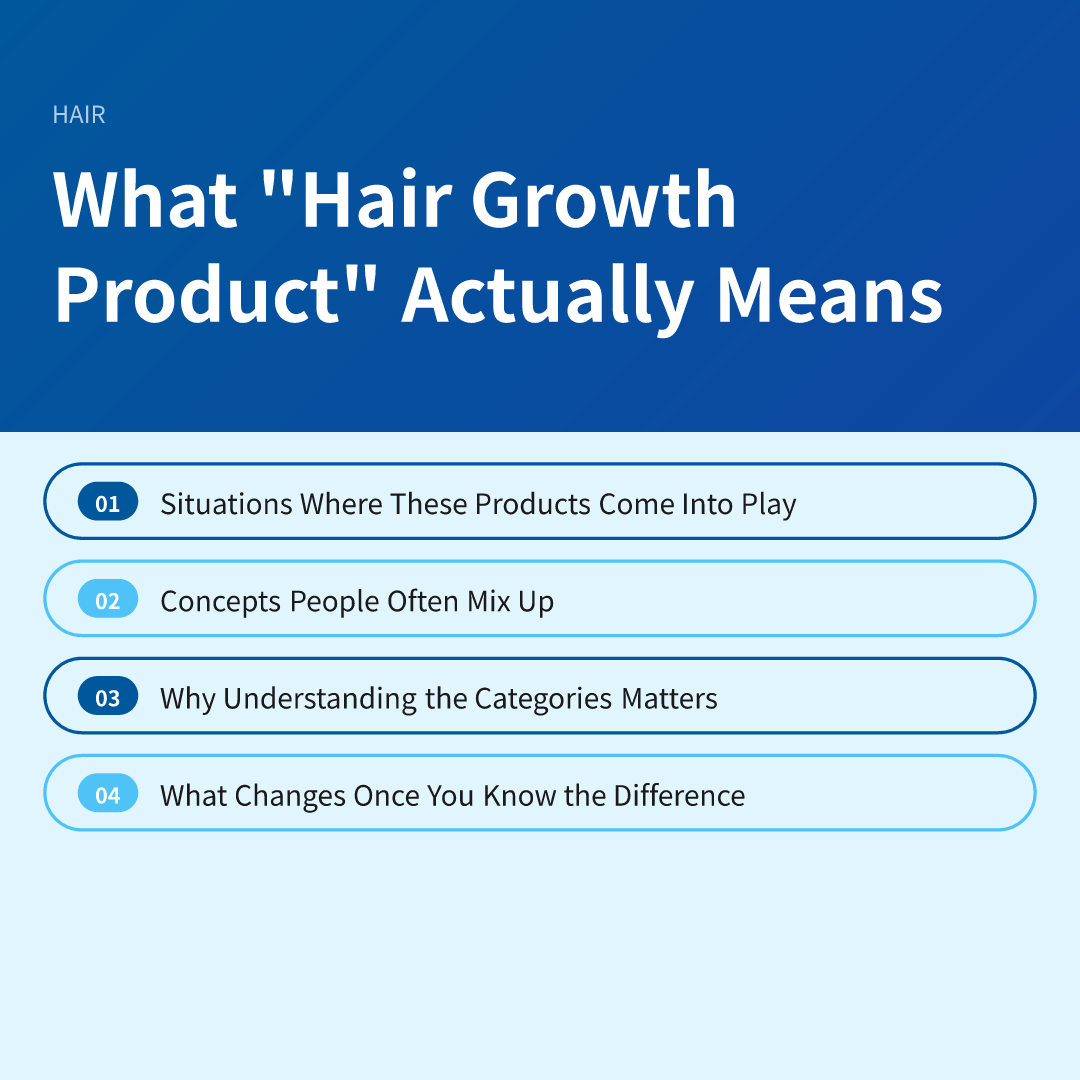
What "Hair Growth Product" Actually Means
The phrase covers a wide range of items, and the label alone does not tell you how a product works. Some are regulated as drugs, some as cosmetics, and some as dietary supplements. That difference affects what a company is allowed to claim, and it affects how much evidence usually sits behind the product.
According to the FDA's general guidance, cosmetics are intended to cleanse or beautify and are not supposed to claim to change the body's structure or function in a medical sense. Products that make claims about altering hair growth biologically can fall into drug territory. In practice, that is why you will see cautious wording on many shampoos and serums, such as "helps hair look thicker" instead of anything stronger.
The main product families
- Topical solutions and foams: liquids or foams placed on the scalp. Some contain an over-the-counter active ingredient, while others are cosmetic formulas.
- Prescription medicines: products a licensed clinician may discuss for certain types of hair loss. These are decided on a case-by-case basis.
- Shampoos and conditioners: mostly cleansing or conditioning products that can make hair look fuller or feel less brittle.
- Supplements: capsules, gummies, or powders with vitamins, minerals, or plant extracts.
- Devices: items such as low-level light caps or combs, and in-office procedures offered by clinics.
- Scalp care products: serums, scrubs, and tonics aimed at scalp comfort or cleanliness.
Think of the hair follicle like a small garden bed. A product can add water, improve the soil surface, or protect the plants, but none of that helps much if the real issue is something deeper, like a seed that has stopped sprouting. Knowing which problem you are dealing with is the first step toward choosing a sensible category.
Situations Where These Products Come Into Play
People look at hair growth products for many reasons, and the reason changes which type is relevant. Hair loss is not one condition. Patterns of gradual thinning, sudden shedding after a stressful period, patchy loss, and breakage from styling all behave differently.
Common situations include:
- Gradual thinning that runs in families: often called pattern hair loss. Topical and prescription options are most often discussed here.
- Shedding after illness, childbirth, or major stress: often temporary, and in many cases hair gradually returns without a product. Dermatologists commonly describe this as telogen effluvium, which simply means a larger-than-usual number of hairs entering the resting and shedding phase.
- Breakage from heat, bleach, or tight styles: this is damage to the hair shaft rather than a problem at the root, so conditioning and gentler styling are usually the relevant conversation.
- Patchy or sudden loss: this deserves a professional look rather than a shelf purchase, since it can be linked to other conditions.
- Scalp irritation or flaking: sometimes mistaken for a growth problem when the scalp itself needs attention.
The American Academy of Dermatology's general public guidance notes that hair loss has many possible causes, including hormones, nutrition, medical conditions, and medications. That is a good reminder that a product aimed at one cause may do little for another.
Why timing matters
Hair grows slowly and in cycles, so visible change generally takes time, if it happens at all. Results vary from person to person, and anyone promising quick transformation deserves some skepticism. If a product's marketing hinges on dramatic overnight change, that is usually a signal to look closer at the claims.
Concepts People Often Mix Up
The hair care aisle is full of look-alike terms. Mixing them up is one of the easiest ways to end up with a product that does not match the goal.
Growth versus thickness versus strength
A product that makes strands feel thicker, coated, or less frizzy is not necessarily affecting how much hair grows. Volumizing shampoos, for instance, often work by adding a film or lifting the hair at the surface. That can look nice, but it is a cosmetic effect rather than a change in the follicle.
Supplements versus nutrition
Hair needs adequate nutrition, and certain deficiencies are linked to shedding. But taking extra of a nutrient when you are not deficient does not reliably lead to more hair. The NIH Office of Dietary Supplements has general public information noting that supplements are not a substitute for a varied diet and that some nutrients can cause problems in excess. Anyone considering a supplement for hair should talk with a pharmacist or physician first, especially if they take other medicines or are pregnant or nursing.
Over-the-counter versus prescription
Over-the-counter products can be bought without a prescription, but that does not mean they are right for everyone or free of reactions. Prescription options are chosen by a clinician after considering your history, your hair loss pattern, and other health factors. How any of these are used, and how often, is determined by the product label or the prescriber rather than by general articles.
Cosmetic claims versus medical claims
Words like "clinically tested" or "dermatologist tested" can sound impressive, but they do not by themselves show that a product regrows hair. The FTC expects health-related advertising to be truthful and backed by evidence, which is why careful readers look for what was actually tested and in whom, rather than the badge itself.
Related reading: Best Hair Loss Treatment Reddit Reviews: How to Read Them
Why Understanding the Categories Matters
Because there is no universal answer to which hair growth products are most worthwhile, the practical question becomes which category fits your situation. Choosing by cause, rather than by packaging or popularity, tends to save both money and frustration.
Possible downsides to keep in mind
- Skin and scalp reactions: itching, redness, dryness, or irritation can happen with topical products, and sensitivity differs widely between people.
- Interactions and health conditions: some supplements can interfere with lab tests or medicines. A pharmacist can check this against your own list.
- Pregnancy and nursing: many hair products and supplements have not been well studied in these situations, so professional advice is especially important.
- Unrealistic expectations: for some types of hair loss, products may slow things down or have a modest effect, and for others they may do little at all.
- Cost over time: many products need ongoing use to maintain any effect, which adds up.
Signs it is time to see a professional
Consider booking an appointment with a dermatologist or primary care clinician if hair loss is sudden, patchy, or comes with scalp pain, scarring, burning, or significant redness. It is also worth getting checked if shedding follows a new medication, if you notice other symptoms like fatigue or unexplained weight changes, or if thinning is causing distress. A professional can look at the scalp directly, ask about your history, and suggest tests when appropriate.
Reviewing claims with a skeptical eye helps too. Be wary of before-and-after photos with no context, "miracle" wording, endorsements without clear sourcing, and promises that work is guaranteed. Under FTC rules, endorsements are supposed to reflect honest experience and disclose any paid relationship, so missing disclosure is itself a flag.
What Changes Once You Know the Difference
Understanding that hair growth products fall into distinct categories shifts how you shop and how you plan. Two judgments in particular tend to change.
- You start with the cause, not the product. Instead of asking which item is most popular, you ask whether your hair loss looks like shedding, breakage, or gradual thinning, and whether a professional should weigh in first. That keeps you from treating a styling problem with a supplement or a medical issue with a shampoo.
- You judge claims by category and evidence. A cosmetic that promises fuller-looking hair is making a different kind of claim than a medicine reviewed for a specific condition. Knowing that lets you set realistic expectations, read labels more critically, and decide with a pharmacist or clinician whether the best hair growth products on market lists you have seen actually apply to you.
Disclaimer: This article is for informational purposes only and is not a substitute for professional medical advice, diagnosis, or treatment. Please consult a licensed professional for personal health decisions.