Filler for Smile Lines (Nasolabial Folds): What the Process Looks Like
This walk-through follows filler for smile lines nasolabial folds from the first planning conversation to the weeks afterward, so you can picture each stage before you book anything. Nasolabial folds are the creases that run from the sides of the nose down toward the corners of the mouth. Injectable fillers are one option people discuss for softening them, but results vary, and a licensed clinician decides whether the approach suits a particular face. What follows is general information, not a recommendation for or against treatment.
Before the Appointment: Planning and Preparation
The first stage happens before anyone picks up a syringe. A consultation usually covers your goals, your medical history, any medicines or supplements you take, and previous cosmetic treatments. The clinician looks at how the fold sits, how your cheeks support the midface, and how your face moves when you talk and smile.
What happens at this stage
According to the U.S. Food and Drug Administration (FDA), dermal fillers are regulated as medical devices, and the agency has published safety communications about their use. Different products have different approved uses, so a reasonable consultation includes a discussion of which product is being considered and why. Many clinicians also talk about whether the fold is mainly caused by skin texture, volume shifting downward, or a mix of both, since that influences the plan.
What you might feel
Mostly this is a conversation, so the main sensation is curiosity, or perhaps a little nervousness. Some people find it helpful to bring photos of how they felt about their face in the past, though a clinician may explain what is and is not realistic. Some practices take reference photos for the chart.
A common question: do I need to stop anything first?
People often ask about blood-thinning medicines, supplements, and alcohol, because bruising is a known possibility with injections. Whether anything should be paused is a decision for the prescribing clinician and the treating provider, not something to change on your own. Tell the provider about everything you use, including over-the-counter products, and ask them directly.
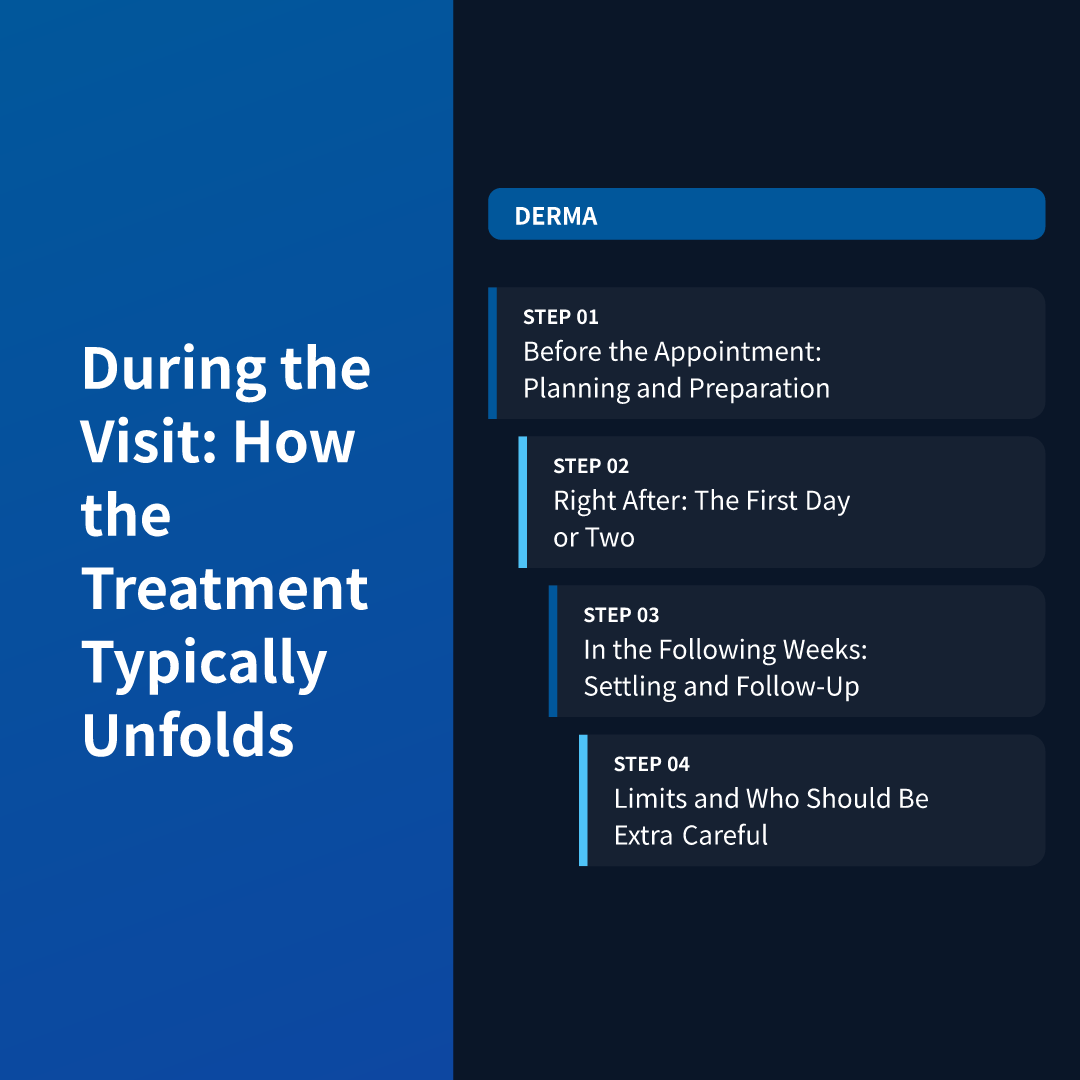
During the Visit: How the Treatment Typically Unfolds
On the day, the provider usually confirms your goals again, cleans the skin, and may mark the areas being treated. Numbing options differ. Some products already contain a local anesthetic, and some providers use a topical numbing product or ice. Which one applies in your case is something the provider arranges at the clinic.
What happens at this stage
The filler is placed by the provider with a fine needle or a blunt-tipped cannula, in small amounts at chosen points around and near the fold. Many clinicians pay attention to the cheek and midface area as well, since support there can influence how the fold looks. The provider may pause to check symmetry, gently shape the area, and look at you from different angles and while you smile.
What you might feel
People commonly describe pressure, a pinching sensation, or a mild stinging, and the experience differs depending on the area, the technique, and personal sensitivity. You may feel fullness once the product is in place. Tell the provider promptly about anything that feels unusual, such as sharp pain, because they can adjust or stop.
A common question: how long does the visit last?
Visits are often fairly short compared with surgical procedures, but the total time depends on the consultation, preparation, and how many areas are treated. Your clinic can give an estimate for your plan.
Right After: The First Day or Two
Immediately afterward, the treated area may look slightly swollen, pink, or uneven. This is a commonly described response to injections, and the skin often looks different from how it will look once things settle. Small bumps or tenderness can appear as well.
What happens at this stage
The product settles into the tissue while the skin reacts to the needle. Mild swelling and redness are commonly reported, and bruising happens for some people but not others. Providers usually give written or verbal aftercare guidance specific to the product and your situation, so follow what your own provider tells you rather than a generic list.
What you might feel
Tenderness when touching the area is common, and some people notice tightness when smiling or chewing. Many people feel comfortable returning to normal routines, though some prefer to plan around possible bruising, such as before an important event. It is wise to ask your provider about timing for exercise, makeup, and facial treatments, since advice differs by product and person.
Warning signs that need prompt attention
The FDA has warned that, although uncommon, filler injections can cause serious complications if product reaches a blood vessel. Contact the treating provider or seek urgent medical care right away if you notice any of the following:
- Severe or increasing pain that seems out of proportion
- Skin that turns white, gray, dusky, or blotchy near the injection area
- Changes in vision, or pain around the eyes
- Signs of infection, such as spreading redness, warmth, pus, or fever
- Difficulty breathing or swelling that spreads quickly
These situations are rare but can be time-sensitive, which is one reason it matters to know how to reach your provider after hours before you leave the clinic.
In the Following Weeks: Settling and Follow-Up
Over the next days to weeks, swelling usually fades and the result becomes easier to judge. Fillers are generally described as temporary, and how long the effect lasts depends on the product, the area, your metabolism, and your lifestyle. Because of that, nobody can promise a specific outcome or duration.
What happens at this stage
The body gradually breaks down most hyaluronic acid based products, which is why the look softens over time. Some people schedule a follow-up visit so the provider can check the result, and sometimes make small adjustments. Lumps, asymmetry, or a result that looks overdone can sometimes be addressed, and providers discuss the options for this at the clinic.
What you might feel
Most people notice the area feeling more normal as swelling goes down. Some feel the product under the skin for a while, and some prefer a subtle change over a dramatic one. If something looks or feels off weeks later, such as a firm lump that is getting more tender, contact your provider rather than waiting it out.
A common question: will it look natural?
Natural-looking results depend heavily on the provider's judgment, the amount used, and your anatomy. Overfilling the folds themselves can sometimes look heavy or change the balance of the face, so many providers talk about conservative, staged treatment. Setting expectations in the consultation tends to help.
Limits and Who Should Be Extra Careful
Filler is not a fit for everyone, and it does not replace other approaches. Deep folds linked to skin laxity or volume loss across the face may be addressed differently, and some people explore skincare, energy-based devices, or surgical options with a dermatologist or qualified specialist. The right choice depends on your skin, goals, budget, and comfort with risk.
- Pregnancy or breastfeeding: Providers commonly advise discussing timing first, since data in these situations are limited.
- Allergies or prior reactions: Tell the provider about any history of severe allergic reactions or past filler reactions.
- Autoimmune or bleeding conditions: These may affect whether and how treatment is considered.
- Active skin infection or cold sores near the area: Providers often prefer to wait until these are resolved.
- Unrealistic expectations: Fillers soften lines but do not stop aging or change how the face moves.
Choosing the provider matters as much as choosing the product. The FDA has cautioned consumers about unapproved products and injections given outside appropriate medical settings, so it is reasonable to ask about the provider's training, the specific product being used, and what happens if a complication occurs.
Conclusion: The Whole Process in Three Lines
A filler for smile lines nasolabial plan typically moves through a few clear stages, and knowing them can make the decision feel less abstract.
- Preparation is mostly a conversation about goals, health history, medicines, and the specific product, so ask questions early.
- The visit itself involves small injections, some pressure or stinging, and an immediate check of balance, followed by swelling or bruising for some people.
- Over the following weeks the result settles and gradually fades, and warning signs such as severe pain, skin color change, or vision changes call for urgent care.
Everyone responds differently, so experiences, results, and how long they last can vary a great deal. A licensed professional who can examine your face and review your history is the right person to discuss whether this option makes sense for you.
Disclaimer: This article is for informational purposes only and is not a substitute for professional medical advice, diagnosis, or treatment. Please consult a licensed professional for personal health decisions.
Related reading: Semi Permanent Filler Options: What the Process Looks Like