Orthodontic Treatment Cost and Duration: What You Really Pay
The price on a brochure or consultation sheet is rarely the same as the total you will pay by the end of care. Orthodontic treatment cost and duration are closely linked, because every extra month in braces or aligners can bring more visits, more supplies, and more decisions. Thinking about spending as a timeline, rather than a single number, tends to give a more realistic picture.
Prices differ widely by country, clinic, and case complexity, so this article avoids quoting figures. Instead, it explains what each stage of care usually involves, where extra costs tend to appear, and how to compare quotes fairly. Your orthodontist or dentist is the only one who can assess your own teeth and give a personal estimate.
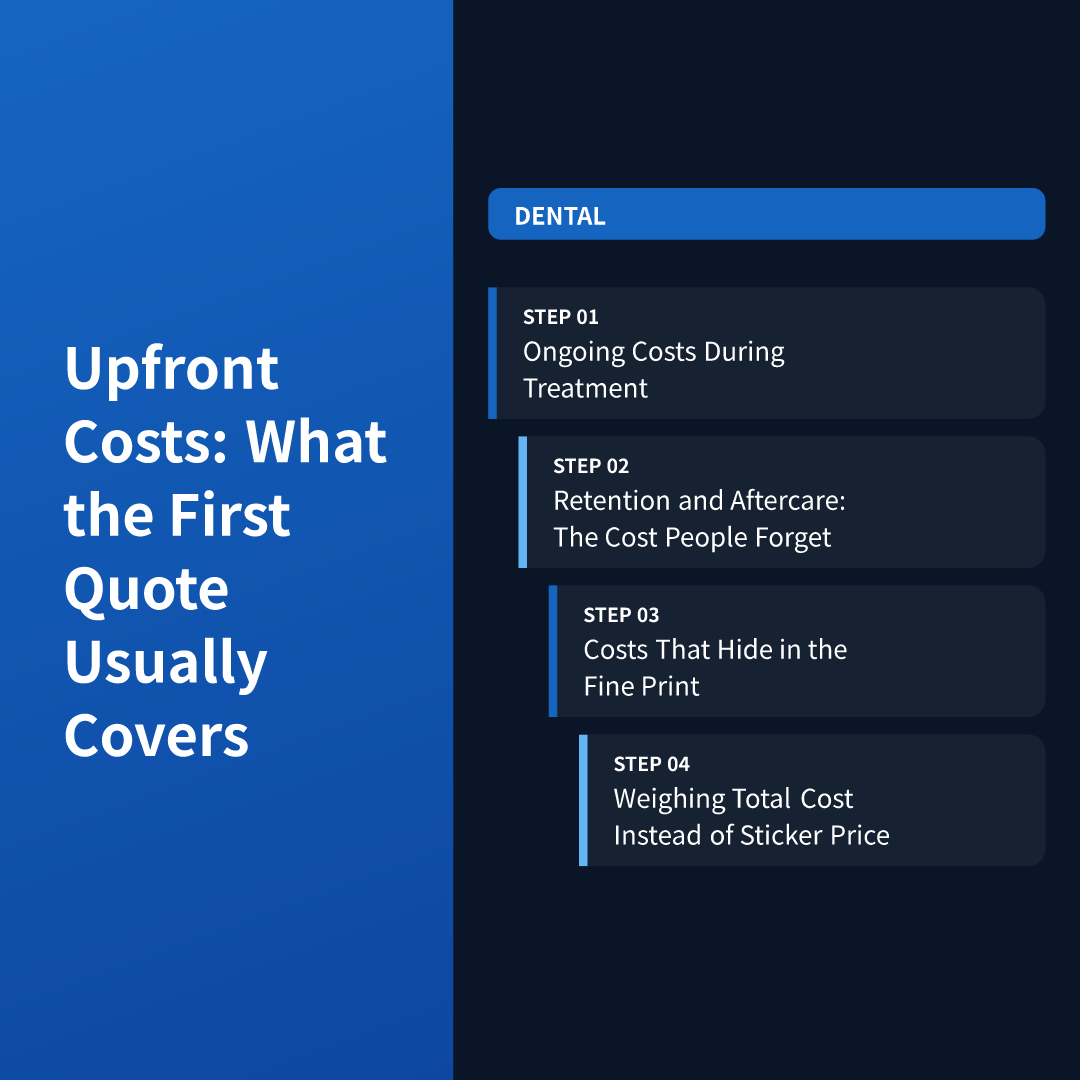
Upfront Costs: What the First Quote Usually Covers
The first costs usually arrive before any appliance is placed. Many practices charge for an initial consultation, and some fold that fee into treatment if you proceed. Records such as X-rays, photos, and digital scans or impressions are often part of this stage, and clinics handle them differently.
The appliance itself
The type of appliance shapes the starting price. Common options include metal braces, ceramic braces, braces placed on the back of the teeth, and clear aligners. According to the American Dental Association’s MouthHealthy resource, orthodontic care can involve different appliance types, and the right choice depends on the individual’s needs. In general, tooth-colored or less visible options tend to be priced higher than traditional metal braces, though this varies by clinic.
Case complexity and expected length
A mild crowding case and a complex bite correction are not priced the same way. Many practices set a single treatment fee based on the expected length of care, while others bill in stages. Ask whether the fee assumes a standard timeline and what happens if treatment runs longer than planned.
Down payments and payment plans
Some clinics ask for an initial payment and then divide the rest into monthly installments. A plan can make the cost easier to manage, but it is worth asking whether interest or administrative fees apply. Insurance, where available, may cover part of the cost, and coverage rules differ by plan, so confirm details with your insurer.
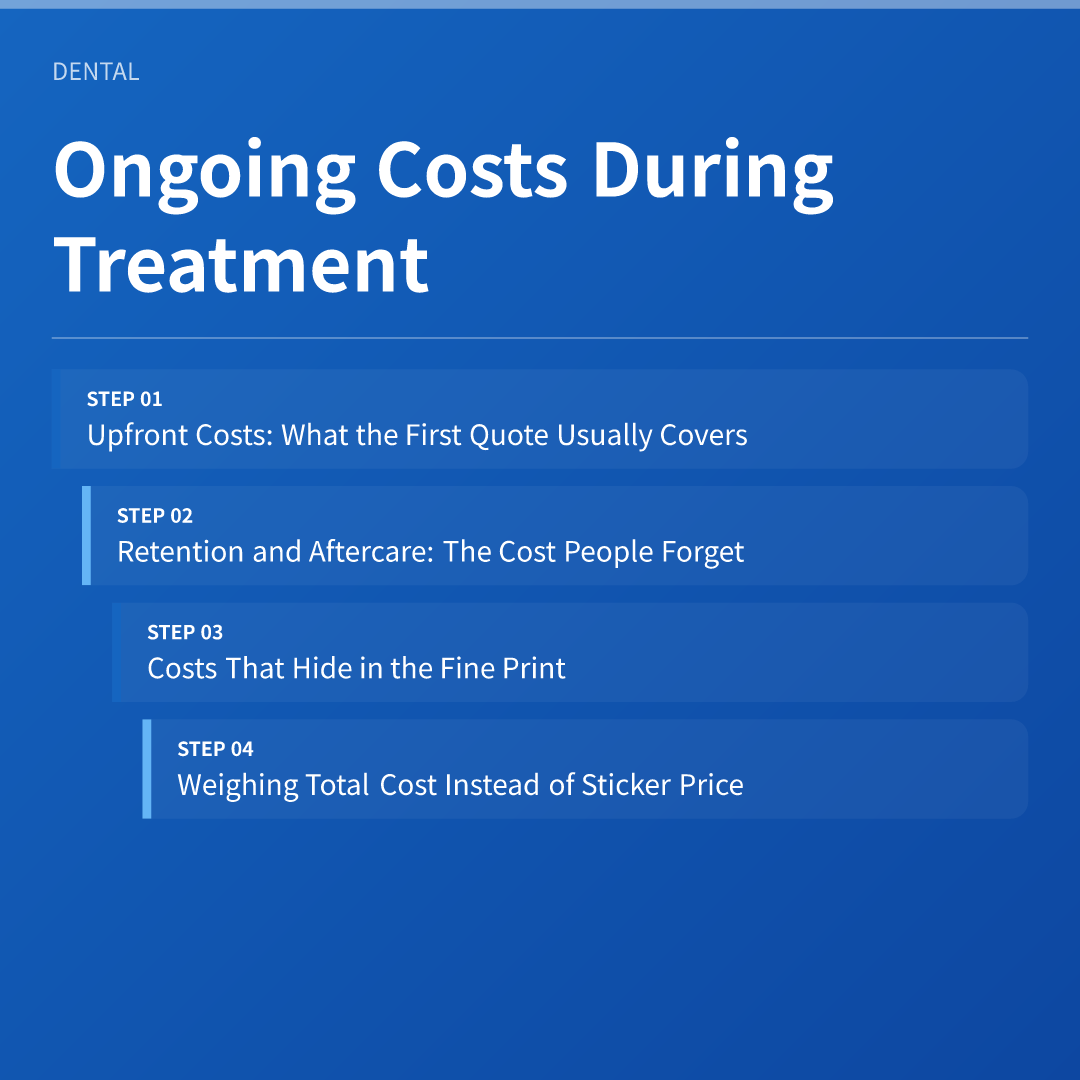
Ongoing Costs During Treatment
Once the appliance is on, the cost shifts from a one-time event to a steady stream of smaller items. How long treatment lasts has a direct effect here. Generally, the more complex the case, the longer care takes, though individual timelines vary and no one can promise an exact end date.
Adjustment and monitoring visits
Braces and aligners need regular check-ins so the clinician can track tooth movement. Some practices include these visits in the main fee. Others bill each visit separately, which matters if treatment is extended. Ask which model your clinic uses.
Aligner trays, wires, and replacements
With clear aligners, additional trays or a refinement round may be needed if teeth do not move as planned. With braces, a broken bracket or bent wire can mean an unscheduled visit. Whether these are covered or charged separately depends on the clinic’s policy, so it helps to get that in writing.
Everyday care supplies
Special brushes, floss aids, wax, and cleaning products add small amounts over many months. Individually they seem minor, but across a long treatment they are part of the real total. Your care team can explain which supplies suit your type of appliance.
braces vs clear aligners comparison
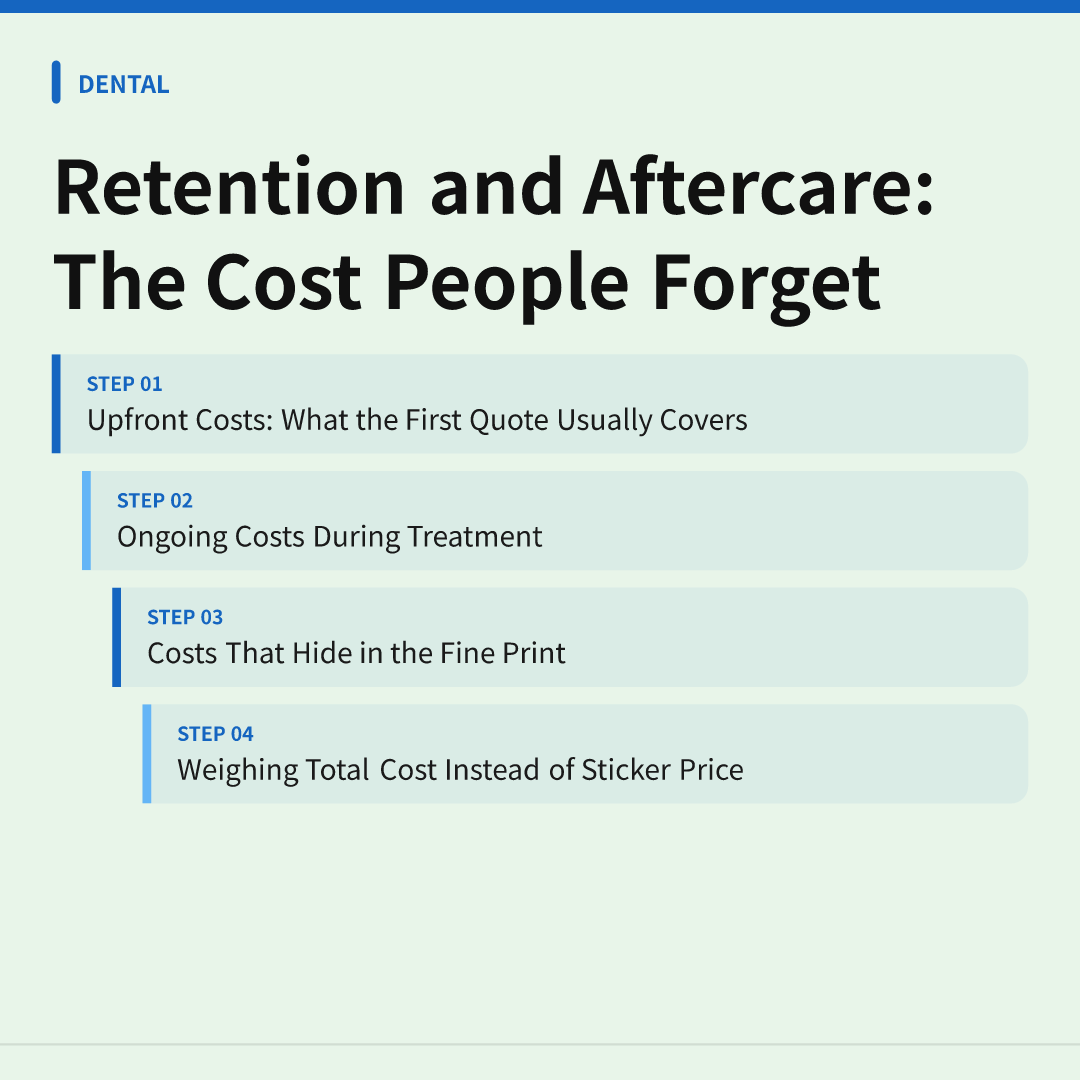
Retention and Aftercare: The Cost People Forget
Finishing treatment is not the end of spending. Teeth can shift after appliances come off, which is why retainers are widely recommended after orthodontic care. The ADA’s MouthHealthy page also discusses the role of retainers in keeping teeth in position after treatment.
First set of retainers
Some clinics include the first retainers in the treatment fee, while others charge for them separately. Retainers can be removable or fixed behind the teeth, and the type affects both price and upkeep. Ask this question before you sign, not after your braces come off.
Replacement and repair
Removable retainers can be lost, warped, or broken, and replacements are an out-of-pocket cost for many people. Fixed retainers may need repair if the bonding loosens. Over several years, these occasional costs can add up, and they depend heavily on personal habits and clinic pricing.
Long-term follow-up
Many orthodontists suggest periodic check-ups after treatment ends. Some practices include a set follow-up period, and others charge per visit. How long retention lasts and how often you are seen is a decision to discuss with your clinician.
Costs That Hide in the Fine Print
Some of the most surprising charges are not about the appliance at all. They sit around the edges of treatment, and they are easy to miss when you compare two quotes side by side.
- Preparatory dental work: Cavities, gum concerns, or other issues may need attention before or during orthodontic care, usually billed separately.
- Extractions or small procedures: Some treatment plans involve removing teeth or placing temporary anchorage devices, which may be quoted outside the main fee.
- Extended-treatment fees: A few practices charge more if care runs past an agreed timeframe.
- Missed or rescheduled appointments: Some clinics apply fees, and repeated delays can also lengthen treatment.
- Cleanings and general dental visits: Regular hygiene visits continue alongside treatment and are typically separate from the orthodontic fee.
- Transfer fees: If you move mid-treatment, continuing care elsewhere can involve additional records and charges.
Honestly, the question to ask is not “How much is it?” but “What is not included?” A clear, itemized estimate makes comparison far easier.
Weighing Total Cost Instead of Sticker Price
A lower quote is not automatically the cheaper path. If it excludes retainers, follow-up visits, or extension fees, the final amount can end up higher than a quote that looked pricier at first. Likewise, a faster option is not always less expensive, and a slower one is not always a bargain.
Duration is a cost in itself
Treatment length affects more than the clinic’s bill. Longer care can mean more time off work for appointments, more travel, and more months of supplies. Duration varies with the case, the appliance, and how consistently the patient follows the care plan, so ask your clinician what a realistic range looks like for you.
Comparing quotes fairly
When you collect more than one estimate, line them up on the same terms. Check the appliance type, expected length, number of included visits, retainer coverage, and policies for repairs or delays. Quotes that cover different things are not truly comparable, even if the headline numbers look close.
When a professional opinion matters most
Seek a dentist or orthodontist’s evaluation if you have gum problems, loose teeth, jaw pain, or a significant bite concern, since these can change both the plan and the budget. Children and teens may have different timing considerations than adults, and a clinician can explain what applies. Pricing aside, treatment choices should rest on an in-person assessment.
Conclusion: Recalculating Orthodontic Treatment Cost and Duration
Orthodontic treatment cost and duration are best understood as a timeline: an upfront fee, a stretch of ongoing visits and supplies, and a long tail of retention and aftercare. The advertised price usually covers only the first part. Results and expenses differ between people, so personal estimates should come from a qualified professional.
Three steps to recalculate your total
- Ask for an itemized estimate. Request a written breakdown showing what the fee includes, such as visits, retainers, and repairs, and what it leaves out.
- Add the time-based and aftercare costs. Estimate the expected length of treatment, then include supplies, travel, possible extension fees, and retainer replacement over the following years.
- Compare options on the same terms. Line up each quote using the same assumptions about appliance, timeline, and included services, then discuss any gaps with the clinic before deciding.
Disclaimer: This article is for informational purposes only and is not a substitute for professional medical advice, diagnosis, or treatment. Please consult a licensed professional for personal health decisions.