Plastic Surgery Insurance Coverage: What Plans Actually Pay For
Plastic surgery insurance coverage is the portion of a surgical procedure that a health plan agrees to pay because it considers the procedure medically necessary. In general, plans pay for surgery that restores function or repairs damage from injury, illness, or a birth condition, and they usually do not pay for surgery done only to change appearance. Below, you will find how that line is drawn, when it applies, which terms people often confuse, and why it matters before you book a consultation.
What Insurance Coverage for Plastic Surgery Really Means
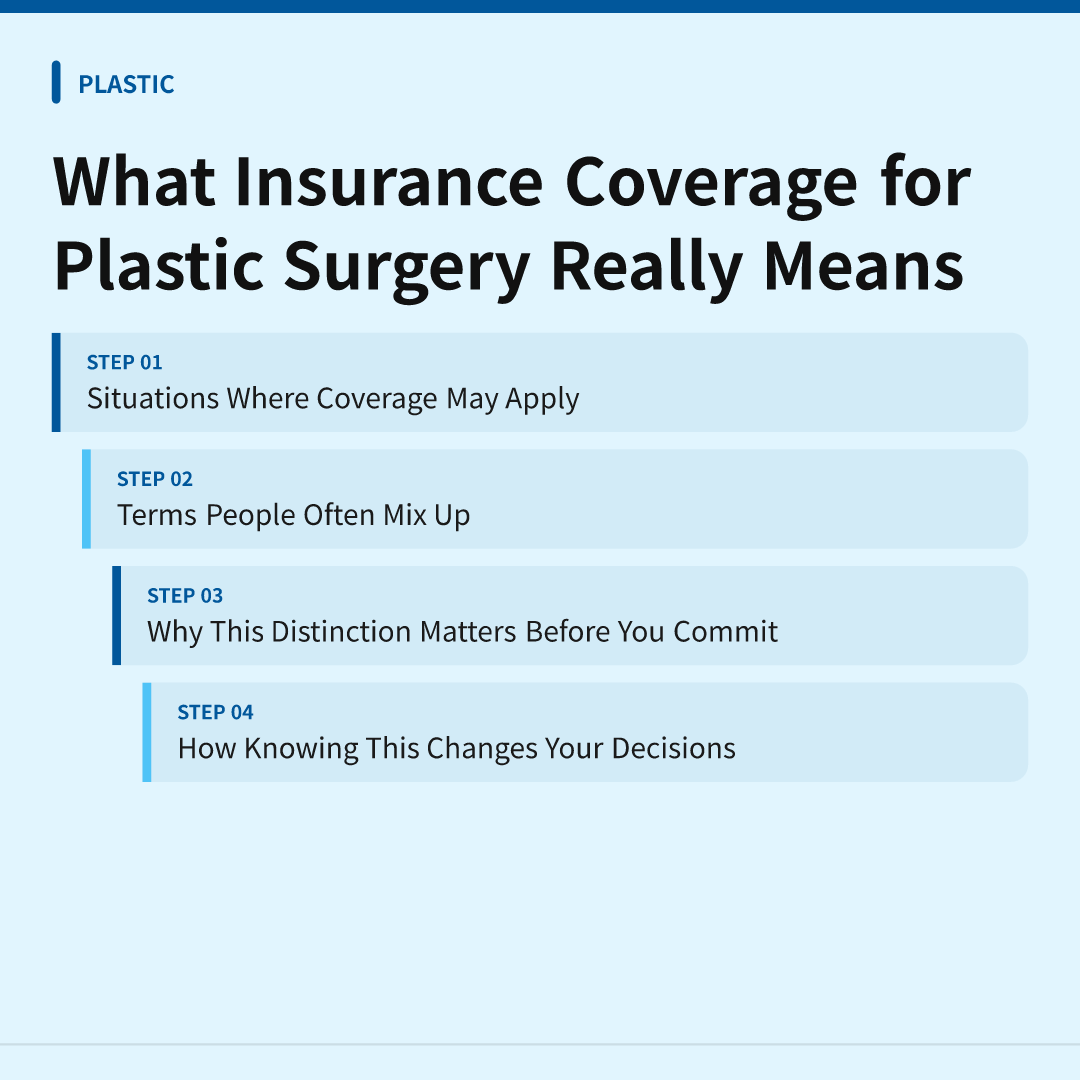
Plastic surgery is an umbrella term. It includes reconstructive procedures, which aim to restore function or normal form after injury, disease, or a condition present from birth, and cosmetic procedures, which aim to change appearance by choice. Insurers treat these two groups very differently, and that split is the foundation of almost every coverage decision.
A few terms come up again and again, so here is a one-line plain-language gloss for each:
- Medical necessity: the insurer's standard for deciding whether a service is needed to diagnose or treat a health problem, rather than wanted for appearance.
- Prior authorization: a requirement that the plan approves a procedure before it happens, otherwise it may refuse to pay.
- Explanation of benefits: the statement a plan sends after a claim, showing what it paid, what it denied, and what you may owe.
- Exclusion: a service the plan's written terms say it does not cover at all.
Think of coverage like a toll road with a gate. The gate does not open because a procedure is popular or because a surgeon is skilled. It opens when the plan's own written definition of medical necessity is met, and the paperwork has to show that clearly.
Situations Where Coverage May Apply
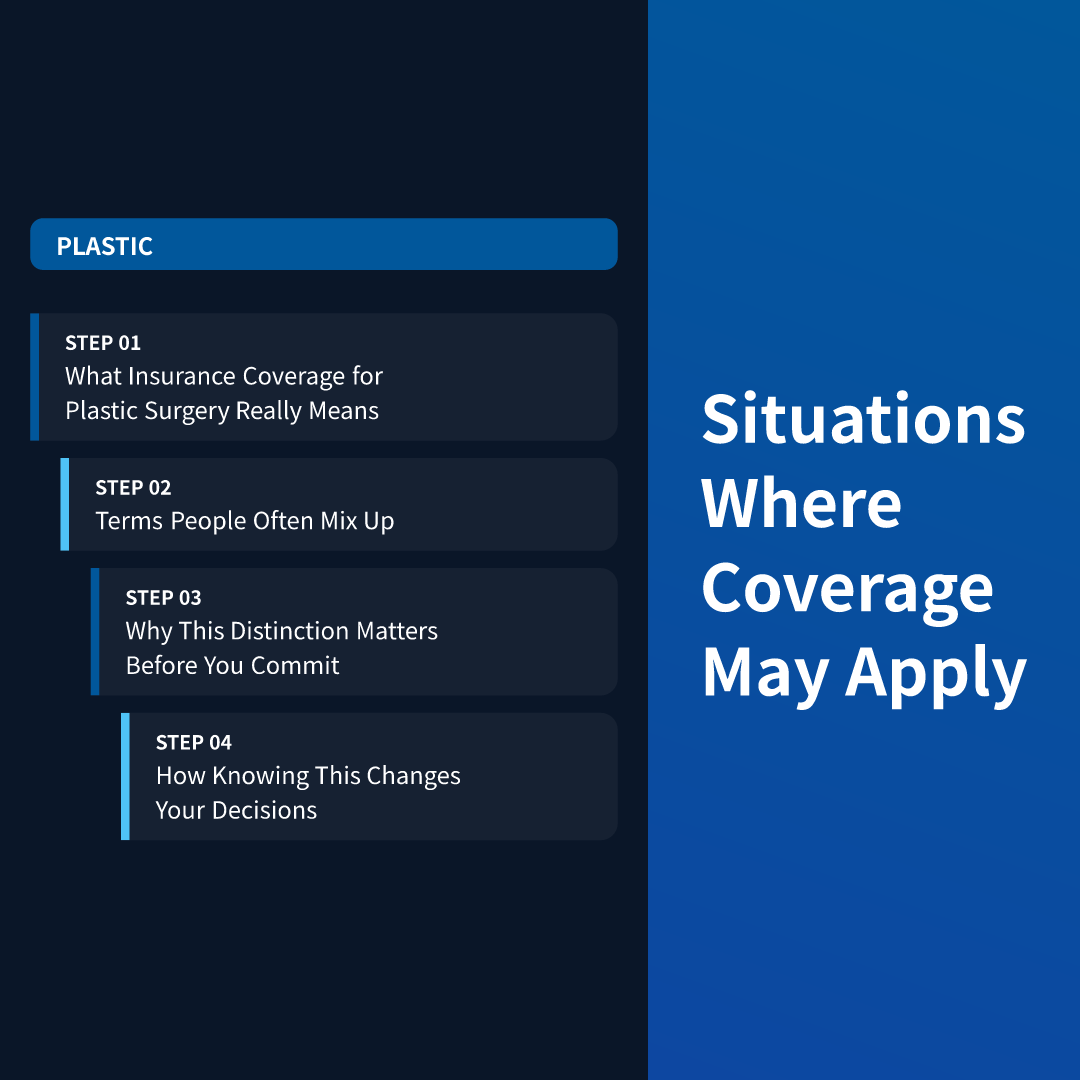
Coverage questions tend to arise in a handful of recurring situations. None of these guarantees approval, because every plan writes its own rules, but they are the areas where insurers more often consider a claim.
Reconstruction After Injury or Illness
Surgery to repair tissue damaged by trauma, burns, or infection is commonly reviewed as reconstructive. Surgery after removal of a tumor may also fall into this category. The documentation usually needs to connect the procedure to the original injury or condition.
Breast Reconstruction After Mastectomy
Breast reconstruction following a mastectomy is one of the better-known examples. According to the U.S. Centers for Medicare & Medicaid Services and the U.S. Department of Labor general guidance, federal law requires many group health plans that cover mastectomy to also cover related reconstruction. Details, such as surgery on the other breast for symmetry, depend on the plan, so reading your own policy matters.
Conditions Present From Birth
Repairs for conditions such as a cleft lip or palate are often treated as medically necessary rather than cosmetic. Plans differ on how much of the multi-stage care they include, and age limits or network rules can apply.
Functional Problems That Overlap With Appearance
Some procedures sit in a gray area. Eyelid surgery may be reviewed when drooping skin interferes with vision. Nasal surgery may be considered when a structural problem affects breathing. Excess skin removal after major weight loss is sometimes reviewed when skin causes chronic rashes or infections. In these cases, plans commonly ask for clinical notes, photographs, and a history of other treatments tried first. Whether a particular case qualifies is a decision for the plan and the treating surgeon, not something a general article can settle.
Related reading: Breast Augmentation Surgery Cost: The Price on the Quote vs. What You Actually Pay
Terms People Often Mix Up

Much of the frustration around coverage comes from vocabulary. A procedure can sound medical and still be classed as cosmetic, or sound cosmetic and still be reviewed as reconstructive. Sorting the terms out helps you ask better questions.
Reconstructive Versus Cosmetic
Reconstructive refers to the purpose of the surgery, not the technique. The same operation can be reconstructive for one person and cosmetic for another, depending on the reason behind it. Insurers look at the stated reason and the supporting records.
Medically Necessary Versus Medically Recommended
A surgeon may recommend a procedure, but the plan applies its own definition of necessity. A recommendation alone does not obligate an insurer to pay. This gap explains many denials that feel surprising.
Pre-Certification, Prior Authorization, and Pre-Determination
These terms are sometimes used loosely. Prior authorization is an approval step. A pre-determination is often an informal estimate of whether something would be covered. Ask your plan which one it offers and whether it is binding, since an estimate is not always a promise to pay.
Coverage Versus Reimbursement
Even when a plan covers a service, you may still owe a deductible, copayment, or coinsurance. Out-of-network surgeons can add further costs. "Covered" does not mean "free."
Insurance Versus Financing
When a procedure is excluded, some clinics offer payment plans or third-party financing. That is a payment arrangement, not insurance coverage. Interest and fees can apply, so reading the terms carefully is wise.
Why This Distinction Matters Before You Commit

The practical stakes are financial and emotional. Surgery is expensive, and a denied claim after the fact can leave a patient with a large bill. According to the Consumer Financial Protection Bureau's general guidance on medical billing, reviewing your statements and asking questions about charges is a reasonable step, and many billing problems can be raised with the provider or plan directly.
Why Claims Get Denied
Denials commonly come from a few patterns. The plan may judge the procedure cosmetic. Required prior authorization may be missing. Records may not show enough connection between symptoms and the proposed surgery. Or the service may simply be an exclusion in the policy. Some of these can be addressed through an appeal, and some cannot.
Appeals and Review Rights
According to the U.S. Department of Labor and HealthCare.gov general guidance, many plans must offer an internal appeal process, and in many cases an external review by an independent party. Timelines and steps vary by plan type, so the denial letter and plan documents are the places to check for deadlines.
Questions Worth Raising With the Plan and the Surgeon
Rather than relying on assumptions, many people find it useful to bring specific questions to both sides of the process:
- Does my plan's written policy list this procedure as covered, limited, or excluded?
- Is prior authorization required, and who submits it?
- What documentation would the plan want to see?
- Is the surgeon and facility in my network?
- If the claim is denied, what is the appeal process and deadline?
- If the plan does not pay, what would the full out-of-pocket cost look like, including anesthesia and facility fees?
Getting answers in writing, or noting the date, time, and name of the person you spoke with, can help if a disagreement comes up later. A phone reassurance is not always the same as a written determination.
Limits of General Information
Plans differ widely. Employer plans, individual marketplace plans, Medicare, and Medicaid each follow different rules, and state laws can add further requirements. Some people are surprised that a procedure covered by one plan is excluded by another. This article cannot tell you whether your specific situation qualifies. Your plan documents, your insurer's member services, and a qualified surgeon's office are the right places for that answer.
Medical and Safety Considerations
Coverage is a financial question, while whether surgery suits you is a medical one. Surgery of any kind carries risks, and outcomes and recovery vary from person to person. A licensed, board-certified surgeon can explain risks, alternatives, and realistic expectations in a consultation. Seek professional care promptly if you have symptoms such as breathing trouble, vision changes, persistent skin infections, or pain, since these may call for medical evaluation regardless of what insurance decides.
How Knowing This Changes Your Decisions
Understanding plastic surgery insurance coverage shifts two choices in particular, and both can save stress later.
- You check the paperwork before the procedure, not after. Once you know that coverage hinges on medical necessity and documented purpose, it makes sense to read your policy, confirm prior authorization requirements, and ask the surgeon's office what records they will submit before any date is set.
- You plan for both outcomes. Because approval is never certain, you can ask for a full cost estimate that covers the scenario where the plan pays and the scenario where it does not, then decide whether to proceed, wait, appeal, or explore other options with that picture in mind.
Disclaimer: This article is for informational purposes only and is not a substitute for professional medical advice, diagnosis, or treatment. Please consult a licensed professional for personal health decisions.