Breast Augmentation Surgery Cost: The Price on the Quote vs. What You Actually Pay
The price printed on a quote and the total you end up paying are rarely the same number, and that gap is the heart of understanding breast augmentation surgery cost. A headline figure describes one moment, the day of the operation, while the real expense stretches from the first consultation to years of follow-up. This article follows that timeline so you can see what each stage tends to involve. It avoids fixed figures, because prices depend on country, city, clinic and the individual plan.
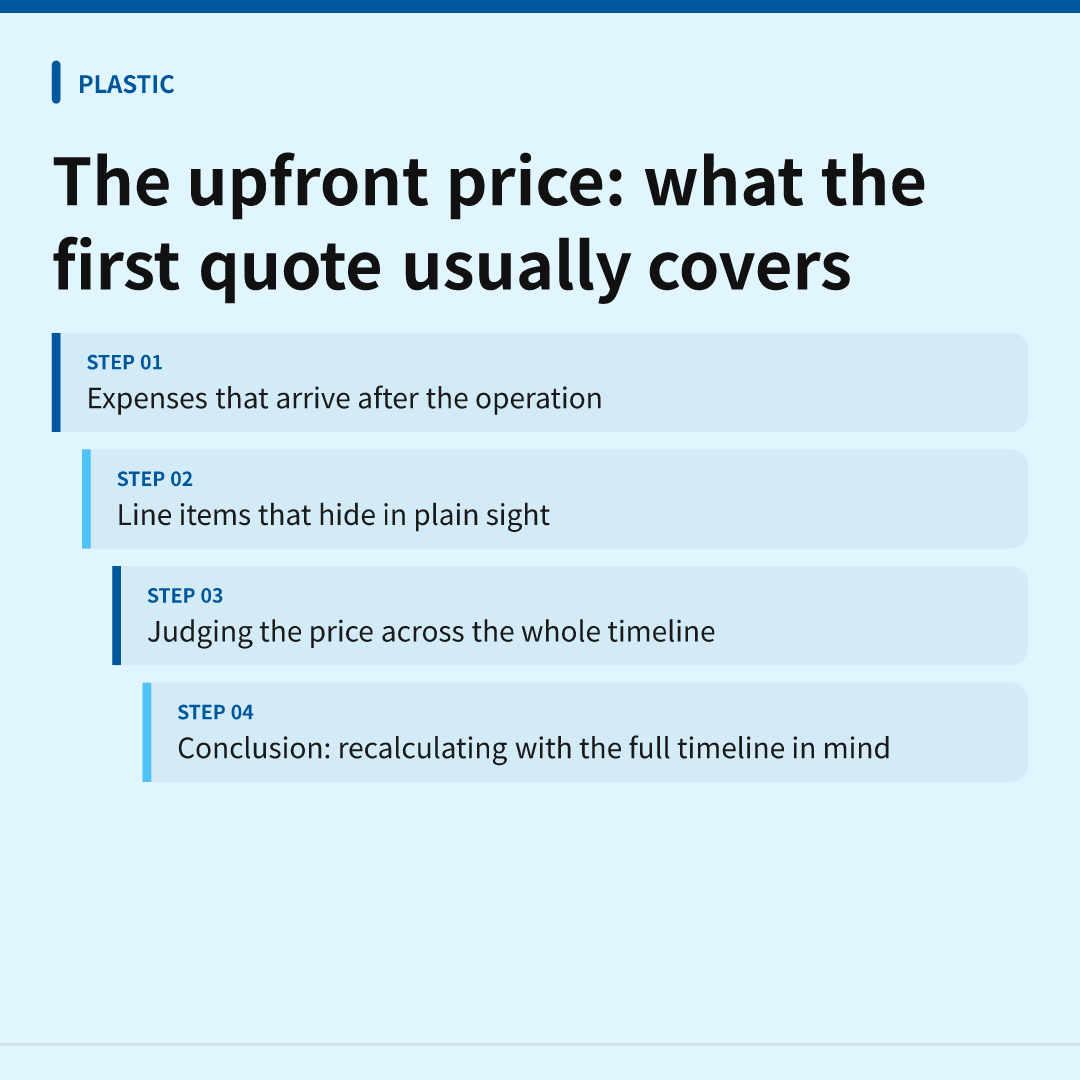
The upfront price: what the first quote usually covers
The first quote is typically built from several parts that can each move independently. Some clinics present a single all-inclusive figure, others itemize every piece. Neither format is automatically better, but itemized versions make comparison easier.
Surgeon’s fee
This is often the most flexible part of the quote. Training, experience, demand and reputation all influence it. A higher fee does not automatically mean better results for you, but it is a real reason prices differ. Verify credentials independently through a national or regional medical board or a plastic surgery society rather than relying on a clinic’s own marketing.
Implants
Implants are a meaningful share of the bill. Silicone gel implants generally cost more than saline ones, and anatomical (teardrop) shapes, newer designs and well-known manufacturers can raise the price further. Regulators publish safety information worth reading before you decide; the U.S. Food and Drug Administration, for example, offers a patient-focused page covering risks, follow-up and questions to ask: FDA breast implants overview. Approved products differ by country, so check what applies where you live.
Anesthesia and facility
General anesthesia given by a separate anesthesia professional is usually billed differently from lighter sedation. An accredited surgical center or hospital tends to cost more than a minimal office setup, though it may also bring more monitoring and emergency capability.
Technique, combined procedures and location
Incision location, implant placement relative to the chest muscle and the complexity of your anatomy can change operating time and therefore price. A breast lift combined with augmentation is a separate procedure and is typically priced on top. Geography matters too: rent, staffing, insurance, local demand and currency all feed into the number. Your surgeon decides which approach may suit your body and goals, and asking why a plan was proposed often explains part of the price.
Expenses that arrive after the operation

Once surgery is done, a second layer of cost begins. These are easy to overlook because they appear weeks or years after the quote.
- Recovery supplies: prescription medication, compression or support garments.
- Follow-up visits: check-ups beyond the number included in the package.
- Time away from work: lost income or used leave during recovery.
- Revision surgery: a correction may or may not be covered by a warranty or clinic policy, and such terms often exclude certain items.
- Long-term monitoring and replacement: implants are not generally regarded as lifetime devices, so some people eventually need additional surgery or imaging.
A surgeon can explain what follow-up is typically recommended for the implant type being proposed. Treat those recommendations as part of the financial picture, even though they never appear on the first invoice.
Line items that hide in plain sight
Some costs are not absent from the quote so much as tucked into its gaps. A very low figure can mean that anesthesia, facility fees, the implants themselves or follow-up visits are excluded. It can also reflect shortcuts in staffing, equipment or monitoring. Vague answers about the implant brand, pressure to book quickly, or reluctance to say who performs the surgery are worth pausing over.
A low price is not automatically a warning sign. Efficient operations, lower overhead, standard implant options or a surgeon earlier in their career can all keep fees down legitimately, provided the quote is transparent and credentials check out. A high price is not proof of quality either; it may reflect an experienced surgeon and accredited facility, or it may reflect branding, a luxury setting and high overhead. A line-by-line breakdown separates real services from presentation.
Other items can also change the final amount:
- Pre-operative consultations, imaging or blood tests billed separately
- Financing interest and fees, since the full repayment amount matters more than the monthly figure
- Deposit rules or cancellation charges
- Travel and accommodation if you choose a clinic far from home, plus the question of how problems would be handled after you return
Cosmetic augmentation is commonly not covered by health insurance, although reconstructive situations can be treated differently depending on the policy and country. Confirm directly with your insurer rather than assuming.
Judging the price across the whole timeline
Comparing quotes works only when they describe the same scope of care. If one clinic includes anesthesia and another does not, the totals cannot be compared until you adjust for that. Ask each clinic to put the same items in writing so the differences become visible, and ask who is responsible, and on what terms, if a revision or complication arises.
Take your time. A reputable clinic generally expects questions, allows a reasonable period to decide and does not rely on countdown discounts. A second consultation with another qualified surgeon can also clarify whether a proposal is reasonable.
The decision is medical as well as financial. Surgery carries risks for everyone, including bleeding, infection, changes in sensation, scarring, implant-related complications and dissatisfaction with the appearance. Results and recovery differ between people. Anyone with existing health conditions, who is pregnant or breastfeeding, or who takes regular medication should raise that at the consultation.
A price on its own tells you very little. What matters is what it covers, who performs the surgery, and what support exists if something does not go as planned.
Conclusion: recalculating with the full timeline in mind
The figure on the first quote is only the opening chapter. Seen across recovery, follow-up and the possibility of future surgery, the real total can look quite different, and two quotes that seem far apart may turn out closer than expected, or the reverse.
Three steps to recalculate by total cost:
- Standardize the quotes. Get every clinic to itemize surgeon, facility, anesthesia, implants and follow-up in writing so each covers the same scope.
- Add the later costs. Include medication, garments, extra visits, time off, financing charges and the written revision terms, along with a realistic allowance for future monitoring or replacement.
- Weigh transparency and trust. Favor the option whose total is clear, whose surgeon’s credentials you verified yourself and who discusses benefits and limits honestly.
Disclaimer: This article is for informational purposes only and is not a substitute for professional medical advice, diagnosis, or treatment. Please consult a licensed professional for personal health decisions.
Related reading: Revision Rhinoplasty Surgery Cost: What the Price Tag Hides