Simple Hydration Tips for Busy Adults Who Forget to Drink Water
Staying hydrated sounds straightforward, but many busy adults struggle to drink enough water throughout the day. Between meetings, deadlines, commutes, and family responsibilities, it’s easy to reach the end of the day and realize you’ve barely had a glass or two. Yet proper hydration affects everything from your energy levels and focus to your physical health and mood.
This guide offers practical hydration tips for busy adults, backed by research where available, and designed to fit into real-world schedules. You’ll learn how much fluid you actually need, how to recognize when you’re falling short, and simple strategies to build better hydration habits without adding stress to your day.
Why Hydration Matters for Busy Adults
Water makes up approximately 60% of your body weight and plays a role in nearly every bodily function. It regulates temperature, transports nutrients, cushions joints, and helps remove waste. Even mild dehydration—losing as little as 1-2% of body water—can affect cognitive performance, mood, and physical stamina.
For busy adults, the effects of inadequate hydration can be particularly noticeable. Research suggests that mild dehydration may impair concentration, increase fatigue, and reduce short-term memory performance. When you’re juggling multiple responsibilities, these small declines can compound throughout the day.
Beyond mental performance, chronic under-hydration may contribute to headaches, constipation, dry skin, and increased risk of kidney stones over time. While individual needs vary, maintaining consistent fluid intake supports both immediate function and long-term wellbeing.
How Much Water Do Busy Adults Actually Need
The often-cited “eight glasses a day” rule is a reasonable starting point, but actual needs depend on several factors including body size, activity level, climate, and overall health. The U.S. National Academies of Sciences, Engineering, and Medicine suggests adequate daily fluid intake is approximately 3.7 liters (about 15.5 cups) for men and 2.7 liters (about 11.5 cups) for women from all beverages and foods.
About 20% of daily fluid intake typically comes from food, especially fruits and vegetables. The remaining 80% comes from beverages—water, coffee, tea, milk, and other drinks all contribute, though water remains the healthiest choice for most of your intake.
Your individual needs may be higher if you:
- Exercise regularly or have physically demanding work
- Live in a hot or humid climate
- Are pregnant or breastfeeding
- Have certain health conditions or take medications that increase fluid loss
- Consume more caffeine or alcohol, which have mild diuretic effects
Rather than obsessing over exact measurements, many health professionals recommend using thirst and urine color as practical guides. Pale yellow urine generally indicates adequate hydration, while dark yellow or amber suggests you need more fluids.
Common Signs You’re Not Drinking Enough Water
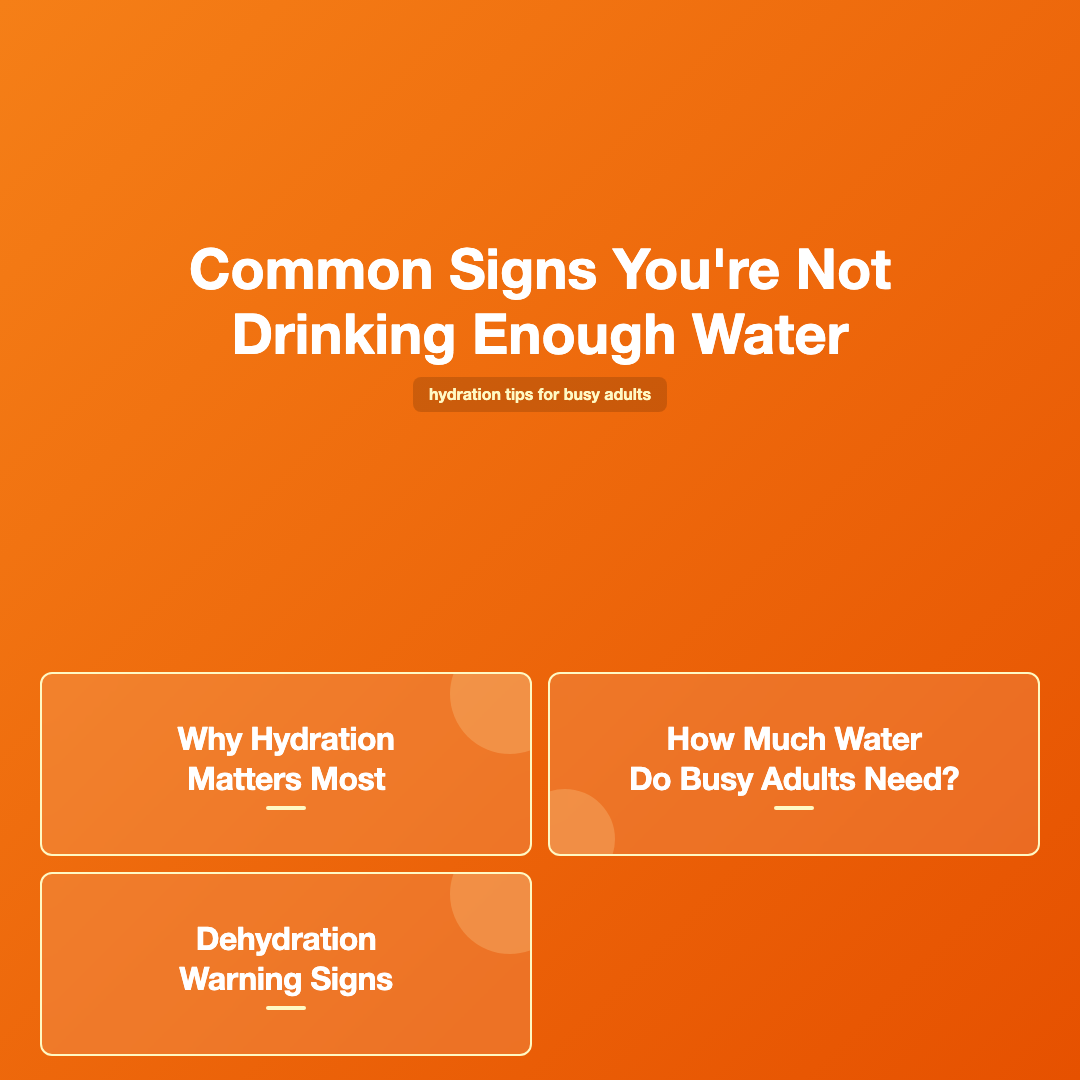
Busy schedules can make it easy to miss your body’s hydration signals. By the time you feel thirsty, you may already be mildly dehydrated. Watch for these common indicators that you need more fluids:
Physical Signs
- Dark urine: One of the most reliable indicators; aim for pale yellow
- Dry mouth and lips: Often the first noticeable symptom
- Headaches: Dehydration can trigger or worsen headaches
- Fatigue: Low fluid levels reduce blood volume, making your heart work harder
- Dizziness: Especially when standing up quickly
- Reduced urination: Fewer than four bathroom trips during the workday may signal inadequate intake
Cognitive and Mood Changes
Some research indicates that even mild dehydration may affect mood and cognitive function. You might notice:
- Difficulty concentrating on tasks
- Increased irritability or anxiety
- Slower reaction times
- Memory lapses or mental fog
These effects are often subtle and easily attributed to stress or lack of sleep, but addressing hydration may provide noticeable improvement for some individuals.
Practical Hydration Strategies That Fit Busy Schedules
The key to better hydration isn’t willpower—it’s creating simple systems that work with your existing routine. Here are evidence-informed strategies that busy adults have found effective:
Start Your Day with Water
Keep a glass or bottle of water on your nightstand and drink it first thing in the morning. After 6-8 hours of sleep without fluids, your body benefits from early rehydration. This simple habit also helps establish a hydration mindset for the day ahead.
Some people find that drinking water before their morning coffee or tea makes them more likely to continue hydrating throughout the day.
Use Visual Reminders and Tracking Tools
Out of sight often means out of mind. Keep water visible at your desk, in your car, and in your bag. A large, marked water bottle showing time-based goals (e.g., “drink to this line by 10 AM”) provides both a visual reminder and an easy way to track progress.
Smartphone apps with hydration reminders can help, though some people find frequent notifications annoying. Experiment to find what works for your preferences.
Link Hydration to Existing Habits
Habit stacking—attaching a new behavior to an established routine—can make hydration automatic. Try drinking water:
- Every time you check your email
- Before each meal or snack
- After each bathroom break
- During transition times (arriving at work, leaving for lunch, starting a meeting)
- While waiting for your computer to start or coffee to brew
These small, frequent sips throughout the day are often more sustainable than trying to gulp large amounts at once.
Make Water More Appealing
If plain water doesn’t appeal to you, it’s harder to drink enough. Consider these modifications:
- Add fresh fruit slices (lemon, lime, cucumber, berries, orange)
- Try sparkling water if you prefer carbonation
- Brew herbal teas and drink them hot or iced
- Invest in a water bottle you actually enjoy using
- Adjust water temperature to your preference—some people drink more when it’s very cold, others prefer room temperature
While flavored waters can help, check labels for added sugars. Unsweetened options are generally healthier for regular consumption.
Eat Water-Rich Foods
About 20% of your daily fluid intake comes from food. Incorporating water-rich foods into meals and snacks supports overall hydration without requiring extra effort:
- Fruits: Watermelon, strawberries, cantaloupe, peaches, oranges (85-95% water)
- Vegetables: Cucumber, lettuce, celery, zucchini, tomatoes (90-96% water)
- Soups and broths: Excellent hydration sources, especially for lunch
- Yogurt: Contains about 85% water
- Smoothies: Blend fruits, vegetables, and liquid for a hydrating meal or snack
These foods also provide vitamins, minerals, and fiber, making them valuable additions to your diet beyond their water content.
Set Realistic Hydration Goals
Rather than trying to dramatically increase water intake overnight, set incremental goals. If you currently drink two glasses of water daily, aim for three or four for a week, then gradually increase. Small, sustainable changes are more likely to become lasting habits than ambitious overhauls.
Track your progress for a week or two to identify patterns. You might notice you drink more on certain days or at certain times, which can help you target when you need extra reminders or strategies.
Workplace Hydration Strategies
The office environment presents unique hydration challenges. Long meetings, back-to-back calls, and deep focus work can make hours pass without a single sip. Try these workplace-specific tips:
- Keep a large bottle at your desk: A 32-ounce bottle requires fewer refills than a small cup
- Set calendar reminders: Schedule brief “water breaks” between meetings
- Use bathroom trips as prompts: Refill your bottle every time you use the restroom
- Make water cooler trips social: Invite a colleague to join you for a brief walk and refill
- Start meetings with water: If you lead meetings, provide water and take a moment for everyone to hydrate
- Keep backup supplies: Store an extra bottle or cup at your desk in case you forget yours
For those working from home, the same principles apply. Set up your workspace with water nearby and use work transitions (finishing a task, taking a break) as hydration cues.
What About Coffee, Tea, and Other Beverages
A common myth suggests that caffeinated beverages don’t count toward hydration because caffeine is a diuretic. While caffeine does have a mild diuretic effect, research indicates that regular coffee and tea drinkers develop tolerance, and these beverages still contribute to overall fluid intake.
That said, water remains the optimal choice for most of your hydration needs because it’s calorie-free and doesn’t contain caffeine, sugar, or other additives. Here’s how common beverages fit into a hydration strategy:
- Coffee and tea: Count toward fluid intake, but limit caffeine to moderate levels (about 400mg daily, or roughly four cups of coffee) to avoid sleep disruption or jitters
- Milk and plant-based alternatives: Contribute to hydration and provide nutrients
- Juice: Hydrating but high in natural sugars; limit to small portions
- Soda and energy drinks: Provide fluids but often contain high amounts of sugar or artificial sweeteners; not recommended as primary hydration sources
- Alcohol: Has a dehydrating effect; drink water alongside alcoholic beverages
For busy adults, a practical approach is to make water your default beverage and enjoy other drinks in moderation as part of a balanced diet.
Hydration During Exercise and Physical Activity
If your busy schedule includes workouts or physically demanding work, your hydration needs increase. General guidelines suggest:
- Drink 15-20 ounces of water 2-3 hours before exercise
- Drink 8-10 ounces 20-30 minutes before starting
- Drink 7-10 ounces every 10-20 minutes during exercise
- Drink 8 ounces within 30 minutes after finishing
- Continue drinking to replace fluids lost through sweat
For moderate exercise lasting less than an hour, water is typically sufficient. For longer or more intense activity, especially in hot conditions, beverages containing electrolytes may help replace sodium and other minerals lost through sweat. However, most busy adults engaging in typical gym workouts or recreational activity don’t need specialized sports drinks.
A simple way to gauge hydration after exercise is to weigh yourself before and after. For every pound lost, drink about 16-24 ounces of fluid to rehydrate.
Special Considerations and When to Seek Professional Guidance
While these hydration tips work well for most healthy adults, certain situations require individualized guidance:
Medical Conditions
Some health conditions affect fluid needs or the body’s ability to regulate hydration. If you have kidney disease, heart failure, liver disease, or take diuretic medications, talk with your healthcare provider about appropriate fluid intake. Drinking too much or too little could affect your condition.
People with diabetes should also discuss hydration strategies, as blood sugar levels can affect fluid balance.
Pregnancy and Breastfeeding
Fluid needs increase during pregnancy and breastfeeding. The general recommendation is about 10 cups (2.4 liters) daily during pregnancy and 13 cups (3.1 liters) while breastfeeding, though individual needs vary. Discuss appropriate intake with your prenatal care provider.
Older Adults
Thirst sensation may decrease with age, making it easier to become dehydrated without realizing it. Older adults may benefit from scheduled hydration rather than relying solely on thirst cues.
Signs of Severe Dehydration
While mild dehydration is common and easily corrected, severe dehydration is a medical emergency. Seek immediate medical attention if you or someone else experiences:
- Extreme thirst
- Very dark urine or no urination for 8+ hours
- Rapid heartbeat or breathing
- Confusion or irritability
- Dizziness or fainting
- Sunken eyes
- Lack of energy
Can You Drink Too Much Water
While dehydration is far more common, it is possible to drink too much water, leading to a condition called hyponatremia (low blood sodium). This typically occurs when people drink excessive amounts very quickly, often during endurance events, or when certain medical conditions affect the body’s ability to process fluids.
For most busy adults drinking water throughout the day in response to thirst and activity, overhydration is unlikely. Your kidneys can process about 27-34 ounces of water per hour. Drinking beyond this rate or consuming excessive amounts when you’re not thirsty or active could potentially cause problems.
If you find yourself drinking far more than the general recommendations without increased activity or heat exposure, or if you’re drinking compulsively, discuss this with a healthcare provider.
Building Sustainable Hydration Habits
The best hydration strategy is one you can maintain long-term. Rather than viewing hydration as another item on your to-do list, think of it as a foundational habit that supports everything else you’re trying to accomplish.
Start with one or two strategies that feel manageable given your current schedule and preferences. Give yourself a few weeks to make them automatic before adding more. Track your progress if it helps, but don’t let tracking become a source of stress.
Remember that hydration needs vary day to day based on activity, weather, stress, and other factors. Some flexibility is normal and healthy. The goal isn’t perfection—it’s consistent, adequate intake that supports your wellbeing without adding complexity to your busy life.
Frequently Asked Questions
Does drinking water really help with energy and focus?
Research suggests that even mild dehydration may affect cognitive performance, mood, and energy levels in some individuals. While water isn’t a cure for fatigue caused by lack of sleep or chronic stress, maintaining adequate hydration supports optimal brain function. Many people report feeling more alert and focused when they drink enough water throughout the day, though individual responses vary.
What if I don’t like the taste of water?
Try adding natural flavor with fresh fruit, cucumber, or herbs like mint. Sparkling water provides variety without added sugars. Herbal teas count toward hydration and offer diverse flavors. If you still struggle, focus on eating more water-rich foods and gradually working toward plain water tolerance. Some people find that water tastes better at certain temperatures or from specific bottles.
How can I remember to drink water when I’m constantly busy?
Link hydration to existing habits—drink water every time you check email, after bathroom breaks, or before meals. Keep water visible at your desk and in your car. Set phone reminders if needed, at least until the habit becomes automatic. Start meetings by taking a drink. The key is making hydration convenient and visible rather than relying on memory alone.
Is it better to sip water throughout the day or drink larger amounts at specific times?
For most people, sipping consistently throughout the day is more effective and comfortable than drinking large amounts at once. Your body can only absorb so much water at a time, and steady intake helps maintain consistent hydration. However, drinking a glass with each meal and snack is also a practical approach. Find what fits your routine and preferences.
Do I need electrolyte drinks or is water enough?
For typical daily activities and moderate exercise lasting less than an hour, plain water is sufficient for most healthy adults. Electrolyte drinks may be beneficial during prolonged intense exercise (over 60-90 minutes), in very hot conditions, or if you’re sweating heavily. They’re generally unnecessary for regular hydration and often contain added sugars. Most people get adequate electrolytes from a balanced diet.
How do I know if I’m drinking enough water?
Use urine color as a practical guide—pale yellow indicates adequate hydration, while dark yellow or amber suggests you need more fluids. You should urinate regularly throughout the day (typically 4-7 times). Other positive signs include feeling energetic, having moist lips and mouth, and not feeling thirsty. If you’re meeting these markers, you’re likely drinking enough for your individual needs.
Conclusion
Staying properly hydrated as a busy adult doesn’t require dramatic lifestyle changes or complicated tracking systems. By understanding your body’s fluid needs, recognizing dehydration signs, and implementing a few practical strategies that fit your schedule, you can build sustainable hydration habits that support your energy, focus, and overall health.
Start with simple changes: keep water visible and accessible, link drinking to existing routines, and make water more appealing if needed. Remember that adequate hydration looks different for everyone based on body size, activity level, and individual circumstances. Use thirst and urine color as your guides, and adjust your intake based on what your body tells you.
These hydration tips for busy adults are designed to work with your life, not add stress to it. Pick one or two strategies that resonate with you, give them time to become habits, and notice how consistent hydration affects how you feel throughout your demanding days. Small, steady improvements in hydration often lead to noticeable benefits in energy, concentration, and wellbeing—making it well worth the minimal effort required.
⚠️ Disclaimer: This article is for informational purposes only and does not constitute professional medical advice. Individual hydration needs vary based on health status, medications, activity level, and other factors. If you have medical conditions affecting fluid balance, take medications that influence hydration, or have concerns about your fluid intake, consult with a healthcare provider for personalized guidance.
📚 References
The official and high-authority sources below can help readers verify the context safely.