What Semaglutide Costs for Weight Loss and How to Afford It
Semaglutide is a prescription medication originally developed for type 2 diabetes that also helps with weight loss. It works by mimicking a hormone that regulates appetite and blood sugar. Brand names include Ozempic (for diabetes) and Wegovy (specifically approved for weight loss).
If you’re considering this treatment, the price tag probably matters as much as the potential results. Let’s break down what you’ll actually pay and how to make it work within your budget.
Why Understanding Semaglutide Cost Matters
Weight loss medications aren’t like buying a gym membership. This is a long-term commitment that can run hundreds or even thousands of dollars monthly without insurance.
Many people start treatment excited about results, then face sticker shock at the pharmacy counter. Knowing the real numbers upfront helps you decide if this path fits your life right now.
Insurance coverage varies wildly. Some plans cover it fully. Others refuse entirely. And the rules change depending on whether you’re using it for diabetes or weight management.
Without clear cost information, you might start treatment only to stop abruptly when money runs out. That can trigger weight regain and leave you frustrated.
Three Core Concepts About Semaglutide Pricing
Retail Price vs What You Actually Pay
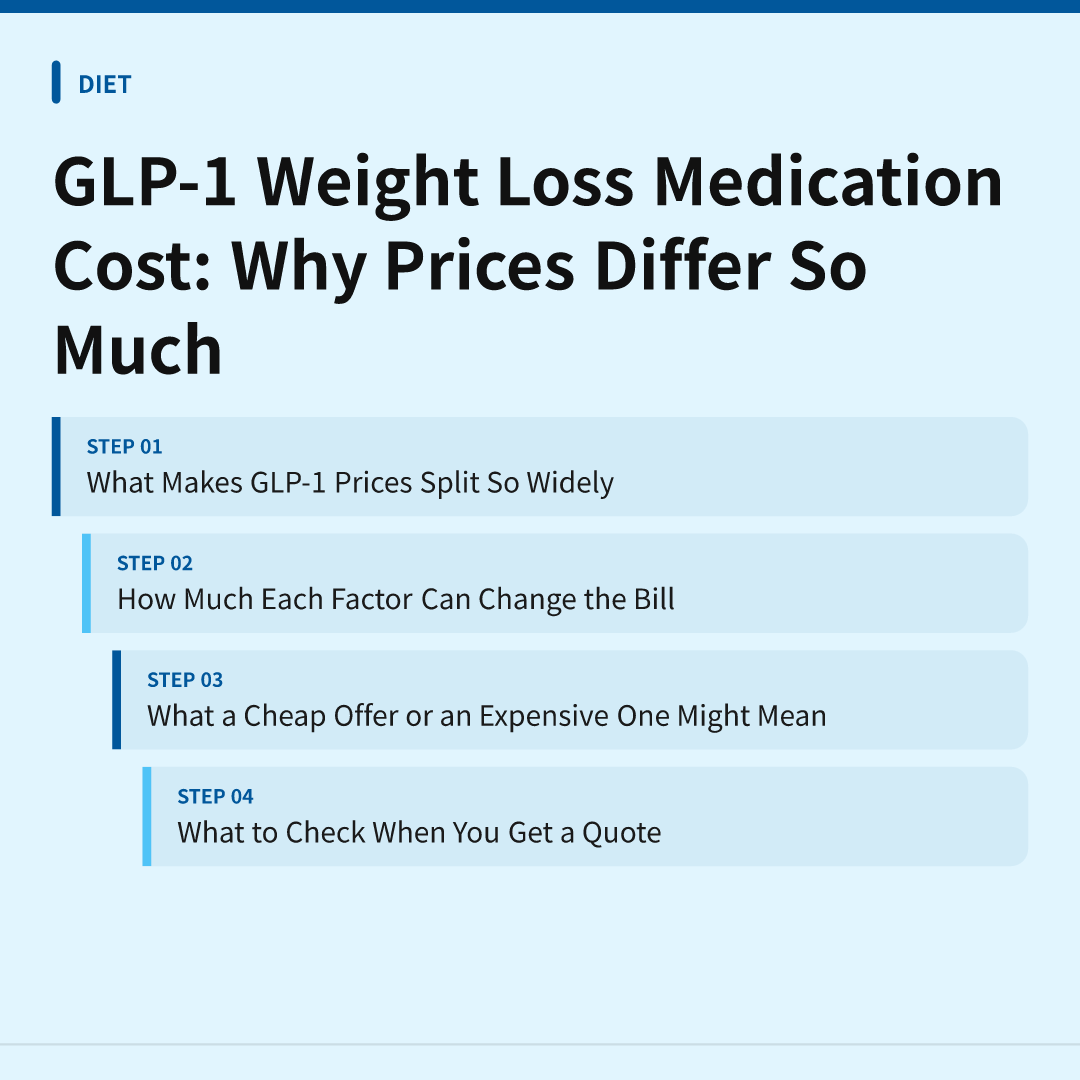
The list price for Wegovy typically runs $1,300 to $1,500 per month. Ozempic costs about $900 to $1,000 monthly. These are the numbers you’ll see without any discounts or insurance.
But almost nobody pays full retail. Manufacturer coupons, pharmacy discount programs, and insurance negotiations usually bring costs down significantly.
Think of it like hotel rooms. The rack rate is high, but most guests pay less through various booking channels.
Insurance Coverage Depends on Your Diagnosis
If you have type 2 diabetes, insurance often covers Ozempic with a standard copay, maybe $25 to $100 per month.
For weight loss alone, coverage gets tricky. Some plans cover Wegovy if your BMI (body mass index, a height-to-weight ratio) exceeds 30, or 27 with weight-related health conditions like high blood pressure.
Many insurance plans specifically exclude weight loss medications, treating them as cosmetic rather than medical. This means you’d pay out-of-pocket even with good insurance.
Compounded Versions Cost Less But Carry Risks
Compounding pharmacies create custom versions of semaglutide, often at lower prices, sometimes $200 to $400 monthly.
These aren’t FDA-approved in the same way brand medications are. Quality control varies. Dosing accuracy may differ. And insurance won’t cover compounded versions.
Some people choose this route to afford treatment. Just know you’re trading lower cost for less regulatory oversight.
What You Can Do Right Now
Check Your Insurance Formulary
Call your insurance company or check their website for the formulary, which is the list of covered medications.
Search for both Ozempic and Wegovy. Note which tier they’re on. Lower tiers mean lower copays.
Ask specifically: “Is prior authorization required?” This means your doctor must submit paperwork proving medical necessity before coverage kicks in.
Use Manufacturer Savings Programs
Novo Nordisk, which makes both medications, offers savings cards that can reduce copays to as low as $25 per month for commercially insured patients.
Visit the official Wegovy or Ozempic website. Look for the savings or support section. You’ll typically fill out a short form and receive a card to show your pharmacist.
These programs usually exclude people on government insurance like Medicare or Medicaid due to federal regulations.
Compare Pharmacy Prices
The same prescription can cost different amounts at different pharmacies, sometimes varying by hundreds of dollars.
Use GoodRx, RxSaver, or similar tools to compare local prices. Enter your medication and dosage, then check nearby pharmacies.
Mail-order pharmacies through your insurance often offer 90-day supplies at lower per-month costs than retail locations.
Common Beginner Mistakes
Assuming All Semaglutide Costs the Same
People often don’t realize Ozempic and Wegovy contain the same active ingredient but come in different dosing pens designed for different uses.
Ozempic maxes out at 2 mg weekly for diabetes. Wegovy goes up to 2.4 mg for weight loss. If your insurance covers one but not the other, your doctor might prescribe the covered version off-label.
Some patients try to save money by using Ozempic for weight loss since it’s sometimes cheaper. This works medically but may complicate insurance claims if your diagnosis doesn’t match the approved use.
Not Budgeting for the Full Treatment Duration
Semaglutide isn’t a short-term fix. Most people need to stay on it long-term to maintain weight loss.
If you can only afford three months, you might lose weight initially, then regain it after stopping. This yo-yo pattern can be harder on your body and motivation than not starting at all.
Calculate what you’ll spend over a year, not just one month. If that number feels impossible, explore other weight management approaches first.
Skipping the Prior Authorization Process
When insurance requires prior authorization, some people give up rather than completing the paperwork.
Your doctor’s office handles most of this, but you need to follow up. Authorizations can take days or weeks. If denied, you have the right to appeal.
Provide all requested documentation: BMI records, previous weight loss attempts, related health conditions. Incomplete submissions get rejected automatically.
Ignoring Patient Assistance Programs
If your income falls below certain thresholds, you might qualify for free or reduced-cost medication directly from the manufacturer.
These programs require proof of income and lack of insurance coverage. The application process takes time, but savings can be substantial.
Many people assume they won’t qualify and never apply. It’s worth 30 minutes to check eligibility.
Terms Worth Knowing
Formulary: Your insurance company’s list of covered medications, organized by cost tiers.
Prior authorization: Insurance requirement that your doctor prove medical necessity before approving coverage.
Copay: The fixed amount you pay at the pharmacy when insurance covers the rest.
Coinsurance: When you pay a percentage of the drug cost rather than a flat copay, often 20-30%.
Deductible: The amount you must spend out-of-pocket before insurance coverage begins each year.
Off-label use: When doctors prescribe a medication for a condition other than what the FDA officially approved it for, which is legal and common.
Compounded medication: Custom-made drugs mixed by specialized pharmacies, not mass-produced by pharmaceutical companies.
GLP-1 agonist: The drug class semaglutide belongs to, which mimics a natural hormone that regulates appetite and blood sugar.
Moving Forward with Your Decision
Once you understand the cost landscape, schedule a consultation with your doctor to discuss whether semaglutide fits your health situation.
Bring your insurance card and formulary information. Ask directly: “What will this cost me monthly with my current insurance?”
If cost remains prohibitive, discuss alternatives. Other GLP-1 medications like liraglutide or tirzepatide might have different coverage or pricing.
Consider whether lifestyle changes, other medications, or surgical options might achieve similar results at different price points.
Some people start with a lower dose to reduce cost while still seeing benefits. Others use the medication as a bridge while building sustainable eating and exercise habits.
If you decide to proceed, set up automatic refills and payment reminders. Missing doses reduces effectiveness and wastes money.
Resources to Explore
The official Wegovy and Ozempic websites offer savings program enrollment and detailed cost information.
GoodRx and RxSaver provide free pharmacy price comparisons without requiring insurance information.
NeedyMeds maintains a database of patient assistance programs for people who can’t afford medications.
Your state’s pharmaceutical assistance program may offer additional support. Search “[your state] prescription assistance” to find local resources.
Patient advocacy groups like the Obesity Action Coalition provide guidance on navigating insurance coverage for weight management treatments.
Telehealth companies like Ro, Hims, and Found offer semaglutide prescriptions with different pricing models, sometimes including the medication cost in monthly membership fees.
Final Thoughts on Affording Semaglutide
The cost of semaglutide for weight loss varies dramatically based on insurance, pharmacy choice, and which programs you access. Monthly expenses can range from under $50 with good coverage and manufacturer support to over $1,000 paying full retail price.
This isn’t a decision to rush. Take time to research your specific insurance coverage, compare all available discount programs, and honestly assess whether you can sustain treatment long enough to see lasting results.
Remember that medication is just one tool for weight management. It works best combined with nutrition changes and physical activity, which also cost money and time.
If semaglutide doesn’t fit your budget right now, that doesn’t mean you’re out of options. Other approaches may work better for your current situation.
Whatever you choose, make sure it’s sustainable for your health and your wallet over the long term.
Disclaimer: This article is for informational purposes only and is not a substitute for professional medical advice, diagnosis, or treatment. Please consult a licensed professional for personal health decisions.
📚 References
The official and high-authority sources below can help readers verify the context safely.