Acne Treatment for Dark Skin Without Discoloration
Many people with darker skin tones know that treating acne isn’t just about clearing breakouts—it’s about avoiding the dark marks that can linger for months afterward. This concern is real: melanin-rich skin responds to inflammation differently, often leaving behind post-inflammatory hyperpigmentation (PIH) that can be more visible than the original pimple.
What Makes Acne Treatment Different for Dark Skin
Darker skin produces more melanin, which offers natural sun protection but also means that any irritation—picking, harsh scrubbing, or aggressive ingredients—can trigger excess pigment production. Think of melanin as a defense system that sometimes overreacts: when skin senses injury, it floods the area with color to protect it, leaving a dark spot long after the acne heals.
This means acne treatment for dark skin must balance effectiveness with gentleness. Ingredients that work quickly but cause peeling or redness may clear acne but leave behind discoloration that takes longer to fade than the breakout itself.
How Effective Ingredients Work Without Causing Marks
Certain ingredients address acne while minimizing irritation. Azelaic acid reduces both bacteria and pigment production, making it a dual-purpose choice. Niacinamide calms inflammation and helps even skin tone. Salicylic acid, when used in lower concentrations (around 2%), unclogs pores without excessive dryness.
Retinoids speed cell turnover and prevent clogged pores, but they require careful introduction—starting with a low-strength formula a few nights per week reduces the risk of irritation that could trigger PIH .
Conditions That Affect Treatment Success
Frequency and formulation matter. Daily use of harsh exfoliants or layering too many actives at once increases irritation risk. Skin barrier health also plays a role: if your skin feels tight, flaky, or sensitive, it’s more prone to reactive pigmentation.
Sun exposure worsens both acne and dark spots. Daily broad-spectrum sunscreen (SPF 30 or higher) is essential, even on cloudy days, to prevent existing marks from darkening further.
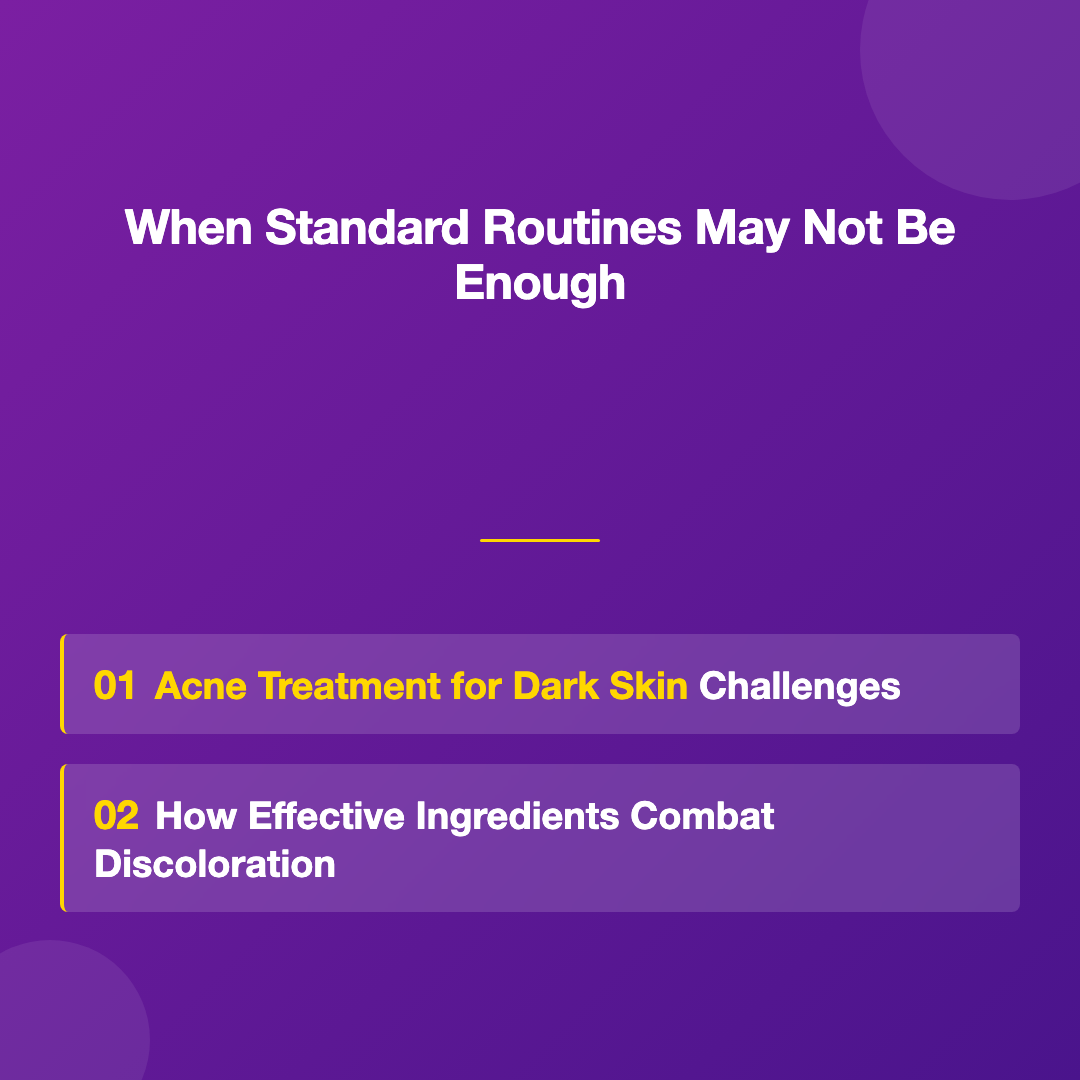
When Standard Routines May Not Be Enough
Some skin responds poorly to over-the-counter options. If acne is widespread, cystic, or leaving persistent dark spots despite gentle care, a dermatologist can offer prescription treatments—such as topical antibiotics, stronger retinoids, or combination therapies—that are tailored to your skin’s melanin response.
Professional guidance is especially important if you notice worsening discoloration, prolonged redness, or if you’re unsure which ingredients to combine safely. Individual skin varies, and what works well for one person may not suit another.
Disclaimer: This article is for informational purposes only and is not a substitute for professional medical advice, diagnosis, or treatment. Please consult a licensed professional for personal health decisions.
📚 References
The official and high-authority sources below can help readers verify the context safely.