Acne Treatment for Sensitive Skin Without Causing Irritation
“`html
More people are searching for ways to clear breakouts without triggering redness, stinging, or flaking. Sensitive skin reacts easily to common acne ingredients, making it difficult to find effective yet gentle solutions. Many individuals struggle with this balance, unsure which products will help rather than harm.
Acne treatment for sensitive skin refers to methods that reduce breakouts while minimizing irritation. This approach uses lower concentrations of active ingredients, fragrance-free formulas, and soothing components to address blemishes without compromising the skin barrier.
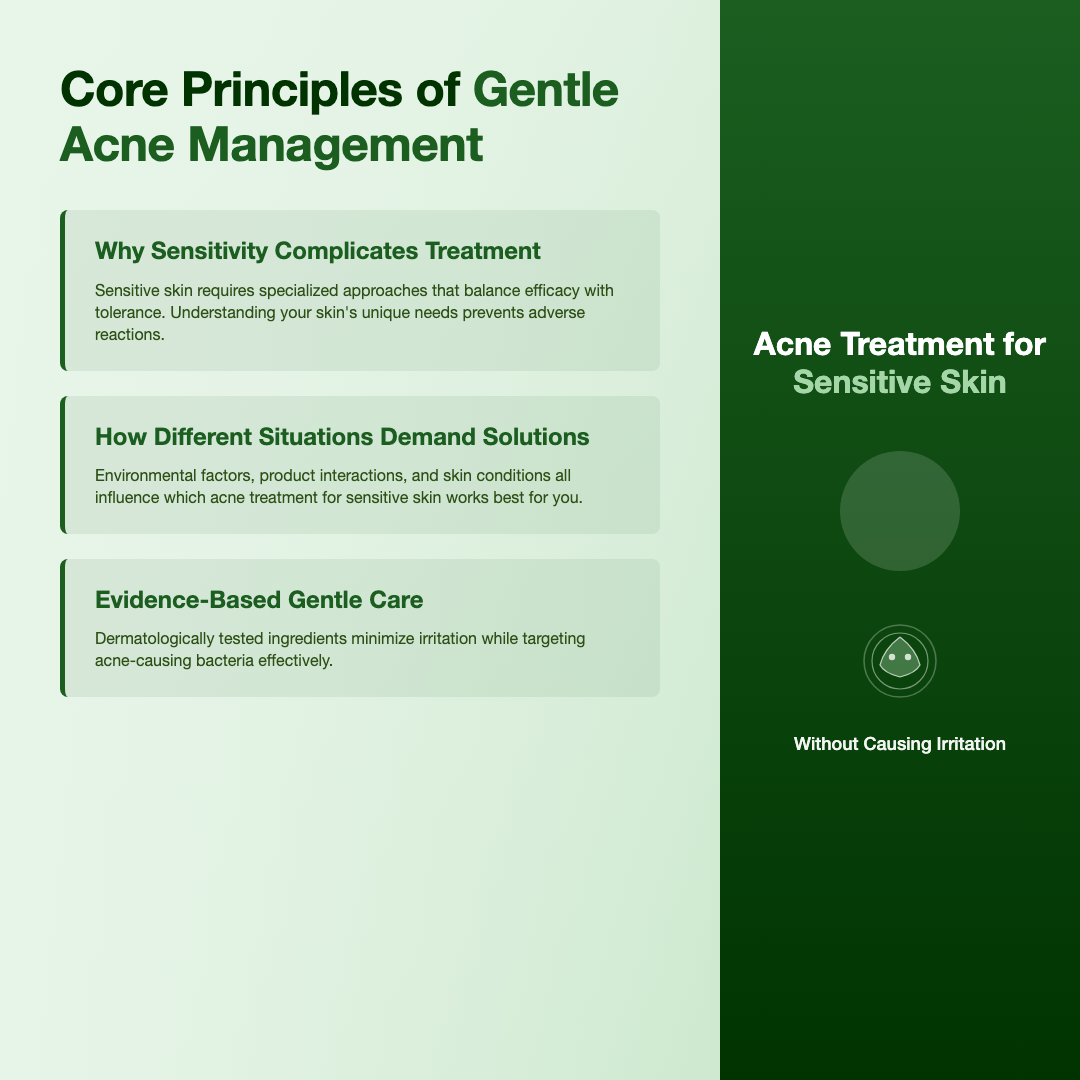
Why Sensitivity Complicates Acne Care
Sensitive skin has a weakened barrier, making it more vulnerable to inflammation. Standard acne products often contain high-strength acids or alcohol that strip natural oils, worsening both sensitivity and breakouts. Consider someone who tries a popular benzoyl peroxide wash—within days, their skin becomes red and tight, even though pimples remain. Another person might use a retinoid cream and experience peeling so severe they stop treatment entirely. Both scenarios show why tailored approaches matter.
Core Principles of Gentle Acne Management
Effective treatment balances active ingredients with barrier support. Start with a mild cleanser containing salicylic acid at 0.5% rather than 2%. Apply a lightweight, non-comedogenic moisturizer immediately after to lock in hydration. Introduce one active ingredient at a time, waiting two weeks before adding another.
Key ingredient considerations include azelaic acid for its anti-inflammatory properties, niacinamide to calm redness, and centella asiatica extract for soothing. Avoid products with fragrance, essential oils, or denatured alcohol—all common irritants.
How Different Situations Change Your Approach
| Situation | Adjustment Needed |
|---|---|
| Active breakouts with redness | Use spot treatments only; apply barrier cream around affected areas |
| Dry, flaky patches | Reduce active frequency; add occlusive layer at night |
| Hormonal acne patterns | Consider professional consultation for prescription options |
Patch testing remains essential. Apply new products to your inner forearm for 24 hours before facial use. This simple step prevents widespread reactions.
Common Misunderstandings About Sensitive Acne Care

Many believe sensitive skin cannot tolerate any active ingredients—this is not accurate. Low concentrations used correctly can be effective. Others think natural products are always safer, but botanical extracts can trigger allergies. Some assume more product equals faster results, yet overuse damages the barrier further.
Conclusion
Treating acne on sensitive skin requires patience and strategic product selection. Key points: use gentle, fragrance-free formulas with lower active concentrations; support your skin barrier with moisturizers; introduce new ingredients slowly. If you experience persistent burning, worsening breakouts, or signs of infection, consult a dermatologist. Professional guidance helps identify underlying causes and prescribe treatments suited to your specific needs.
Disclaimer: This article is for informational purposes only and is not a substitute for professional medical advice, diagnosis, or treatment. Please consult a licensed professional for personal health decisions.
“`
📚 References
The official and high-authority sources below can help readers verify the context safely.