Asian Eyelid Surgery Near Me: What to Know Before You Search Further
Typing “asian eyelid surgery near me” into a search bar usually leads to a long list of clinics, so the most useful first step is to understand what the procedure is, how approaches differ, and which questions help you compare providers. Asian eyelid surgery, often called double eyelid surgery or blepharoplasty, reshapes the upper eyelid, most commonly by creating or refining a crease. Results and suitability vary from person to person, and a licensed surgeon who examines you in person is the only one who can say what fits your anatomy.
The topic comes up often because social media, before-and-after galleries, and travel-friendly clinic marketing have made cosmetic eyelid procedures more visible than ever. Many people also search with a practical goal: they want a provider close enough for consultations and follow-up visits. Visibility, though, is not the same as suitability, and a polished website says little about a surgeon’s training.
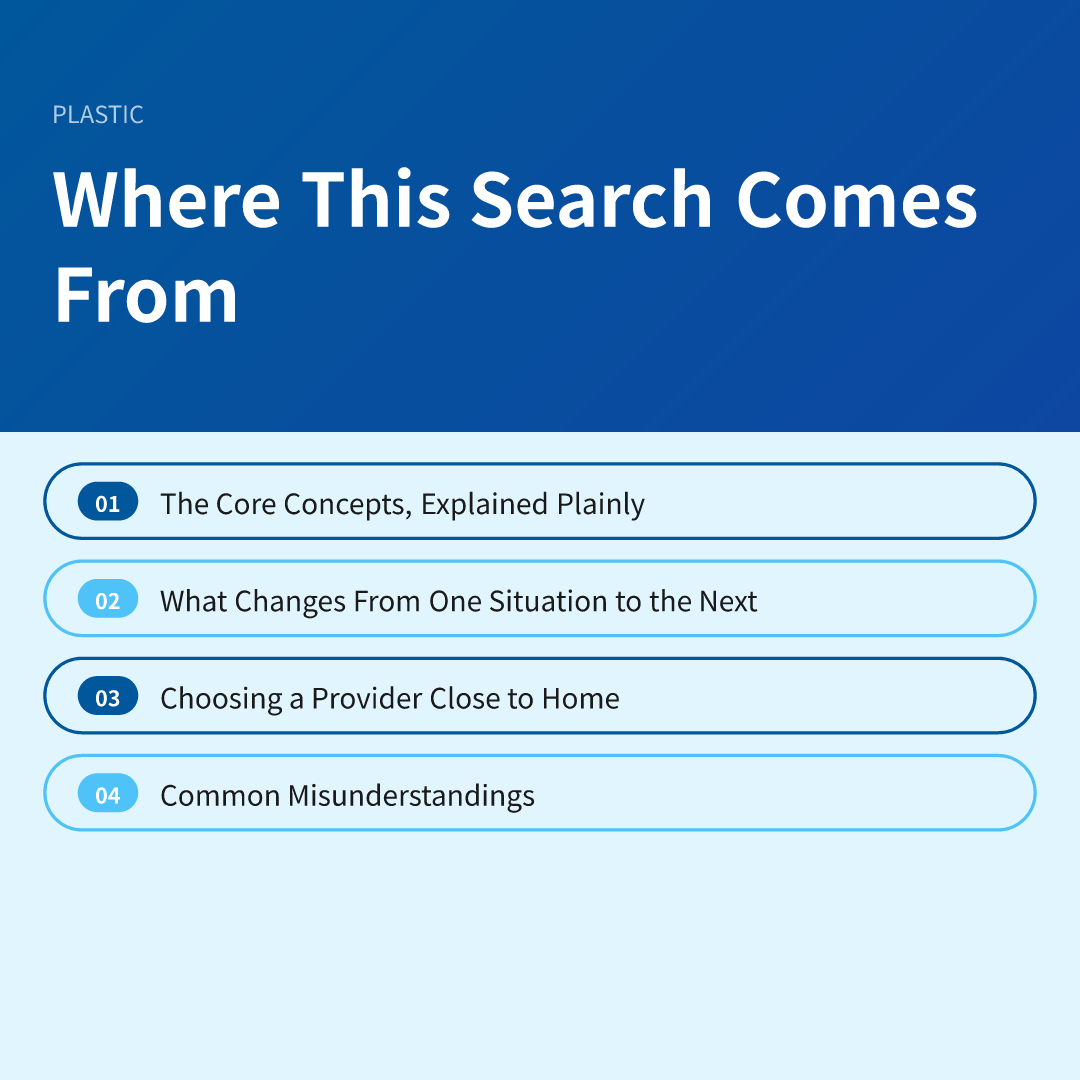
Where This Search Comes From
People reach this topic from quite different starting points. Some want a visible upper eyelid crease because they have a single lid, or a crease that looks faint or uneven. Others feel their lids look heavy or tired, or find that eye makeup and eyelid tape are a daily hassle.
Here are two hypothetical situations, written as general illustrations and not as real patient accounts.
Situation one: the tape-and-glue routine
Imagine someone who has used eyelid tape for years to create a crease and is curious about a more lasting option. Their main questions are likely to be about how natural the result looks, how much recovery time to plan for, and whether the procedure is reversible. These are reasonable questions to bring to a consultation, and a surgeon can explain what is and is not realistic for that person’s eyelid structure.
Situation two: heaviness and skin fold concerns
Now imagine someone in midlife whose upper lids feel heavy, with skin that folds over the lash line. Their goal may be less about creating a crease and more about addressing excess skin. This can overlap with functional concerns, so a medical evaluation matters. A clinician can distinguish a cosmetic preference from a condition, such as a drooping lid, that might need a different approach.
The Core Concepts, Explained Plainly

Upper eyelid surgery for people of Asian descent is not one single operation. It is a family of techniques, and the right one depends on eyelid anatomy, skin thickness, fat distribution, and the look a person wants. Anatomy differs from one individual to another, which is why general descriptions can only go so far.
Main technique categories
Surgeons commonly describe three broad approaches. The names and details vary by practice, so treat the table below as a general orientation and not a recommendation.
| Approach | General idea | Often discussed in relation to | Points to raise with a surgeon |
|---|---|---|---|
| Suture (non-incisional) method | Fine stitches under the skin create a crease without a long incision | Thinner lids with little excess skin or fat | How long the crease may hold and what happens if it loosens |
| Partial incision method | Small incisions allow limited fat removal and crease setting | Moderate fullness in the lid | Scar placement and how the surgeon decides between options |
| Full incision method | A longer incision allows skin, fat, and muscle adjustments | Thicker lids or more excess skin | Expected recovery, scar visibility, and crease height choices |
Related terms you may see include epicanthoplasty, which adjusts the inner corner of the eye, and ptosis correction, which addresses a lid that sits low. These are separate procedures that a surgeon may discuss alongside or instead of a basic crease procedure.
Crease design is a decision, not a default
Crease shape and height are among the most discussed choices. Some people prefer a crease that tapers toward the inner corner, while others prefer one that runs more parallel to the lash line. Many surgeons use photos and in-person markings to talk through options, and it is fair to ask to see examples of work on patients with similar eyelid characteristics.
What Changes From One Situation to the Next
Several factors shape both the plan and the experience. Skin thickness, fat volume, the strength of the muscle that lifts the lid, and personal healing patterns can all influence how a procedure is planned and how recovery feels. Because of this, two people who have “the same surgery” may have noticeably different experiences.
Recovery expectations
Swelling and bruising are commonly described after eyelid procedures, and the time it takes to settle differs between people and between techniques. Final appearance is often described as taking a while to emerge as swelling fades. Your surgeon’s written aftercare instructions, not general articles, should guide what you do during healing.
Risks and limits worth understanding
Like any surgery, eyelid procedures carry risks. General medical sources describe possibilities such as infection, bleeding, asymmetry, scarring, dry or irritated eyes, and the need for revision. The American Society of Plastic Surgeons offers consumer-facing information on eyelid surgery and on choosing a surgeon at plasticsurgery.org, which is a reasonable place to start your own reading. Nobody can promise a particular outcome, and a trustworthy provider will talk openly about limitations.
Choosing a Provider Close to Home
Proximity is convenient, especially for follow-up visits, but it should not be the deciding factor. A few things are worth verifying independently of any clinic’s own marketing.
- Licensing and training: Confirm credentials through your local medical board or the relevant national specialty organization, not just the clinic’s website.
- Relevant experience: Ask how often the surgeon performs eyelid procedures for patients with features like yours, and what they do when results need adjustment.
- Facility standards: Ask where the procedure takes place and what anesthesia arrangements are used, and who provides them.
- Transparent pricing: Costs vary widely by region and technique, so ask what is and is not included, such as follow-up visits or revision policies.
- Realistic photos: Be cautious about galleries that show only dramatic results or heavily edited images.
It is also worth being wary of high-pressure sales tactics, limited-time discounts, or consultations that skip a real examination. A good consultation tends to include a discussion of your goals, your medical history, and the downsides as well as the benefits. If you feel rushed, that is useful information.
Common Misunderstandings
A few ideas circulate widely and deserve a closer look.
“It is a quick, simple fix”
Some procedures are described as minimally invasive, and that wording can make them sound trivial. Even smaller techniques involve healing time, and any procedure can have complications. Treat marketing phrases like “no downtime” with caution and ask for specifics.
“The result will look like the photo I brought”
Reference photos help communicate taste, but your own anatomy limits what is achievable. A surgeon who says a particular look is unlikely for your lids is giving you useful information, not being difficult.
“Suture methods and incision methods are interchangeable”
They are not. Each has different trade-offs involving durability, recovery, and suitability for different eyelid types. Which one makes sense is a clinical judgment made after an exam.
“Cheaper or closer is just as good”
Price and distance are legitimate practical concerns, but they say nothing about skill or safety. Comparing several licensed providers before deciding is a sensible habit.
“Any eyelid change is purely cosmetic”
Sometimes a drooping lid or sudden change in the eyelid can relate to a health issue. If you notice a recent change in how your lids sit, vision changes, pain, or swelling that seems unusual, seek medical evaluation rather than assuming it is a cosmetic matter.
Conclusion
When you search for asian eyelid surgery near me, the clinic list is only the beginning. The more important work is understanding the technique options, verifying a surgeon’s credentials, and going into consultations with clear questions.
- Asian eyelid surgery covers several techniques, and the right one depends on your individual anatomy and goals.
- Every surgery has risks and limits, so look for providers who discuss them openly and explain recovery in specifics.
- Verify credentials independently, compare more than one consultation, and avoid pressure to decide quickly.
Consider seeing a licensed medical professional promptly if you have a sudden change in eyelid position, vision changes, eye pain, ongoing dryness or irritation, a history of eye conditions, or a bleeding or healing disorder. If you are already considering surgery, a consultation with a board-certified plastic surgeon or a qualified oculoplastic specialist in your area is the appropriate way to find out whether a procedure suits you.
Disclaimer: This article is for informational purposes only and is not a substitute for professional medical advice, diagnosis, or treatment. Please consult a licensed professional for personal health decisions.
Related reading: Breast Augmentation Surgery Cost: The Price on the Quote vs. What You Actually Pay