Botox for Forehead Lines Cost: Why Prices Vary So Much
If you have collected two or three quotes and wondered why they look nothing alike, you are not imagining things. The botox for forehead lines cost people see advertised can differ a lot from one clinic to the next, and the gap usually comes from how the price is built rather than from one place being "right" and another "wrong." This article explains the main factors behind the spread, speaks in general ranges rather than fixed figures, and ends with a checklist you can bring to a consultation.
One caution up front: any price you read online is only a rough guide. Your actual quote depends on your face, your goals, and the clinic's pricing model, and only a licensed provider who examines you can give you a real figure.
The Big Factors That Move the Price

Forehead treatment is rarely priced from a single universal menu. Most quotes come from a handful of building blocks, and a change in any one of them can shift the total noticeably.
How the clinic charges: per unit, per area, or per visit
Some clinics price by the unit of product used, while others quote a flat fee per treatment area or per session. A per-unit price can look low until you learn how many units your plan is expected to need. A flat area fee can look high but may already bundle in everything. Comparing a per-unit number with a per-area number without translating them is one of the most common reasons quotes seem to contradict each other.
The amount of product your plan involves
The forehead is often treated together with neighboring areas, such as the frown lines between the brows or the outer corners of the eyes. The more areas included, the higher the total tends to be. How much product is appropriate is a clinical decision made by the treating provider based on your muscle strength, brow position, and goals, so it is not something to guess from a website.
Who performs the treatment
Providers differ in training, experience, and licensing, and clinics differ in how they set fees accordingly. Rules about who may perform injections vary by state and country, so it is reasonable to ask about the provider's license and training. According to the U.S. Food and Drug Administration, botulinum toxin products are regulated prescription products, which is one reason the treating setting matters.
Location and type of practice
Rent, local demand, and overhead all feed into pricing. A clinic in a major city center may charge differently from one in a smaller town, and a medical practice may price differently from a spa-style setting that operates under medical supervision. None of these labels alone tells you about quality.
How Much Each Factor Can Change the Number
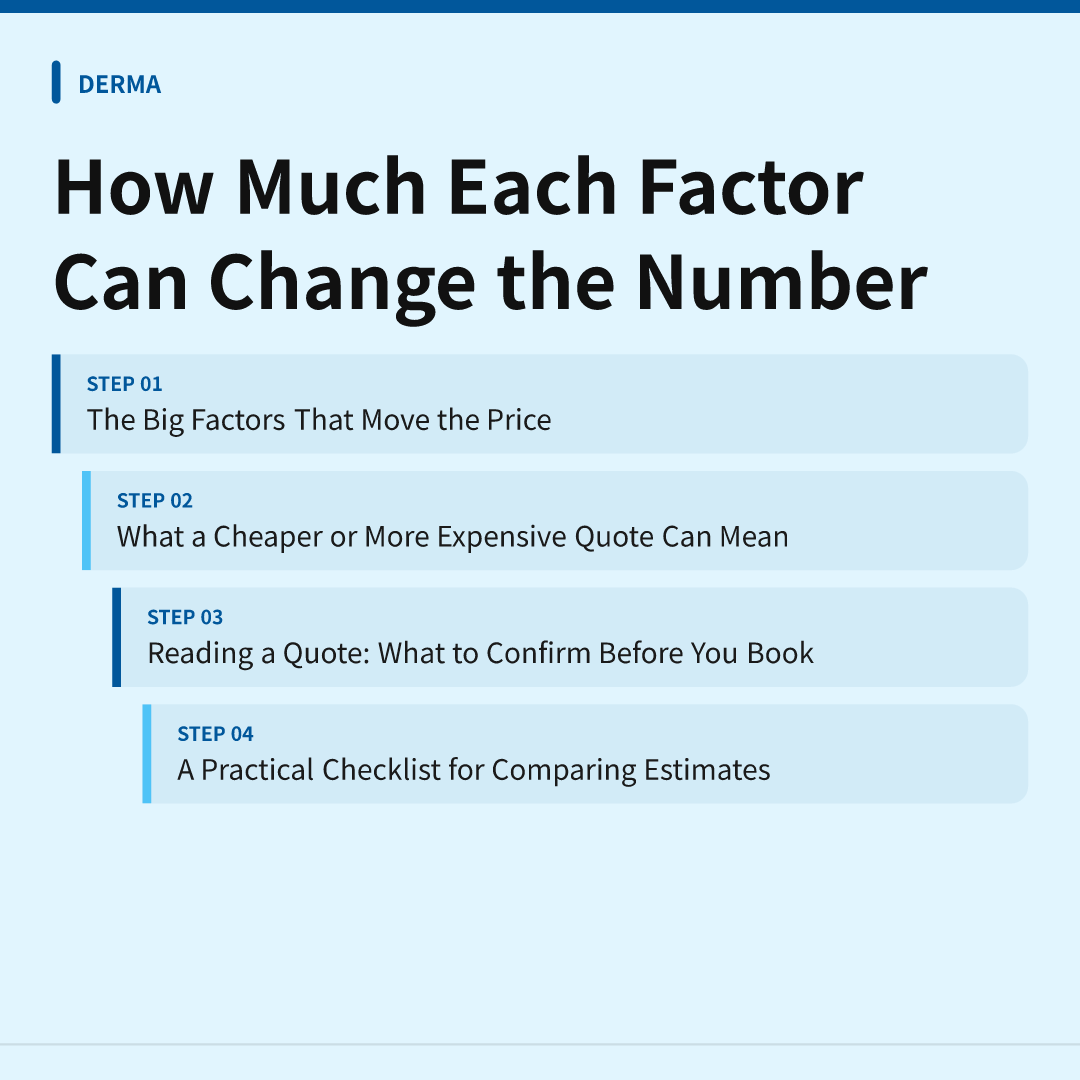
Because exact figures vary by region and change over time, it helps to think in terms of how much weight each factor tends to carry rather than chasing a precise dollar amount.
- Pricing model: Often the biggest source of confusion. Two clinics may charge a similar total for the same plan while quoting very different headline numbers.
- Treatment area size: Treating the forehead alone generally costs less than combining it with other upper-face areas.
- Individual anatomy: People with stronger forehead muscles or deeper lines may be given a different plan than someone with subtle lines, which changes the total.
- Provider experience: Higher fees sometimes reflect greater experience, though a higher price does not automatically mean better results.
- Geography: Regional cost differences can be meaningful, and they tend to be reflected across all services at a practice.
- Follow-up policy: Whether a check-in or small adjustment is included can alter the real cost over the whole process.
Treatment is also not a one-time purchase for most people. The effect of botulinum toxin is generally temporary, and many people return periodically to maintain their results, so the cost over a year can matter more than the cost of a single visit. How long effects last varies from person to person.
What a Cheaper or More Expensive Quote Can Mean

It is tempting to read price as a quality score. In practice, a low or high quote is only a starting point for questions, not an answer.
When a lower price may be reasonable
A lower quote can reflect lower overhead, a promotional offer, a first-visit discount, or a simple per-unit model that is clear about what is included. Some clinics also price competitively because they treat many patients. None of that is a red flag on its own.
When a lower price deserves a closer look
A price that is far below what other licensed clinics in your area quote may be worth examining. Reasonable questions include what product is being used, whether it is sourced through proper channels, who is performing the injection, and what is excluded from the price. The FDA has warned the public in general terms about counterfeit or unapproved botulinum toxin products, so confirming the product and the provider is a sensible step rather than an insult to the clinic.
When a higher price may or may not add value
A higher fee can reflect a more experienced provider, longer consultations, included follow-up, or a more upscale setting. It can also reflect branding and location alone. Ask what specifically you are paying more for, and decide whether those things matter to you.
A price is only comparable when you know what it covers. Two numbers that look different may describe two different services.
Reading a Quote: What to Confirm Before You Book

A written or clearly stated estimate makes comparison much easier. Many people find it useful to ask the same questions at every clinic so the answers line up side by side.
Ask about the product and the provider
Ask which botulinum toxin brand is used and who will be performing the treatment, including their license type. According to the FDA, approved botulinum toxin products are prescription medicines, so a legitimate clinic should be comfortable answering questions about the product and its sourcing.
Ask what the estimate includes
Find out whether the consultation is free or charged, whether taxes or fees are added later, and whether a follow-up visit is part of the price. Some clinics include a short check-in; others charge for any adjustment. Knowing this ahead of time prevents surprises.
Ask about risks and suitability
Cost is only one part of the decision. Reactions and side effects vary from person to person, and the treating provider can explain what is common, what is uncommon, and whether this approach suits your situation. Possible concerns people often raise include a heavy-feeling brow or uneven results, which is worth discussing with the provider before any decision. This treatment is not suitable for everyone, so sharing your medical history, medications, and any pregnancy or breastfeeding status matters. Do not skip that conversation to save money.
When to seek medical care after treatment
If you notice difficulty swallowing or breathing, widespread weakness, vision changes, or any symptom that feels severe or unusual after a treatment, seek urgent medical care. For milder concerns, contact the treating clinic and ask what follow-up they offer.
A Practical Checklist for Comparing Estimates
When you are weighing several quotes for botox for forehead lines cost, a short list keeps the comparison fair. Bring it to each consultation and write down the answers.
- Is the price quoted per unit, per area, or per visit, and what is the estimated total for my plan?
- Which areas are included, and would additional areas change the total?
- Which product brand is used, and where does the clinic source it?
- Who performs the treatment, and what is their license and training?
- Is the consultation fee separate, and is it applied to treatment if I proceed?
- Is a follow-up or touch-up visit included, and under what conditions?
- What are the clinic's policies on cancellation, refunds, or adjustments?
- How often do people in my situation typically return, and what would the yearly cost look like?
- What risks are relevant to me, and what should I do if I have concerns afterward?
- Are there any financing, membership, or package terms I should read carefully before signing?
Used consistently, these questions turn a confusing set of numbers into something you can actually compare. The most useful figure is usually the full cost of your plan from a qualified provider, not the lowest headline price, and your own consultation is the only place to get it.
Disclaimer: This article is for informational purposes only and is not a substitute for professional medical advice, diagnosis, or treatment. Please consult a licensed professional for personal health decisions.
Related reading: Filler for Smile Lines (Nasolabial Folds): What the Process Looks Like