Breast Implant Complications and Risks: Who Should Wait
No single choice about breast implants fits everyone, and the breast implant complications and risks that matter most depend heavily on your health, your timing, and your goals. Because of that, this article starts with the people who are often advised to postpone surgery, then covers situations where it may be possible with conditions, and finally what careful planning tends to involve. Nothing here is a diagnosis or a recommendation for any individual; it is general information to help you prepare better questions for a licensed surgeon.
Why the "who should wait" question comes first
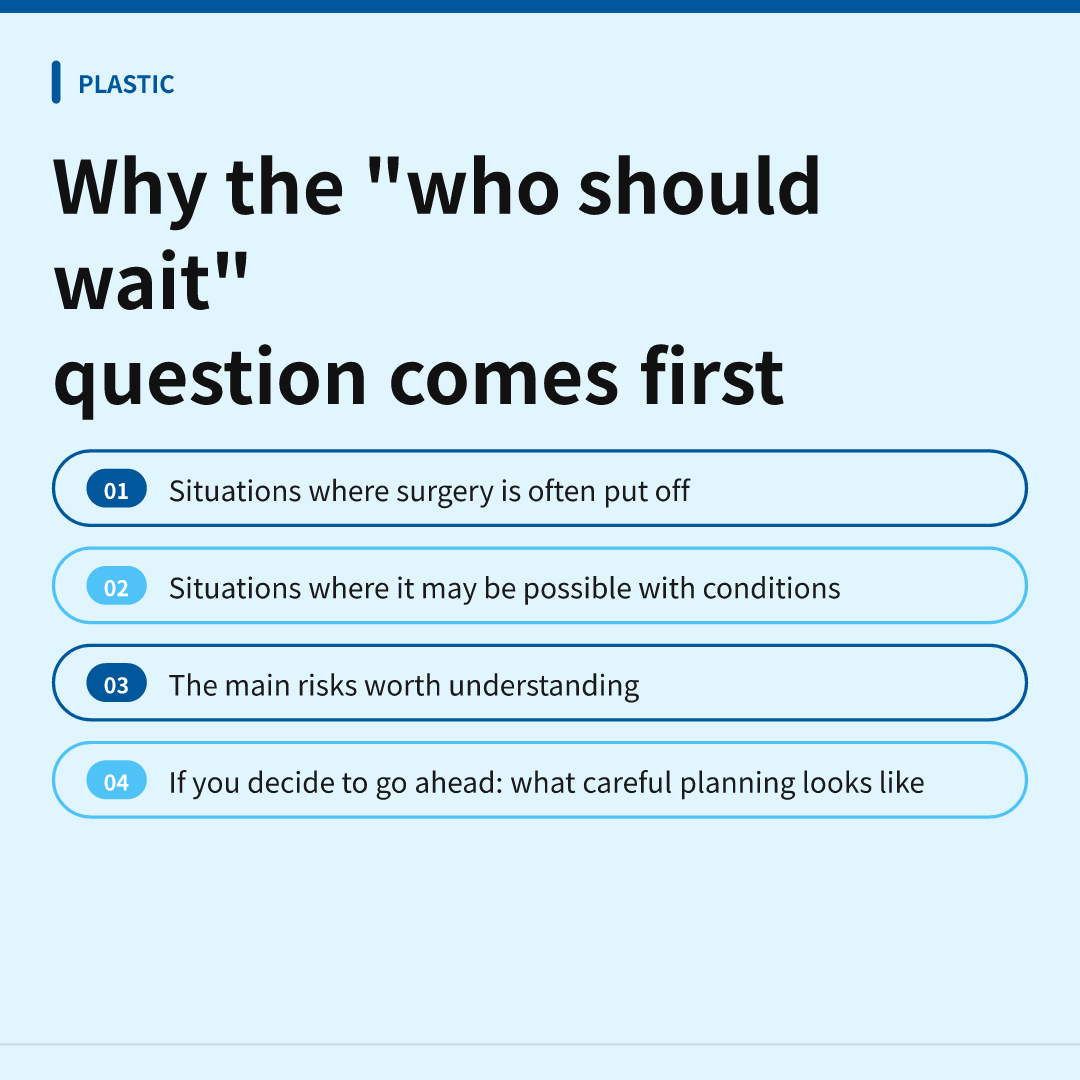
Most conversations about implants begin with shapes, sizes, and recovery photos. The less glamorous part, who is a poor candidate right now, tends to get skipped. That is a problem, because many of the problems people later regret are tied less to the device itself than to the timing or the health situation at the moment of surgery.
According to the U.S. Food and Drug Administration (FDA), breast implants are not considered lifetime devices, and further procedures are common over time. Some people need revision, removal, or replacement. Knowing that going in changes how you weigh the decision, especially if you are already dealing with something else that affects healing.
Situations where surgery is often put off
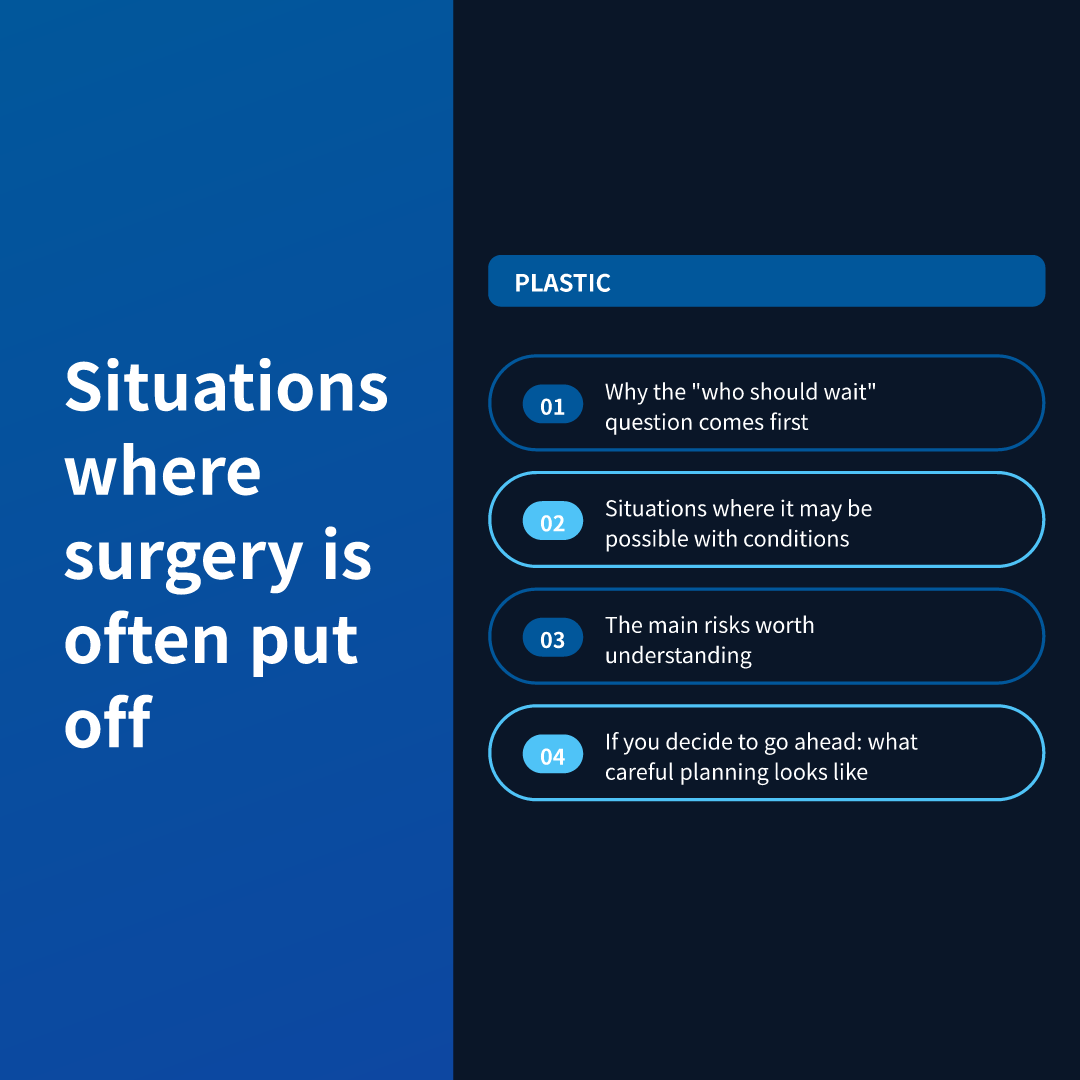
Surgeons commonly advise delaying elective breast augmentation in certain circumstances. The reasons below explain why, rather than just listing them. Whether any of these applies to you is a question for a licensed surgeon who can review your history.
Pregnancy and breastfeeding
Pregnancy and breastfeeding change breast tissue in ways that are hard to predict. Size, shape, and skin tension shift, so a result planned during this period may not match how the breasts settle afterward. Anesthesia and medications also raise separate questions during pregnancy. Many surgeons prefer to wait until breastfeeding has ended and the breasts have had time to return to a stable state. If you are pregnant, trying to conceive, or nursing, say so at the first consultation.
Active infection or unresolved skin problems
An infection elsewhere in the body, or a skin condition on or near the chest, can raise the chance that bacteria reach the surgical site. An implant is a foreign object, and infections around implants can be difficult to clear without removing the device, according to general FDA patient information. For that reason, active infections are usually treated and resolved before an elective procedure is scheduled.
Uncontrolled medical conditions
Conditions that affect healing or anesthesia risk, such as poorly controlled diabetes, blood clotting disorders, serious heart or lung disease, or autoimmune disease flares, are commonly reasons to pause. Healing is a whole-body process. If your underlying condition is unstable, a surgeon may want it managed first, often in coordination with your primary care clinician or specialist.
Smoking and nicotine use
Nicotine narrows blood vessels, and reduced blood flow can interfere with wound healing. Surgeons frequently ask patients to stop nicotine products well before and after surgery, and that includes vaping and nicotine replacement in some practices. The exact timeline is set by your surgical team, so ask them directly instead of relying on a general rule.
Unrealistic expectations or pressure from others
This one is not physical, but it matters. If the main driver is pressure from a partner, social media, or a hope that surgery will fix an unrelated source of distress, many surgeons will slow down the process. Persistent distress about appearance, in particular, can be worth discussing with a mental health professional before deciding. That is not a judgment; it is part of making a choice you are likely to feel steady about later.
Breasts or body still developing
Implants are generally approved for adults of a certain age, and breast tissue continues to change for some time after puberty. The FDA labels breast implants with minimum age ranges that differ by implant type. A surgeon can explain how those labeled ranges apply to you.
Situations where it may be possible with conditions
"Conditional" does not mean "cleared." It means a surgeon may be willing to proceed once specific questions are answered. These are the situations where the details matter most.
Family history of cancer or prior breast problems
A personal or family history of breast cancer, prior breast surgery, or abnormal imaging does not automatically rule out implants, but it changes the planning. Implants can make some imaging harder to interpret, so surgeons and radiologists often discuss screening plans in advance. According to the National Cancer Institute, women with implants can still have mammograms, though the technician needs to know about the implants beforehand and may use additional views.
Autoimmune or connective tissue conditions
Some people with autoimmune or connective tissue conditions ask about implants. The FDA has noted that some patients report systemic symptoms they associate with their implants, sometimes called breast implant illness, and that the cause and relationship remain under study. Because the science is not settled, this is a conversation to have with both your surgeon and the specialist who manages your condition, so the decision reflects your whole picture.
Medications and supplements that affect bleeding or healing
Blood thinners, anti-inflammatory pain relievers, some herbal supplements, and certain immune-suppressing or hormonal medications can affect bleeding or recovery. Do not stop or change any prescribed medication on your own. Your surgeon and the prescribing clinician or pharmacist can decide together what, if anything, should be adjusted and when.
Very thin tissue or significant weight changes
If there is little natural breast tissue covering the implant, the edges or ripples may be more noticeable over time. Major weight loss or gain after surgery can also alter the look. Some surgeons prefer your weight to be stable before operating. Implant placement, size, and material choices are individualized, and a surgeon can explain the trade-offs for your anatomy.
Plans for future pregnancy
Having implants does not necessarily prevent a future pregnancy, but pregnancy-related breast changes can alter the result. If you expect to have children, ask what that might mean for your outcome and whether timing the surgery afterward makes sense.
The main risks worth understanding
Every surgery carries general risks such as bleeding, infection, reactions to anesthesia, and scarring. Implants add device-specific concerns. The FDA's patient information for breast implants describes several of these, and the likelihood of each varies by person, implant type, and technique.
- Capsular contracture: scar tissue around the implant can tighten, causing firmness, shape changes, or discomfort. It is one of the more commonly discussed reasons for additional surgery.
- Implant rupture or leakage: shells can wear or tear over time. Silicone gel implant ruptures may be "silent," meaning there are no obvious symptoms, which is why the FDA has described periodic imaging recommendations for silicone gel implants.
- Changes in sensation: nipple or breast sensation may increase, decrease, or change, sometimes temporarily and sometimes longer.
- Asymmetry, rippling, or position changes: implants can shift or look different from side to side.
- Breast implant-associated anaplastic large cell lymphoma (BIA-ALCL): the FDA has described this as a rare type of immune system cancer linked mainly to textured implants. It often shows up as persistent swelling or fluid around the implant, long after surgery.
- Need for reoperation: many people eventually have revision, replacement, or removal, for medical or cosmetic reasons.
If you decide to go ahead: what careful planning looks like
Preparation is mostly about choosing the right professional and asking the right questions. None of this removes risk, but it can help you make a more informed decision.
Check the surgeon and facility
Look for a surgeon certified in plastic surgery by a recognized board in your country, and confirm that the facility is accredited and equipped to handle emergencies. The American Society of Plastic Surgeons offers general guidance on how to verify credentials. Be cautious about any provider who minimizes risks or rushes you to book.
Read the patient decision materials
The FDA has said that patients considering certain breast implants should receive a decision checklist and device information so they can review risks before surgery. Read it, take it home, and take time before signing. A good practice will not pressure you to decide on the day.
Understand the implant itself
Ask which type is being proposed (saline or silicone gel, smooth or textured), who manufactures it, and how you will be given the device identification card. Keep that record. If you ever need follow-up or a recall question arises, knowing exactly which device you have is very helpful.
Plan for follow-up, not just surgery day
Implants usually call for ongoing monitoring. Ask what follow-up visits are expected, whether imaging is recommended for your implant type, and what it would cost if revision becomes necessary. Many people underestimate the long-term financial side.
Related reading: Breast Augmentation Recovery Time: What Each Stage Feels Like
Know the warning signs
Contact your surgeon or seek urgent care promptly if you notice fever, spreading redness, increasing pain, unusual swelling, fluid collecting around one breast, a sudden change in shape or firmness, or wound problems. Do not wait for a scheduled visit if something feels clearly wrong. For severe symptoms such as trouble breathing or chest pain, emergency services are the right call.
Frequently asked questions
Can I have a mammogram if I have implants?
Yes, people with implants can generally still have mammograms, but you should tell the imaging facility about your implants when booking. Additional views may sometimes be taken so that more of the breast tissue can be seen. Ask your clinician how implants might affect your personal screening plan.
Do implants need to be replaced after a certain number of years?
Implants are not designed to last forever, and there is no single replacement date that applies to everyone. The FDA notes that additional surgery is common over a person's lifetime. Whether and when to replace an implant depends on its condition, your symptoms, and your preferences, so it is best discussed with your surgeon.
Does breast implant illness mean implants cause systemic disease?
The science is not settled. The FDA has acknowledged that some people report a range of symptoms they connect to their implants, and that more research is needed to understand any relationship. If you have unexplained symptoms, a clinician can help evaluate other possible causes and talk through your options.
What should I say at the consultation so the surgeon can assess my risk accurately?
Share everything that could affect safety or healing, even if it seems unrelated. Be ready to discuss:
- Any current or possible pregnancy, plans to become pregnant, and breastfeeding status
- All prescription medicines, over-the-counter products, and supplements you use
- Past surgeries, anesthesia reactions, and bleeding or clotting problems
- Chronic conditions such as diabetes, autoimmune disease, heart or lung disease
- Personal or family history of breast cancer or abnormal breast findings
- Smoking, vaping, or other nicotine use
- Allergies, including to latex, adhesives, or antibiotics
- Recent infections or skin problems, and recent large weight changes
- Your expectations, and any emotional distress about your appearance
The more complete this information is, the better a licensed professional can judge breast implant complications and risks for your situation.
Disclaimer: This article is for informational purposes only and is not a substitute for professional medical advice, diagnosis, or treatment. Please consult a licensed professional for personal health decisions.