Can Adults Get Braces at Any Age? What to Know
Maybe you are scrolling through your phone at midnight, noticing the crowded lower teeth you have hidden in photos for years, and wondering whether that window closed in high school. It did not, at least not automatically. Adults can often get braces at any age, as long as their teeth, gums, and supporting bone are healthy enough, and a dentist or orthodontist decides what fits each person.
Is there an age limit for braces?
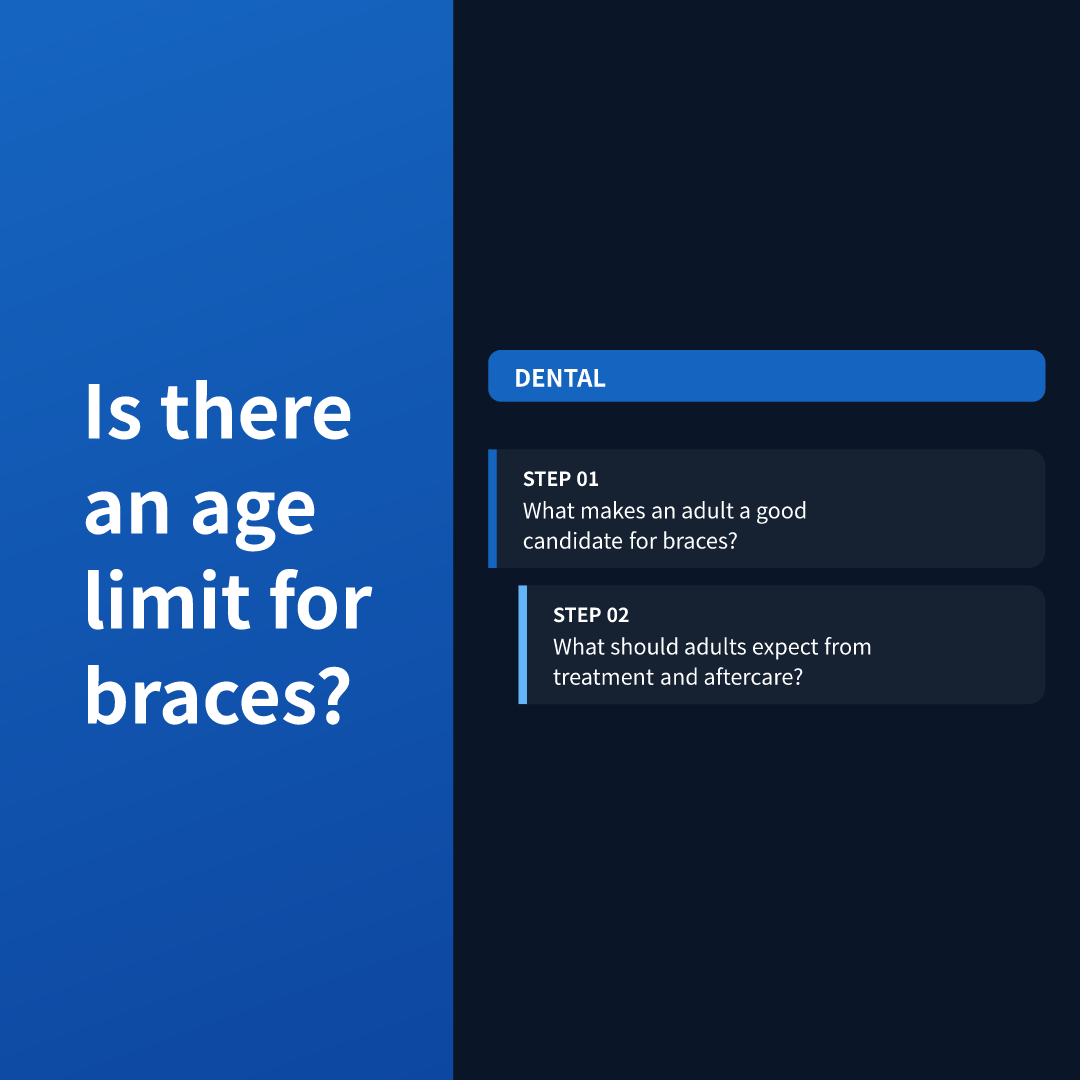
No, there is generally no upper age limit for orthodontic treatment. According to the American Association of Orthodontists' general public guidance, adults make up a meaningful share of orthodontic patients, and teeth can move at many stages of life. What matters more than the number on your birth certificate is the condition of your mouth.
Teeth move because of a biological process in which the bone around them remodels in response to steady, gentle pressure. That process continues in adulthood, though it can behave differently than in a growing teenager. Adult bone tends to be denser, so some people find that treatment moves along at a different pace than they expected.
Why adults often look into it later
Many adults postponed treatment for practical reasons. Cost, time, and the worry about looking like a teenager with metal on their teeth are common hesitations. Others had braces in their youth, did not keep up with retainers, and noticed their teeth shifting back over the years.
Some people come to it because of function rather than looks. Crowding can make cleaning between teeth harder, and a bite that does not line up well may cause uneven wear. A dental professional can tell you whether your situation is mainly cosmetic, mainly functional, or a mix of both.
Where age can still matter
Age itself is rarely the barrier, but age-related health conditions can be. Gum disease, bone loss, and certain medical conditions or medicines can affect whether teeth can be moved safely. The American Dental Association's public information notes that healthy gums and supporting structures are important for orthodontic care.
That is why a thorough exam usually comes first. Orthodontists commonly look at X-rays, gum health, and existing dental work before proposing anything. If something needs attention first, such as a cavity or inflamed gums, that is usually sorted out before teeth are moved.
What makes an adult a good candidate for braces?
A good candidate generally has reasonably healthy gums, enough supporting bone, and a willingness to follow the treatment plan. Having every tooth perfectly sound is not required, since dental work like fillings and crowns can often be accommodated. The orthodontist weighs the whole picture rather than any single factor.
Commitment counts more than most people expect. Appointments, cleaning routines, and wearing retainers afterward are all part of the process. Adults who treat it as a project with a realistic timeline tend to be better prepared for the experience.
Health factors an orthodontist may ask about
Expect questions about your general health and history. The following topics often come up during an evaluation:
- Gum health: Active gum disease is typically addressed before tooth movement begins.
- Medications: Some medicines can affect bone or gum tissue, so share a full list.
- Jaw joint concerns: Clicking, pain, or limited opening are worth mentioning.
- Past dental work: Crowns, bridges, and implants can change what is possible.
- Pregnancy or planned pregnancy: This may affect timing and the type of imaging used.
None of these automatically rules anyone out. They simply help the clinician plan carefully and flag anything that needs coordination with your general dentist or physician.
Common options for adults
Adults usually have more than one route to consider. Traditional metal braces, tooth-colored ceramic braces, braces placed behind the teeth, and removable clear aligners are all widely discussed options. Each has trade-offs involving visibility, comfort, upkeep, and how well it suits a particular bite problem.
Clear aligners are popular with adults partly because they are less noticeable, but they depend heavily on being worn consistently. Some more complex bite issues may be better handled with fixed braces. Which approach makes sense is something to settle with a professional who has examined your teeth in person.
Related reading: Clear Aligners vs Metal Braces: What Should Guide Your Decision?
Exceptions worth knowing about
Some situations call for extra caution or a different plan. Significant bone loss from gum disease, certain jaw discrepancies, or complex medical conditions may limit what braces can achieve alone. In a few cases, orthodontics is combined with other treatment, and in others a clinician may advise against moving teeth at all.
It is also worth being wary of any provider who promises a specific result without a proper exam. Results vary from person to person, and an honest consultation should include limits as well as possibilities.
What should adults expect from treatment and aftercare?
Expect a process that unfolds gradually, with the length depending on your teeth, your goals, and the method chosen. Many adults find treatment takes a similar order of time as it does for teens, though individual plans differ widely. Your orthodontist can give a rough estimate after examining you, but it remains an estimate.
Mild soreness after adjustments is commonly reported, and eating habits often change for a while. Cleaning around braces takes more attention, because food and plaque can collect around brackets and wires. The American Dental Association's general guidance emphasizes that good oral hygiene matters throughout orthodontic care.
Retainers are part of the deal
Teeth tend to drift back toward old positions once active treatment ends. This is why retainers are a standard part of orthodontic care, and many adults are advised to wear them long term. How and when to wear one is decided by your orthodontist, so follow the instructions you are given at the clinic.
Skipping this step is a common reason people end up needing work again. If you had braces years ago and noticed changes, mention that history during your consultation, since it affects how a new plan is designed.
Cost, time, and realistic expectations
Costs vary considerably by region, provider, and treatment type, and dental insurance coverage for adult orthodontics differs from plan to plan. Many practices offer payment arrangements, so it is reasonable to ask for a written breakdown before committing. Comparing a couple of consultations can help you feel more confident in your choice.
Keep expectations grounded as well. Straighter teeth may make cleaning easier and improve appearance, but no clinician can promise a particular outcome. Discussing your priorities openly, whether comfort, speed, discretion, or function, helps match the plan to your life.
Warning signs to raise with your provider
Contact your orthodontist or dentist if something does not feel right during treatment. Examples include a broken wire that irritates your cheek, loose brackets, persistent or worsening pain, swollen or bleeding gums, or a tooth that feels unusually loose. Prompt attention can often prevent small issues from becoming bigger ones.
For sudden severe pain, facial swelling, or fever, seek urgent dental or medical care rather than waiting for a routine appointment.
Frequently asked questions
Do braces hurt more for adults than for teenagers?
Not necessarily, since discomfort varies a great deal between individuals. Many people of all ages describe a dull ache or pressure after adjustments that fades over a few days. Your orthodontist can suggest ways to manage soreness that suit your health history.
Can I get braces if I have crowns, bridges, or implants?
Often yes, but it takes careful planning. Dental implants do not move the way natural teeth do, so they can act as fixed points in the plan. Your orthodontist may coordinate with your general dentist to work around existing restorations.
Is it too late if I wore braces as a kid but my teeth shifted?
Usually not. Relapse after earlier treatment is a fairly common reason adults return to orthodontics. An evaluation can show how far the teeth have moved and whether a shorter or simpler plan might be enough.
Disclaimer: This article is for informational purposes only and is not a substitute for professional medical advice, diagnosis, or treatment. Please consult a licensed professional for personal health decisions.