Does Insurance Cover Semaglutide for Weight Loss?
Semaglutide weight loss insurance coverage depends less on the drug itself and more on how your specific plan defines “medically necessary” treatment, which diagnosis code your prescriber uses, and whether your employer’s benefits package excludes weight management medications altogether. There is no single national rule that applies to everyone, which is exactly why so many people feel confused after calling their insurer and getting a different answer than a friend did. That gap between expectation and reality is usually the real source of frustration, not the medication itself.
In practical terms, “coverage” for a GLP-1 medication like semaglutide means your insurance plan agrees to pay some or all of the cost after certain conditions are met—things like a documented body mass index, a history of failed weight loss attempts, or a coexisting condition such as type 2 diabetes or high blood pressure. Some plans cover it readily, others require a lengthy prior authorization, and some exclude weight loss medications from the formulary entirely, regardless of medical history. Understanding which category your plan falls into is the first real step, and it usually takes more than a quick phone call to find out.
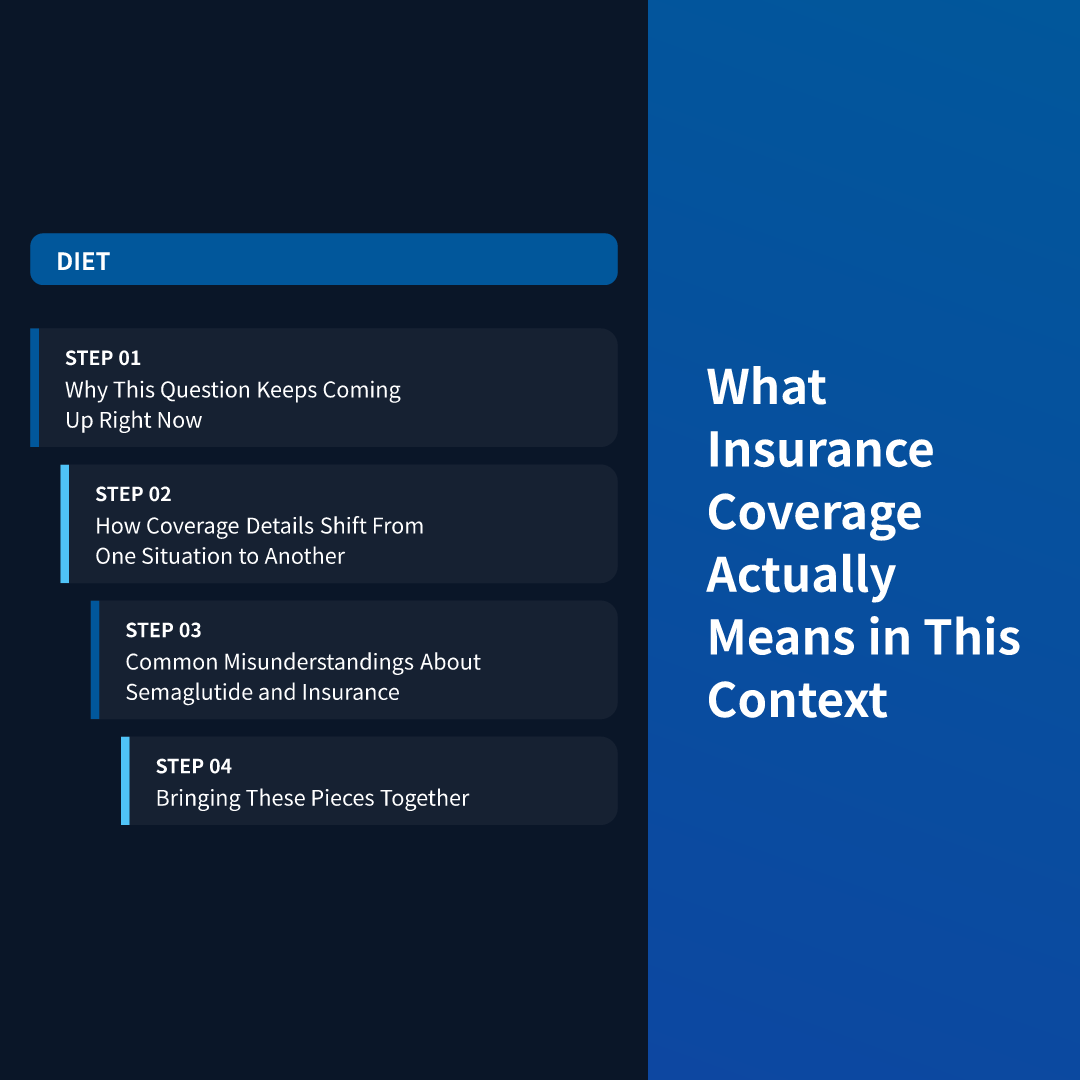
Why This Question Keeps Coming Up Right Now

Interest in semaglutide has grown quickly as more people hear about it through friends, social media, or a doctor’s recommendation, and pricing without insurance can be steep enough that coverage becomes the deciding factor in whether treatment is even possible. At the same time, insurers have been tightening or adjusting their policies around weight loss drugs, which means the coverage landscape feels like it’s shifting under people’s feet even when their plan hasn’t technically changed.
Many readers land on this topic after being prescribed semaglutide for weight management and then discovering, sometimes at the pharmacy counter, that their plan either denies the claim or applies a cost-sharing structure they didn’t expect. Others are still in the research phase, trying to figure out whether it’s worth bringing up with their doctor at all. Both situations point to the same underlying issue: coverage rules are inconsistent, and nobody explains them clearly until you’re already in the middle of the process.
What Insurance Coverage Actually Means in This Context
When people ask whether insurance “covers” semaglutide, they’re usually really asking about three separate things at once: whether the drug is on the plan’s formulary, whether prior authorization is required, and what the out-of-pocket cost looks like after any coverage is applied. These are not the same question, and a plan can answer “yes” to one and “no” to another.
Formulary status simply means the medication is listed as something the plan will pay toward, under specific conditions. Prior authorization is a separate approval step where your doctor’s office submits documentation—diagnosis, weight history, other treatments tried—before the insurer agrees to pay. Even after both of those hurdles are cleared, many plans still apply a copay or coinsurance, so “covered” rarely means free.
Coverage decisions often come down to how the prescription is coded—weight management alone is treated very differently from a diagnosis like type 2 diabetes, even when the medication is identical.
This distinction matters because semaglutide is marketed under different brand names depending on the approved use, and insurers frequently apply different rules to each. A plan that denies coverage for a weight-loss-specific formulation may still approve a related product prescribed for diabetes management, which is one reason two people taking what seems like “the same drug” can have completely different insurance experiences.
How Coverage Details Shift From One Situation to Another
Consider two common, entirely hypothetical scenarios that illustrate how differently this can play out. In the first, someone has a diagnosis of type 2 diabetes along with a higher body mass index, and their doctor prescribes semaglutide primarily to manage blood sugar, with weight loss as a secondary benefit. Because the diagnosis code reflects diabetes management, many insurance plans are more willing to approve coverage, since this use aligns with the medication’s original approved indication.
In the second scenario, someone without diabetes wants semaglutide specifically for weight loss, perhaps after trying diet and exercise changes without the results they hoped for. Here, coverage becomes far less predictable. Some employer-sponsored plans explicitly exclude weight loss medications as a category, regardless of how well-documented the medical need is, while others will cover it once specific criteria—like a minimum BMI threshold or a documented related health condition—are met.
A Simple Comparison of How Plans Can Differ
| Factor | More Likely to Be Covered | Less Likely to Be Covered |
|---|---|---|
| Primary diagnosis | Type 2 diabetes or related metabolic condition | Weight loss only, no other diagnosis |
| Plan type | Plans without a specific weight-loss drug exclusion | Plans with an explicit exclusion clause |
| Prior treatment history | Documented attempts at lifestyle changes | No prior documented weight management attempts |
| Authorization process | Prior authorization approved with supporting records | Prior authorization denied or not submitted |
This table is a general illustration, not a guarantee of how any specific plan will respond. The same person could be approved by one insurer and denied by another offering what looks like a similar plan on paper, because the fine print—exclusions, riders, and formulary tiers—varies enormously between employers and insurance carriers.
Government-sponsored programs add another layer of variation. Medicare Part D formularies, for example, have historically treated weight loss medications differently from diabetes medications, and readers with Medicare coverage may want to review official plan documents directly through Medicare.gov rather than relying on general assumptions, since plan details are updated and can differ by region and provider.
Common Misunderstandings About Semaglutide and Insurance
One frequent misunderstanding is assuming that because semaglutide is FDA-approved, insurance is obligated to cover it for any use. Approval and coverage are entirely separate systems—regulatory approval determines whether a drug can legally be prescribed, while coverage is a business decision made by each individual insurer or employer plan.
Another misconception is thinking that a denial is final. In many cases, an initial denial can be appealed, especially if additional documentation—like detailed weight history, other health conditions, or notes from a structured weight management program—is submitted afterward. This process takes time and paperwork, and results are never guaranteed, but it’s often worth discussing with your prescriber’s office, since many clinics have staff experienced in handling these appeals.
Some readers also assume that if their plan doesn’t cover semaglutide, there’s no way to reduce the cost. In reality, manufacturer savings programs, patient assistance options, and formulary alternatives sometimes exist, though eligibility rules vary and none of these should be treated as a substitute for reviewing your actual plan documents. It’s also a mistake to assume that switching to a compounded or off-label version of the medication automatically solves the coverage problem—these versions often aren’t covered at all, and there are separate safety and regulatory considerations worth discussing with a pharmacist or physician.
Bringing These Pieces Together
Semaglutide weight loss insurance coverage ultimately hinges on your diagnosis, your specific plan’s formulary and exclusions, and whether the required documentation supports medical necessity in the eyes of your insurer. No two plans behave identically, and the same prescription can be approved for one person and denied for another based on details that have nothing to do with how well the medication might work for them personally.
Here’s the short version worth remembering: check your plan’s formulary and exclusion list before assuming anything, keep detailed records of prior weight management attempts and related health conditions, and don’t treat a first denial as the end of the road—appeals and alternative documentation sometimes change the outcome. Beyond that, individual circumstances vary enough that a benefits specialist at your insurance company or your prescribing clinician’s office is usually better positioned than a general article to walk through your specific policy language.
If you’re currently navigating a denial, a confusing formulary listing, or uncertainty about whether semaglutide fits your specific health situation, it’s worth having a direct conversation with both your insurance provider and a qualified healthcare professional before making any decisions about starting or switching treatment.
⚠️ Disclaimer: This article is for informational purposes only and does not replace professional medical advice.
Disclaimer: This article is for informational purposes only and is not a substitute for professional medical advice, diagnosis, or treatment. Please consult a licensed professional for personal health decisions.