Obesity Weight Loss Medication Comparison: What It Means and Why It Matters
An obesity weight loss medication comparison is a structured look at prescription drugs for weight management, set side by side by mechanism, route, common side effects, and the people each might suit. It is not a ranking of which drug is “best,” because the right fit depends on a person’s health history. This article explains what such a comparison contains, when it applies, what it is often confused with, and why it affects real decisions.
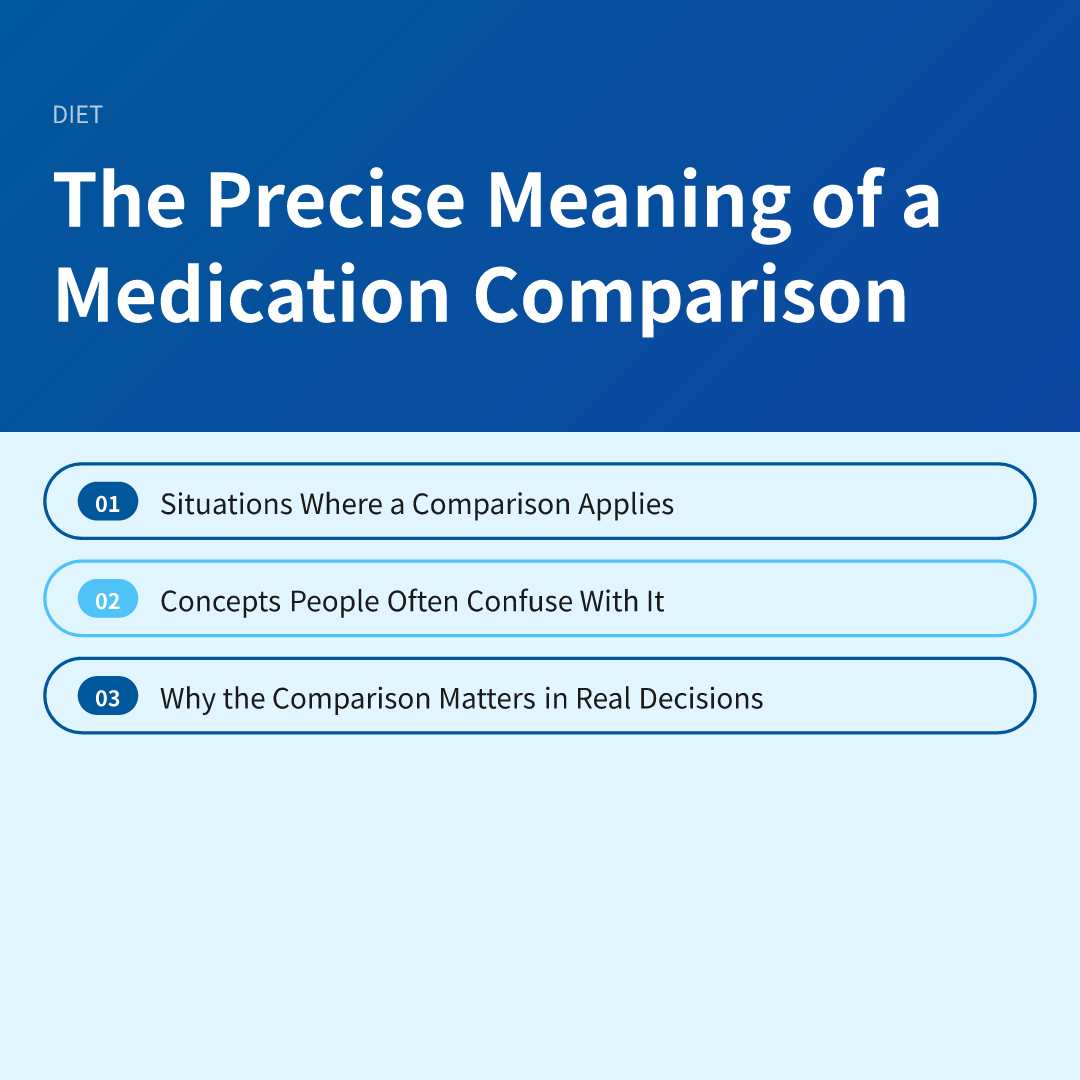
The Precise Meaning of a Medication Comparison
Prescription weight loss medicines fall into a few groups based on how they act in the body. A comparison sorts them along a few practical lines rather than by a single score.
- Gut-hormone-based medicines (often called GLP-1 receptor agonists, meaning drugs that mimic a natural hormone signaling fullness; newer ones also act on a second hormone pathway). They are usually injections, with an oral form available for some.
- Combination appetite-related medicines, usually taken by mouth, which act on brain pathways involved in hunger and cravings.
- Fat-absorption blockers, which work in the digestive tract and limit how much dietary fat is absorbed.
- Older appetite-suppressing medicines, generally considered for short-term use under close supervision.
Availability, approved uses, and brand names differ by country, so a drug discussed online may not be offered where you live. The U.S. Food and Drug Administration keeps a public overview at fda.gov, a reasonable place to confirm what is approved.
How each group differs in practice
Injectable gut-hormone medicines slow stomach emptying and signal fullness, which many people describe as feeling satisfied sooner. Some are given weekly and others daily, as set by the product and prescriber. Common side effects involve the stomach, such as nausea, vomiting, diarrhea, or constipation, and these often appear while the body adjusts. Rarer but more serious concerns, including gallbladder problems and pancreatitis (inflammation of the pancreas), are listed in product information and worth discussing before starting.
Oral combination medicines pair two ingredients acting on appetite and craving pathways. Some people prefer pills to injections. Reported effects can include changes in mood or sleep, dry mouth, constipation, or increases in heart rate or blood pressure, depending on the product. The prescriber and the product instructions set how they are started and adjusted.
Fat-absorption blockers do not act on appetite. Because some dietary fat passes through undigested, oily stools, urgency, and gas are commonly described, often tied to higher-fat meals. Clinicians also tend to discuss absorption of fat-soluble vitamins with people using them.
Older appetite suppressants are stimulant-like and generally described for short-term use, partly because of concerns about dependence, blood pressure, and heart rate. They are not suitable for everyone.
Situations Where a Comparison Applies
A comparison becomes useful when a prescriber is considering medication for an adult whose weight puts their health at risk, often alongside changes to eating, movement, and sleep. Eligibility is commonly framed around body mass index (a height-to-weight ratio) and weight-related conditions, but exact thresholds vary by country and product label.
Think of a comparison like a map legend: it does not tell you where to go, but it helps you read the terrain. Clinicians look at the whole picture, including other medical conditions, current prescriptions, past attempts at weight management, and personal goals.
There are cautions. Pregnancy, planning a pregnancy, and breastfeeding are generally reasons to avoid or carefully review these drugs. Certain histories, such as specific thyroid conditions, pancreatitis, eating disorders, or heart rhythm and blood pressure concerns, may steer someone toward different options or away from medication entirely. Only a licensed professional who knows your history can sort this out.
Practical limits matter as well. Prices, insurance rules, and supply vary widely by region and over time, and some drugs have been hard to get at certain periods. Questions worth bringing to a visit include which conditions you have, which medicines you already take, how comfortable you are with injections, and which side effects would be hardest to live with.
Concepts People Often Confuse With It
A comparison is not a leaderboard. Studies and labels report average outcomes, but trial populations, durations, and designs differ, so direct comparisons can mislead. Your own result may be smaller or larger than an average, and some people do not respond well enough to continue.
Medication is not a substitute for lifestyle support. These medicines are generally described as an add-on to nutrition, movement, and behavior support. Many clinicians also connect patients with dietitians or other support.
Prescription drugs are not supplements. Products marketed as “natural” alternatives are not equivalent, and evidence for many is limited or mixed. Mention any you use to your clinician or pharmacist.
Approved products are not the same as imitation or “compounded” versions sold online. Sellers offering these drugs without a prescription may have unclear sourcing, so quality and safety cannot be assumed. A licensed pharmacy and a prescriber who monitors you over time are the safer route.
Why the Comparison Matters in Real Decisions
Every class carries trade-offs. Digestive complaints are the most common, especially with the injectable group, while oral combinations and older stimulants raise more questions about heart rate, blood pressure, sleep, and mood.
Some warning signs call for prompt medical attention rather than waiting it out: severe or persistent abdominal pain, repeated vomiting leading to dehydration, signs of an allergic reaction, a racing or irregular heartbeat, new or worsening depression, or thoughts of self-harm. If something feels seriously wrong, contact a healthcare professional or emergency services.
What happens after stopping matters too. Many people regain some weight when medication ends, particularly if the surrounding habits have not changed, so clinicians often discuss long-term planning from the start. Product labels and your prescriber can explain what to expect for a specific drug.
Understanding this concept changes two judgments:
- You stop asking which drug is strongest and start asking which fits your health, routine, and tolerance for side effects. That turns a search for a winner into a more useful conversation with a prescriber.
- You treat averages, online claims, and low-cost offers with caution. You weigh them against your own history and plan for what comes after treatment, rather than assuming a headline result will be yours.
Disclaimer: This article is for informational purposes only and is not a substitute for professional medical advice, diagnosis, or treatment. Please consult a licensed professional for personal health decisions.
Related reading: GLP-1 Weight Loss Medication Cost: Why Prices Differ So Much