GLP-1 Weight Loss Medication Cost: Why Prices Differ So Much
GLP-1 weight loss medication cost can differ enormously from one person to the next, and the gap usually comes down to insurance coverage, the specific product, the dose, and where the prescription is filled. If you have looked up a price and then heard a very different number from a friend, that is not unusual. Instead of a single fixed price, it helps to think of a wide range shaped by several factors, most of which you can ask about before you commit.
This piece is written from an editor’s perspective to help you read quotes more clearly. It does not recommend any product, and it cannot tell you what you will pay. Your prescriber, your pharmacist, and your insurance plan are the ones who can give figures that apply to you.
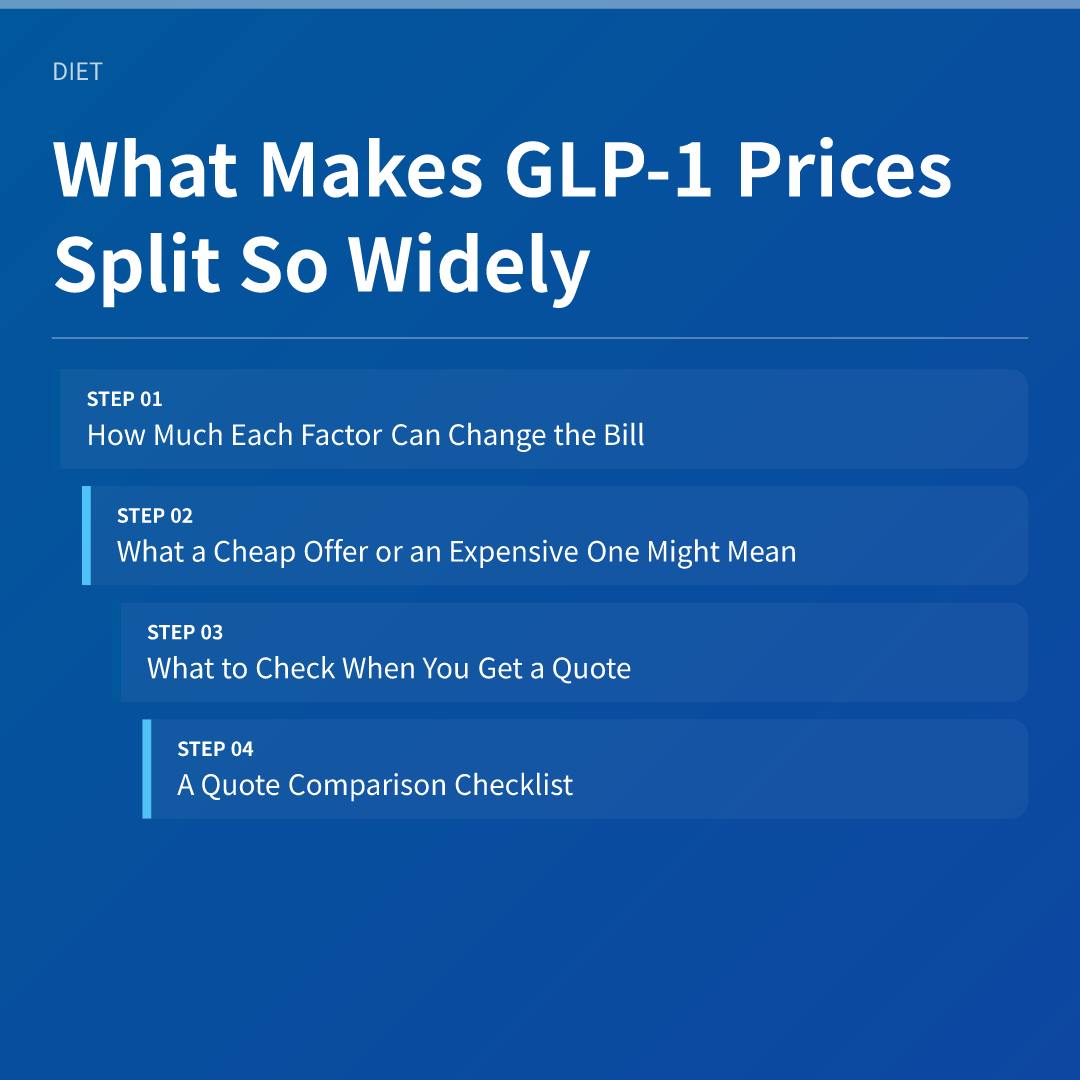
What Makes GLP-1 Prices Split So Widely
GLP-1 medicines are a class of prescription drugs that mimic a gut hormone involved in appetite and blood sugar regulation. Some are approved for type 2 diabetes, and some are approved for chronic weight management. The U.S. Food and Drug Administration explains the approved uses of these products on its drug information pages, and the label a product carries affects how insurers treat it.
Several big factors tend to move the price. Here is a quick overview before the details:
- Insurance coverage: whether your plan covers the drug for weight management at all.
- Which product is prescribed: brand, formulation, and approved indication.
- Dose and treatment stage: many people move through different strengths over time.
- Pharmacy and purchasing channel: retail, mail order, or manufacturer programs.
- Visit and monitoring costs: appointments, lab work, and follow-up.
- Duration: how long treatment continues, which affects total spending.
Because these overlap, two people taking what sounds like the same medicine can face very different monthly bills.
How Much Each Factor Can Change the Bill
Insurance coverage and plan rules
Coverage is often the single biggest swing factor. Some plans cover these drugs for diabetes but not for weight loss, while others cover them only after prior authorization, meaning your prescriber has to document why the drug is needed. Plans may also ask you to meet certain criteria first, such as a weight-related health condition or a trial of other approaches.
Even with coverage, your share depends on your deductible, copay, or coinsurance. A person early in the plan year may pay far more per fill than someone who has already met their deductible. Reading your plan’s formulary and calling the member services line is usually the most reliable way to learn where you stand.
The specific medicine and its approved use
Different GLP-1 products are priced differently, and a product labeled for diabetes may be handled differently from one labeled for weight management, even when the active ingredient is related. Some are injected weekly and some daily, and some come as pills, which can affect pricing and supply. Your prescriber decides which option suits your health history, and cost is one of several things worth discussing in that conversation.
Dose changes over time
Many people start at a lower strength and move up in steps under their prescriber’s guidance. Depending on the product and the pharmacy, different strengths may carry different prices, or they may be priced similarly. It is worth asking whether the price you were quoted applies only to the starting strength or to later ones as well. Dosing decisions belong to your prescriber and are based on your response and tolerance, not on price.
Pharmacy, channel, and manufacturer programs
The same prescription can cost different amounts at different pharmacies, and mail-order options may differ from local retail. Manufacturers sometimes offer savings programs, but eligibility rules often depend on whether you have commercial insurance, and these programs may not apply to government plans. Terms change over time, so check the manufacturer’s current program page and ask your pharmacist what applies to you.
Appointments, labs, and monitoring
The drug is rarely the only expense. A prescriber may order baseline and follow-up lab work, and some clinics or telehealth programs charge membership or visit fees. These costs can be modest or significant depending on your coverage and where you are seen. Asking for a breakdown of visit costs separate from drug costs makes comparisons much clearer.
How long treatment lasts
Monthly cost is only part of the picture. Guidance on these medicines generally describes them as part of a longer-term plan, and what happens after stopping is a question to raise with your prescriber. If treatment continues for a long period, total spending can add up even when the monthly price feels manageable. Thinking in terms of a full year, rather than a single fill, can prevent surprises.
What a Cheap Offer or an Expensive One Might Mean
A low advertised price is not automatically a bargain, and a high one is not automatically a rip-off. The difference often reflects what is, or is not, included. Before reading too much into a number, it helps to ask what sits behind it.
When a low price deserves a second look
Some low offers cover only the medicine and leave out visits, labs, or supplies. Others are introductory prices that change after the first fill. Be especially careful with products sold online as “GLP-1” alternatives that are not the approved prescription drugs. The FDA has warned the public about unapproved or compounded versions, and you can read its guidance on drug safety information for patients. Quality, ingredients, and labeling can vary with products that are not FDA-approved, so a pharmacist or prescriber is the right person to ask about a particular offer.
When a high price may be reasonable
A higher quote sometimes bundles in clinician visits, lab monitoring, nutrition counseling, or ongoing follow-up. That can be useful for some people, particularly if they want structured support. It can also simply reflect a pharmacy with a higher list price or a plan with a high deductible. The question is not only how much, but what you are getting for it.
Why cost should not be the only lens
These medicines are not right for everyone. They have known side effects, such as digestive symptoms, and they are not suitable for certain medical histories. Choosing based on price alone can leave out the more important question of whether a medicine fits your health situation, which only a qualified clinician can assess. Results also vary from person to person, so it is reasonable to discuss realistic expectations before spending.
What to Check When You Get a Quote

Quotes are easier to compare when you ask the same questions every time. Try to get answers in writing or through your insurer’s portal so you are not relying on memory. If something sounds unclear, asking again is perfectly normal.
Questions for your insurer
Ask whether the specific product is on your formulary for your intended use, and whether prior authorization or step requirements apply. Ask what your deductible status is and what your expected share would be per fill. Also ask whether there are quantity limits or preferred pharmacies that change your cost.
Questions for the pharmacy or program
Ask what the price includes, whether it changes with strength, and whether the price is a one-time introductory rate. If a discount or savings program is involved, ask about its eligibility rules and whether it could end. For anything that arrives by mail, ask how the product is stored and shipped, since that is a practical safety detail your pharmacist can explain.
Questions for the clinic or telehealth service
Ask about visit fees, membership charges, and lab costs, and whether they are separate from the medicine. Confirm who the prescribing clinician is and that they are licensed. A reputable service should be willing to explain how it handles follow-up and what happens if the medicine is not a good fit for you.
When to get professional input before deciding
Speak with a licensed clinician before starting or changing any of these medicines, especially if you have a history of pancreatitis, thyroid conditions, diabetes, kidney problems, are pregnant or planning pregnancy, or take other medicines. Contact a healthcare professional promptly if you notice severe or persistent abdominal pain, repeated vomiting, or other symptoms that worry you. If you are seeing a clinician about cost, it is fine to say so directly, because they may know about alternatives or assistance programs.
A Quote Comparison Checklist
Before you agree to anything, run each quote through this list. It keeps the focus on what you will actually pay over time, not just the first number you hear.
- Is the exact product named, and is it an FDA-approved prescription medicine?
- Does your insurance cover it for your intended use, and is prior authorization needed?
- What is your expected out-of-pocket amount per fill after deductible and copay?
- Does the quoted price apply to every strength you may move through, or only the first?
- Is the price introductory, and when might it change?
- Are visits, lab work, and follow-up included or billed separately?
- Are there membership, shipping, or supply fees that were not mentioned up front?
- Do savings programs apply to your type of insurance, and what are their limits?
- Have you estimated the total over several months, not just one month?
- Has a licensed clinician reviewed whether the medicine fits your health history?
- Do you know what happens, cost-wise and medically, if you stop?
This is best decided together with your clinician at the visit. Your insurer, pharmacist, and prescriber can fill in the numbers that apply to you.
Disclaimer: This article is for informational purposes only and is not a substitute for professional medical advice, diagnosis, or treatment. Please consult a licensed professional for personal health decisions.
Related reading: Medical Weight Loss Program Semaglutide: What It Actually Involves