Medical Weight Loss Program Semaglutide: What It Actually Involves
A medical weight loss program with semaglutide is a physician-supervised treatment plan that combines a prescription GLP-1 medication with ongoing medical monitoring, nutrition guidance, and behavioral support. It differs from generic diet plans because it involves a licensed provider who evaluates whether the medication and program structure fit a person’s health history. This article breaks down what the term actually means, when this type of program is typically recommended, how it differs from approaches people often confuse it with, and why the distinction matters for anyone considering it.
What “Medical Weight Loss Program Semaglutide” Actually Means
At its core, this phrase describes a structured, clinically supervised approach to weight management that centers on semaglutide, an injectable medication belonging to a drug class known as GLP-1 receptor agonists (medications that mimic a gut hormone involved in appetite and blood sugar regulation). Unlike over-the-counter supplements or self-directed diet apps, a medical program typically involves an intake evaluation, lab work, and a licensed prescriber who decides whether semaglutide is appropriate based on a person’s medical history.
According to the FDA’s announcement on chronic weight management medication, semaglutide-based treatments were approved for use in adults meeting certain weight-related criteria, alongside a reduced-calorie diet and increased physical activity. This FDA page is a useful reference point for understanding the medication’s approved context. The medication is designed to work alongside lifestyle changes, not as a replacement for them.
The “program” part of the term matters as much as the medication itself. A well-run version of this kind of program generally includes regular check-ins, dose adjustments guided by a clinician, and some form of nutrition or behavioral counseling. Without that surrounding structure, someone is really just taking a prescription medication in isolation, which is a different thing entirely.
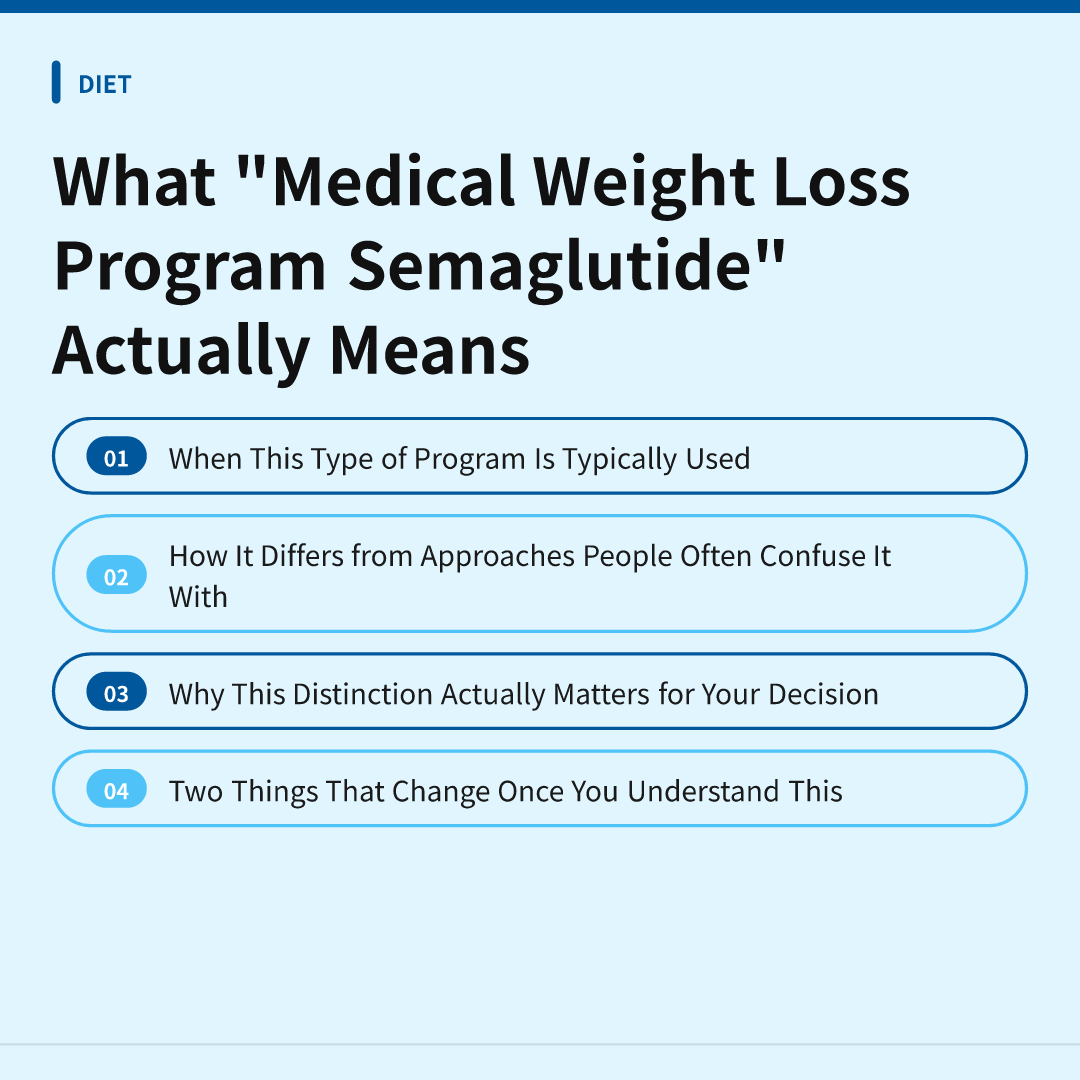
When This Type of Program Is Typically Used
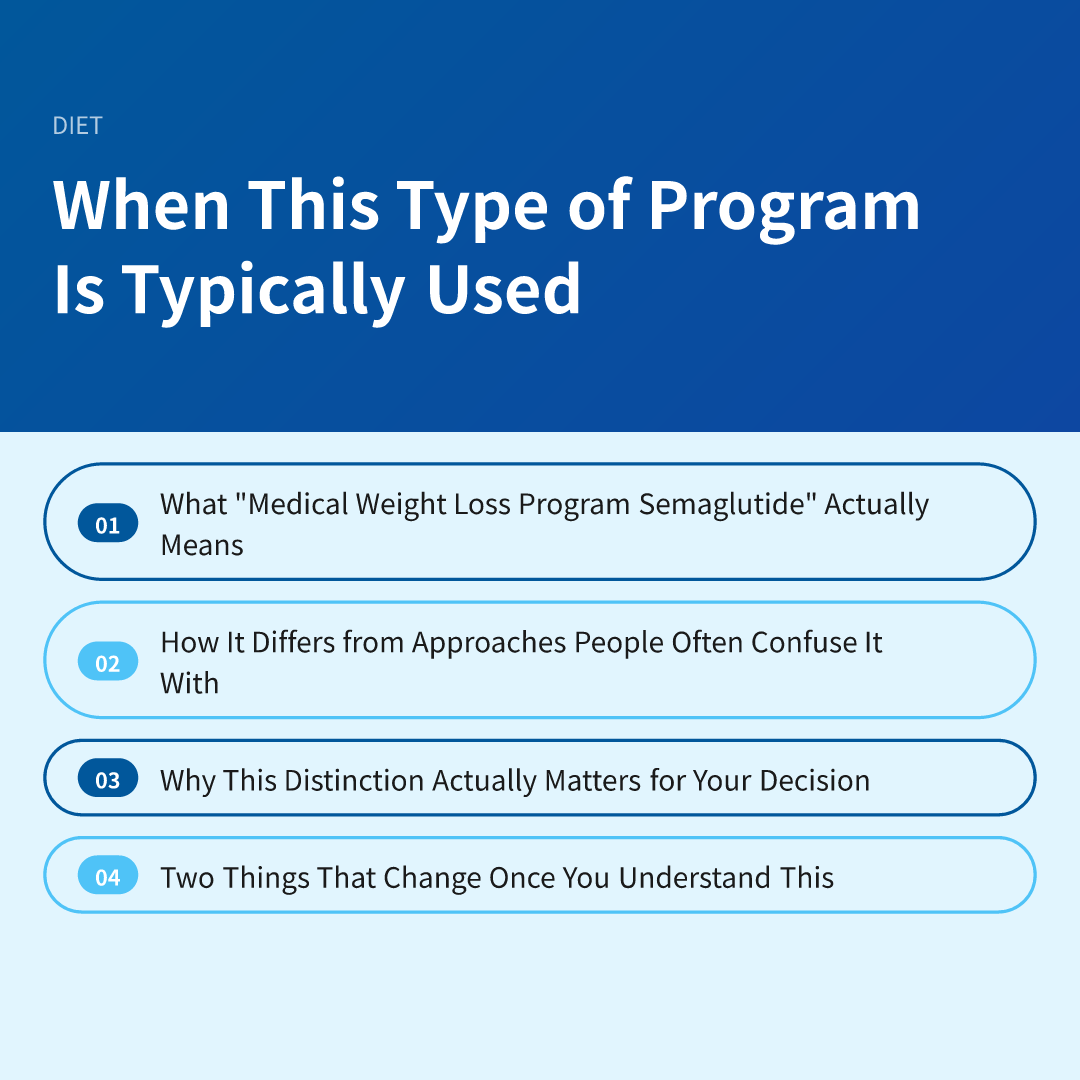
These programs are generally considered for adults who have tried other weight management approaches without the results they were hoping for, and who meet specific body weight or health-related criteria that a provider evaluates during an initial consultation. Some clinics also work with people who have weight-related health conditions such as elevated blood pressure or blood sugar concerns, where a provider believes medical intervention alongside lifestyle changes may be worth discussing.
It’s not typically positioned as a quick fix or a short-term intervention. Most programs are structured around a longer timeline, since GLP-1 medications tend to work gradually, and providers usually monitor how a person responds before making adjustments. Someone considering this route should expect an ongoing relationship with a clinical team rather than a one-time prescription.
- Adults who meet weight-related eligibility criteria set by a licensed provider
- People with weight-related health concerns who are exploring medical options alongside lifestyle changes
- Individuals who want structured monitoring rather than a self-directed approach
Who Providers Typically Screen Out
Not everyone is considered a fit for this type of program. Providers generally ask about personal or family history of certain thyroid conditions, pancreatitis, or other factors that a prescribing clinician needs to weigh carefully. This is one of the clearest limits of the “medical” part of medical weight loss program semaglutide — the screening process exists precisely because the medication isn’t appropriate for everyone, and a responsible program should never skip that step.
How It Differs from Approaches People Often Confuse It With
A common point of confusion is mixing up a medically supervised semaglutide program with weight loss supplements sold online, or with compounded versions of the medication offered outside a proper clinical relationship. Here’s a simple way to think about the difference: a legitimate medical program includes a licensed provider who reviews the person’s health history, orders relevant labs, and stays involved throughout the treatment — it’s less like buying a product and more like entering ongoing care.
Another point of mix-up is comparing semaglutide programs to older prescription weight loss medications or to general “diet plans with medication support.” While the underlying goal — supporting weight management — overlaps, the mechanism is different. GLP-1 medications work by influencing appetite signals and digestion speed, whereas some older medications acted more directly on the central nervous system. This is a meaningful distinction because it affects what side effects to watch for and how the medication is typically introduced and adjusted.
Think of it the way you’d think of a supervised physical therapy plan versus a home workout video — both might involve similar movements, but one includes a professional adjusting the plan based on how your body actually responds.
People also sometimes assume that any clinic offering semaglutide is automatically a “medical weight loss program” in the fuller sense. In reality, the quality and thoroughness of the surrounding care — lab monitoring, follow-up frequency, and how dose changes are handled — can vary a lot between providers. This is one of the more important things to ask about before starting.
Related reading: Does Insurance Cover Semaglutide for Weight Loss?
Why This Distinction Actually Matters for Your Decision
Understanding what a genuine medical program includes — versus what a bare prescription or an unsupervised online purchase includes — has real consequences. Semaglutide can come with side effects, and some are more likely to show up or need adjustment early in treatment, including nausea, digestive changes, or, in some individuals, more serious reactions that a provider needs to evaluate promptly. A program with regular monitoring is generally better positioned to catch these early and adjust the approach, compared with an isolated prescription with little follow-up.
There’s also the question of appropriateness. Because the medication interacts with hormonal and digestive systems, a provider’s initial screening — including questions about personal and family medical history — is not just paperwork. It’s part of how a program determines whether semaglutide is a reasonable option for a specific person, rather than a one-size-fits-all solution. Skipping this step, which happens more often with less regulated or online-only sources, removes an important layer of safety.
Warning Signs Worth Taking Seriously
Anyone using semaglutide as part of a weight loss program should know which symptoms call for prompt medical attention rather than waiting it out. Severe abdominal pain, persistent vomiting, signs of an allergic reaction, or unusual changes in mood or vision are generally considered reasons to contact a healthcare provider without delay. Ordinary, mild digestive discomfort during the early adjustment period is more commonly reported, but a clinician is the right person to judge whether a symptom fits that pattern or falls outside it.
It’s also worth being cautious about programs that make big promises with little clinical structure behind them — things like promising specific results, no follow-up visits, or minimal screening. Weight management outcomes vary quite a bit from person to person, and a responsible provider will usually be upfront about that variability rather than overstating what to expect.
Related reading: Safe Acne Treatment During Pregnancy
Two Things That Change Once You Understand This
Once the distinction is clear, the first thing that shifts is how you evaluate a clinic or provider offering this type of treatment. Instead of asking “do they offer semaglutide,” the more useful question becomes “what does their monitoring and screening process actually look like” — because that surrounding structure is what separates a genuine medical weight loss program semaglutide plan from a bare prescription with little oversight.
The second thing that changes is how you think about your own expectations and safety. Recognizing that this is a supervised medical treatment, not a standalone product, means paying closer attention to how your body responds, staying in contact with your provider about side effects, and understanding that dose adjustments and program length are decisions made collaboratively with a clinician rather than something to self-manage. Anyone considering this path is generally better served by discussing personal medical history, expected timelines, and monitoring plans directly with a licensed healthcare provider before starting.
Disclaimer: This article is for informational purposes only and is not a substitute for professional medical advice, diagnosis, or treatment. Please consult a licensed professional for personal health decisions.