Hair Loss Due to Stress: Solutions That Make Sense
Hair loss due to stress solutions are the approaches people use to address temporary shedding that tends to follow a period of intense physical or emotional strain. Stress-related shedding is usually a diffuse thinning in which more hairs than usual enter the resting phase and fall out together, and in many people it settles over time once the trigger eases. Below you will find what the term actually means, when it applies, how it differs from look-alike conditions, and why those differences shape which steps are worth considering.
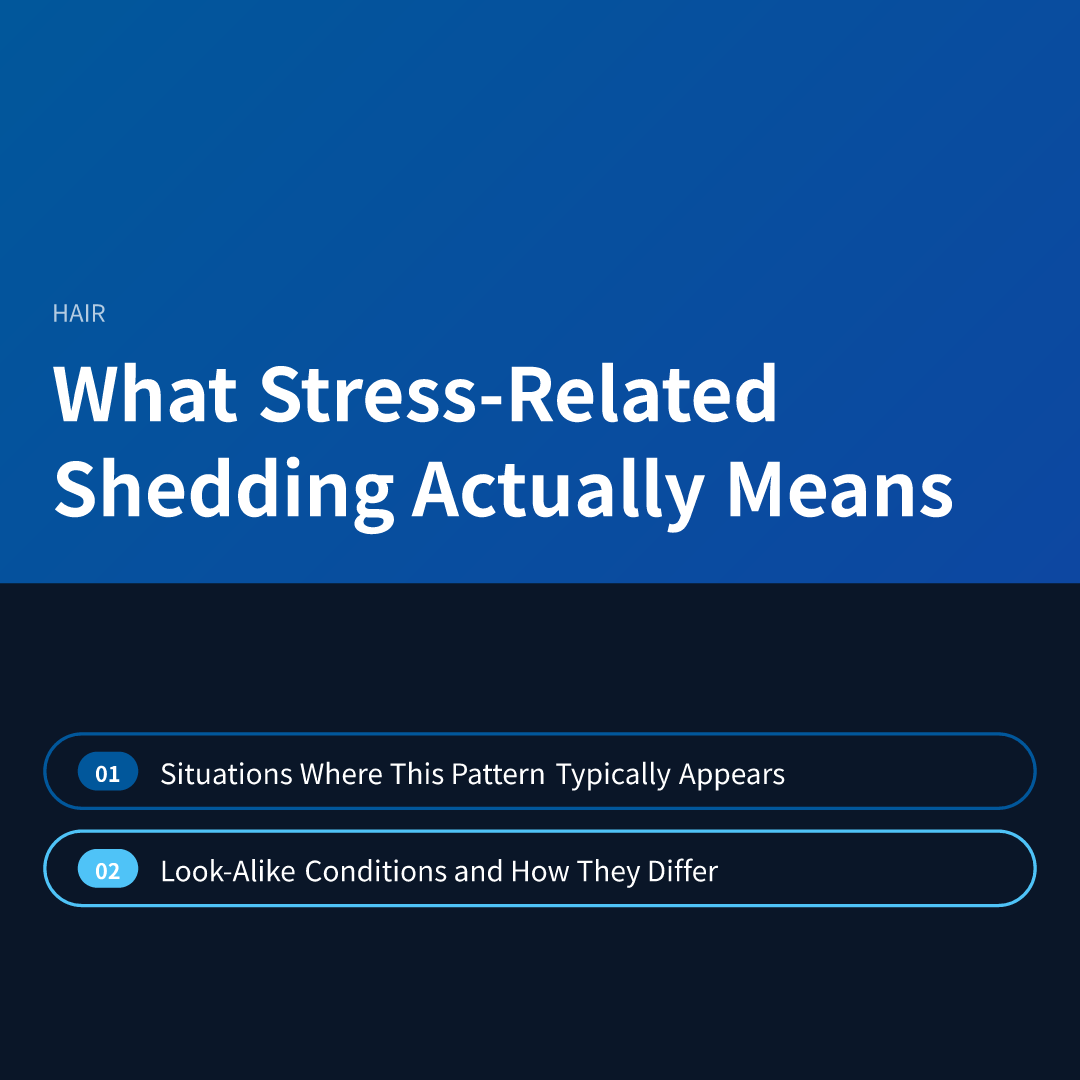
What Stress-Related Shedding Actually Means
Hair grows in cycles. Each strand spends a long stretch actively growing, a brief time in a transition stage, and then a resting stage before it sheds and a new hair begins. Under ordinary conditions, only a small share of hairs are resting at any moment, which is why you lose some hair every day without noticing a change in density.
The medical term most often used for stress-related shedding is telogen effluvium. In plain words, that means a larger-than-usual number of hairs are pushed into the resting (telogen) phase at once, and they shed together a couple of months later. The American Academy of Dermatology describes this kind of shedding as commonly following events such as major illness, surgery, significant weight change, childbirth, or severe emotional stress.
Think of it like a tree dropping leaves after a harsh season. The tree is not dying; it is redirecting energy until conditions improve. The analogy has limits, since human hair follicles are not responding to weather, but it captures why the shedding often looks sudden and alarming while the underlying follicles usually remain intact.
Why the delay confuses people
One of the most puzzling features is timing. Shedding often becomes noticeable a good while after the stressful event, so by the time hair is falling in the shower drain, life may already feel calmer. That gap makes it hard to connect cause and effect, and it is one reason people sometimes blame a new shampoo or a recent haircut instead.
Situations Where This Pattern Typically Appears
Stress-related shedding is usually described as a reaction to a trigger, not as a standalone disease. Commonly mentioned triggers include:
- A serious illness or a high fever
- Surgery or a hospital stay
- Rapid or significant weight loss, or very restrictive dieting
- Childbirth and the months afterward
- Prolonged emotional strain, grief, or major life upheaval
- Certain medications, which a prescriber or pharmacist can review with you
The NIH-supported MedlinePlus health information on hair loss notes that many causes of hair thinning exist, including hormonal changes, nutritional factors, and medical conditions. That is an important reminder: stress may be one factor among several, and sometimes more than one thing is happening at the same time.
What it tends to look like
People often describe more hair on the pillow, in the brush, or in the drain, along with a general thinning across the scalp instead of one bare patch. Ponytails may feel thinner. The hairline can look slightly different, particularly at the temples. Severity and duration vary widely from person to person, and a dermatologist is the right person to judge whether your pattern fits.
Look-Alike Conditions and How They Differ
This is where many people go wrong. Several conditions can resemble stress shedding, and they do not all respond to the same approach. Guessing can delay appropriate care.
Pattern hair loss
Androgenetic alopecia, often called pattern hair loss, is a gradual, usually inherited thinning. It tends to progress slowly over years and often shows up as a widening part, a receding hairline, or thinning at the crown. Stress can make people notice it sooner, but stress is generally not considered its root cause. Because it tends to be ongoing, it is usually discussed with a professional instead of waiting for it to resolve on its own.
Alopecia areata
Alopecia areata is an autoimmune condition, meaning the body's immune system mistakenly targets hair follicles. It typically causes round or oval bare patches that can appear fairly suddenly. The National Institute of Arthritis and Musculoskeletal and Skin Diseases (NIAMS) provides general information on this condition. Smooth, distinct bald spots are a reason to get a professional evaluation, not to assume it is only stress.
Traction and styling damage
Tight ponytails, braids, extensions, and frequent heat or chemical treatments can lead to breakage or tension-related loss, often concentrated along the hairline or where hair is pulled. This is a mechanical issue, and it can coexist with stress shedding.
Nutritional gaps and medical conditions
Low iron, thyroid problems, and other health issues are commonly mentioned as contributors to thinning. The Office of Dietary Supplements at the NIH offers general information on nutrients, and it also cautions that more is not always better with supplements. Whether a deficiency exists is something a blood test and a clinician can sort out, and guessing with supplements can be unhelpful or even risky for some people.
Related reading: Hair Loss From Hormonal Imbalance: What to Know
Scalp conditions
Persistent itching, flaking, redness, pain, or scaling can point to a scalp condition that needs its own attention. Shedding with an irritated scalp is another reason to have it looked at in person.
Why Telling Them Apart Matters
The reason this distinction carries so much weight is that the sensible next step depends on the cause. If shedding is truly a delayed reaction to a past trigger, the usual expectation is that the hair cycle gradually recovers once the body settles. Many sources, including the American Academy of Dermatology, describe stress-related shedding as often temporary, though recovery speed and completeness differ between people.
If the cause is something else, waiting may not be the best plan. Pattern hair loss, autoimmune patches, thyroid problems, and scalp disease are generally better addressed sooner, and a licensed professional can discuss options, including prescription approaches where appropriate. Because decisions about medicines, topical products, and supplements depend on your health history, ask a pharmacist or doctor before starting anything, and read product directions carefully.
Supportive habits people commonly consider
While the underlying driver is being sorted out, people often look at general, low-risk habits. These are broad wellness ideas, not treatments, and they may not change shedding on their own:
- Managing stress in ways that suit you, such as regular movement, time outdoors, social connection, or talking with a counselor. Evidence that these directly regrow hair is limited, but they can support overall well-being.
- Eating regular, varied meals, since very restrictive eating is itself a commonly cited trigger for shedding.
- Keeping sleep reasonably steady, because many people feel better able to cope with stress when rested.
- Being gentle with hair, such as avoiding very tight styles and limiting harsh heat or chemical treatments while hair feels fragile.
- Staying patient, since regrowth is gradual and new hairs are short at first.
Expect variation. Some people notice changes within several months, while others wait longer, and no routine can promise a particular outcome. Be cautious with products that advertise fast or dramatic regrowth; hair simply does not work on that timeline.
Related reading: Hair Growth Products on the Market: What They Really Are
Signs it is time to get checked
Consider booking an appointment with a dermatologist or other licensed clinician if:
- Shedding continues for a long time without easing
- You see distinct bald patches or sudden, extensive loss
- Your scalp is painful, very itchy, scaly, or inflamed
- You have other symptoms such as unusual fatigue, weight changes, or changes in your cycle
- Hair loss is affecting your mood or daily confidence
A professional can examine the scalp, ask about your history, and decide whether tests are useful. That is something an article cannot do for you, and it is worth remembering that emotional distress over hair loss is real and deserves support too.
How Knowing the Difference Changes Your Decisions
Understanding how stress shedding works shifts two practical judgments. First, it helps you decide whether to wait or to act: a recent, identifiable trigger followed by even, widespread shedding may justify some patience while still keeping an eye on the timeline, whereas patches, scalp symptoms, or slow progressive thinning point toward a professional evaluation sooner. Second, it helps you spend your energy and money wisely: instead of cycling through shampoos, serums, and supplements in hope of a quick fix, you can focus on addressing the likely trigger, supporting general well-being, and bringing a clear description of your symptoms to a qualified clinician. With that in mind, the most useful hair loss due to stress solutions are usually the ones matched to the actual cause.
Disclaimer: This article is for informational purposes only and is not a substitute for professional medical advice, diagnosis, or treatment. Please consult a licensed professional for personal health decisions.