Hair Loss From Hormonal Imbalance: What to Know
You notice more strands in the shower drain, a wider part, or a thinner ponytail, and a friend mentions it might be your hormones. Hair loss from hormonal imbalance is a real and commonly discussed possibility, because hormones influence how hair follicles grow and rest. It is rarely the only explanation, though, so a clinician is usually the one who can sort out what is behind your own shedding.
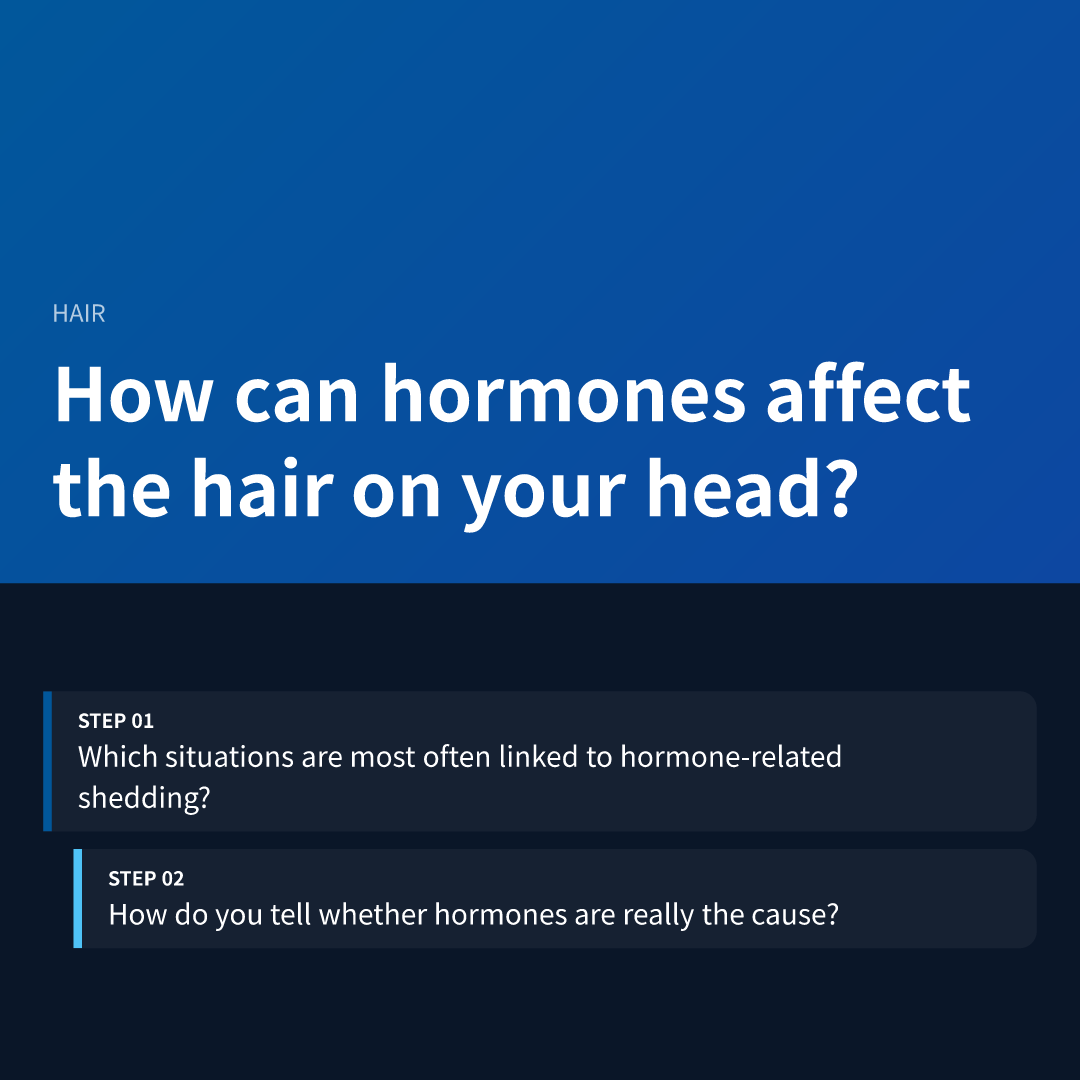
Below, the questions are arranged from the simplest to the hardest: how hormones touch hair at all, which situations are most often linked to shedding, and how people figure out whether hormones are really the cause.
How can hormones affect the hair on your head?
Hormones act as chemical messengers, and hair follicles respond to several of them. Thyroid hormones, sex hormones such as estrogen, progesterone, and androgens, and the stress hormone cortisol are the ones most often mentioned in connection with hair. When their levels shift, the follicle's growth schedule can shift too.
The basic hair growth cycle
Each hair follicle moves through a growth phase, a short transition phase, and a resting phase before the hair sheds and a new one starts. At any moment, different follicles are at different stages, which is why everyone loses some hair daily. Shedding some hair each day is a normal part of the hair growth cycle for most people.
Hormonal changes can push more follicles into the resting phase at the same time. Shedding then becomes noticeable, often a few months after the trigger. That delay is why people frequently struggle to connect the hair change with the event that caused it.
Which hormones come up most often?
- Thyroid hormones: Both an underactive and an overactive thyroid are commonly associated with diffuse thinning, according to the National Institutes of Health.
- Androgens: These are sometimes called "male hormones," though everyone has them. Follicles in people who are genetically sensitive can shrink in response, leading to gradual thinning.
- Estrogen and progesterone: Shifts in these hormones are often discussed around pregnancy, the postpartum period, and menopause.
- Cortisol: Long periods of physical or emotional stress may affect the hair cycle, though the link is usually indirect.
An important exception
Not every hormone fluctuation leads to visible hair changes. Many people experience hormonal shifts without noticing anything unusual on their scalp. Genetics, age, nutrition, and overall health all shape how strongly a follicle reacts.
Which situations are most often linked to hormone-related shedding?
Several life stages and health conditions are commonly connected with hormone-related hair changes. Recognizing the pattern can help you describe your symptoms clearly to a professional. It does not confirm a diagnosis on its own.
Pregnancy, postpartum, and menopause
Many people notice heavier shedding a few months after giving birth. The Mayo Clinic and other health organizations describe this as a common, usually temporary pattern tied to hormone levels settling after pregnancy. How long it lasts varies from person to person.
Menopause and the years leading up to it can also bring thinning, often at the crown or along the part. Changing estrogen and progesterone levels are generally thought to play a role, alongside genetics and aging.
Thyroid conditions
Thyroid problems are a frequently mentioned cause of widespread thinning rather than a single bald patch. The hair may also feel drier or more brittle. Hair changes can be one of several possible signs of a thyroid disorder, and they often appear alongside other symptoms such as fatigue, changes in weight, or sensitivity to temperature.
When thyroid levels are brought back into balance under medical care, hair changes often improve gradually for many people. Results differ, and regrowth takes time.
Polycystic ovary syndrome and androgen-related thinning
Polycystic ovary syndrome, often shortened to PCOS, is a hormonal condition associated with higher androgen activity. The Office on Women's Health describes thinning scalp hair as one possible feature, sometimes alongside irregular periods, acne, or extra hair growth on the face or body.
Androgen-related thinning can also occur without PCOS. Pattern hair loss is common and often runs in families. A clinician can help tell these situations apart.
Stress, illness, and medication changes
Major physical stress, such as a high fever, surgery, or rapid weight change, can trigger a wave of shedding. Some medications, including certain hormonal contraceptives when started or stopped, are also discussed in connection with shedding. Whether any medicine is involved in your case is a question for your prescriber or pharmacist, and it is best not to stop or change a prescription on your own.
Other causes that can look similar
Hormones are only one piece of a much larger picture. Low iron, other nutritional gaps, autoimmune conditions, scalp infections, tight hairstyles, and harsh styling habits can all cause thinning that resembles a hormonal problem. This is the main reason self-diagnosis can lead people in the wrong direction.
How do you tell whether hormones are really the cause?
You usually cannot tell from the mirror alone. The pattern of hair loss offers clues, but confirming a hormonal cause generally takes a conversation with a healthcare professional and sometimes testing. Think of your own observations as useful notes to bring to that visit.
Clues that may point toward a hormonal link
- Thinning that is spread across the scalp rather than in one round patch.
- A wider part or reduced volume at the crown that develops gradually.
- Hair changes that appear alongside other symptoms, such as irregular periods, fatigue, skin changes, or temperature sensitivity.
- Shedding that began a few months after pregnancy, illness, or a change in medication.
None of these clues is proof. They simply help a clinician decide where to look first.
What a professional visit may involve
A primary care clinician, dermatologist, or endocrinologist may ask about your health history, menstrual patterns, diet, stress, medications, and family history. They may examine your scalp and hair closely. Depending on what they find, they may suggest blood tests, which can include thyroid function, iron status, or hormone levels.
Which tests make sense depends on your symptoms and history, so there is no single standard panel for everyone. A professional decides what is appropriate and interprets the results in context.
What to bring to the appointment
- A rough timeline of when you first noticed the change.
- A list of medications and supplements you currently use.
- Notes about recent illness, major stress, weight changes, or pregnancy.
- Photos of your part line over time, which can make gradual change easier to see.
Signs that call for prompt attention
Seek medical care sooner rather than later if hair loss is sudden or comes in patches, if the scalp is painful, red, or scaly, or if you notice other new symptoms alongside it. Unexplained fatigue, significant weight change, heavy or missing periods, or a swelling in the neck are also reasons to book a visit. Early evaluation matters partly because some causes are more manageable when addressed sooner.
Limits of what you can expect
Even when a hormonal cause is found and addressed, hair regrowth is typically slow, because follicles need time to restart their cycle. Some people see meaningful improvement and others see more modest change. Pattern hair loss in particular is often long-term, and a professional can talk through realistic options and expectations.
Many over-the-counter products and supplements are marketed for hair, but evidence for them varies, and some supplements can interfere with lab tests or medicines. Talk with a pharmacist or doctor before starting anything new, particularly if you are pregnant, nursing, or managing a health condition.
Frequently asked questions
Can hair grow back after hormone-related shedding?
In many cases, yes, especially when the shedding is temporary, such as after pregnancy or a stressful illness. Regrowth tends to be gradual, and the timeline varies between people. If the cause is ongoing, such as genetic pattern thinning, a clinician can explain what may be realistic.
Do hormonal birth control or hormone therapy affect hair?
Some people report changes in shedding when they start, switch, or stop hormonal products, while many notice nothing at all. Different formulations act differently on the body, so reactions vary. Bring up any hair changes with the prescriber, and avoid stopping a prescribed medicine without their guidance.
Is diet or stress management enough to restore hormone-related hair loss?
Balanced eating and stress care support general health, but results vary from person to person, so it is worth asking a clinician what may fit your situation. If an underlying condition such as a thyroid disorder is driving the shedding, it typically needs professional evaluation. Lifestyle habits are often best viewed as a supporting part of a plan rather than the whole plan.
Disclaimer: This article is for informational purposes only and is not a substitute for professional medical advice, diagnosis, or treatment. Please consult a licensed professional for personal health decisions.
Related reading: Best Hair Loss Treatment Reddit Reviews: How to Read Them