Hair Loss From Dandruff and Itching: What’s Really Happening on Your Scalp
It’s a topic that comes up constantly in online forums, pharmacy counter conversations, and late-night searches: someone notices flakes on their shoulders, a scalp that won’t stop itching, and then — seemingly out of nowhere — more hair than usual in the shower drain. The instinct is to connect the dots immediately, and that’s exactly where questions about hair loss from dandruff and itching tend to start. The concern isn’t unreasonable, but the actual relationship between the two is more layered than a simple cause-and-effect story.
In plain terms, dandruff itself is a surface-level scalp condition involving flaking, mild redness, and irritation, usually linked to a yeast-like organism called Malassezia that lives on everyone’s skin but overgrows in some people. It does not typically destroy hair follicles on its own. What often gets blamed on “dandruff causing hair loss” is usually a secondary chain of events — persistent scratching, ongoing inflammation, or an unrelated condition happening at the same time — rather than the flakes themselves attacking the hair root.
Where This Concern Usually Shows Up First
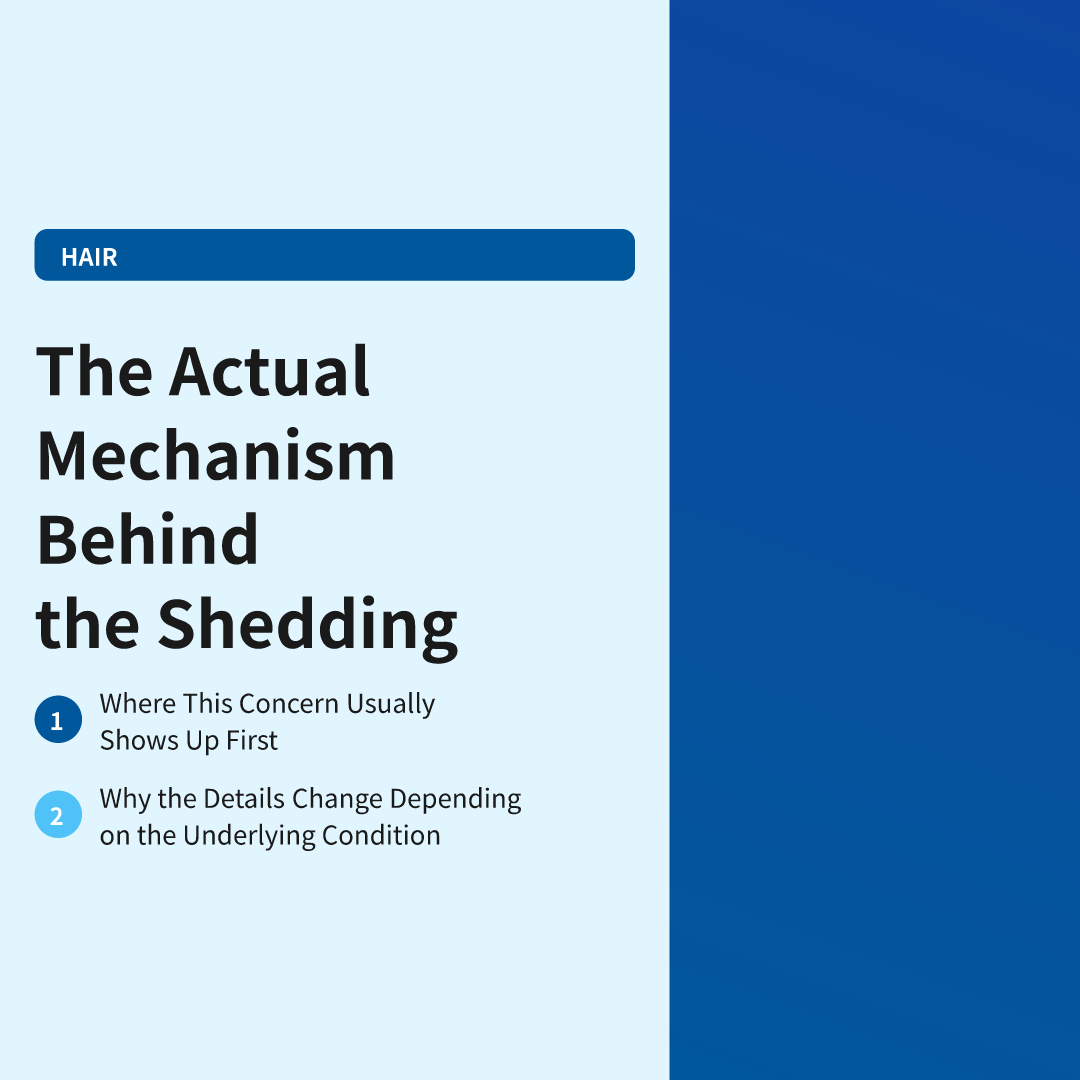
Most people don’t go looking for information about scalp conditions until something changes. A flare-up that used to be a minor annoyance suddenly feels more intense, or a period of heavy scratching lines up a little too neatly with visible thinning. That timing is often what pushes someone from “I have dandruff” to “is my dandruff causing hair loss.”
It also tends to surface during seasonal shifts, after switching shampoos, or during stressful stretches of life when several things — skin, sleep, appetite, hair — seem to change at once. Because scalp symptoms and hair shedding can appear in the same window of time without one directly causing the other, this is exactly the kind of situation where it’s easy to draw the wrong conclusion from a coincidence.
The Actual Mechanism Behind the Shedding
Dandruff is generally considered non-scarring — it lives on the skin’s surface, not inside the hair follicle. The link to hair loss, when it exists, usually runs through irritation and mechanical stress rather than the dandruff condition itself. A useful way to think about it: the flakes and itch are the surface symptom, but scratching is often the actual physical force doing something to the hair.
When scratching is frequent, hard, or happens over an extended period, it can loosen hair that’s already sitting in a resting phase, or create small areas of broken skin that become inflamed or occasionally infected. In more advanced cases, ordinary dandruff can progress into seborrheic dermatitis, a related but more inflamed condition marked by greasier flakes, deeper redness, and stronger itching. Persistent inflammation of this kind is one of several factors that dermatology sources associate with disrupted hair growth cycles, alongside genetics and hormonal changes — but it’s a contributing factor, not the sole explanation, in most cases.
Two Situations That Look Alike but Aren’t
Consider two hypothetical, fairly common scenarios that illustrate how differently this can play out.
In the first scenario, someone has had mild dandruff for years, occasionally scratches their scalp at night without realizing it, and starts noticing a bit more shedding during a particularly itchy month. Once they adjust their shampoo routine and consciously reduce scratching, both the flaking and the extra shedding settle down within a few weeks. Here, the shedding was largely reactive — tied to scalp irritation that eventually calmed down.
In the second scenario, someone has similar dandruff symptoms, but the thinning is happening at the crown and temples in a gradual, fairly even pattern, and a parent or grandparent experienced the same kind of hair loss. Even after the flaking clears up completely with consistent scalp care, the thinning keeps progressing on its own timeline. In this case, the dandruff and the hair loss are likely two separate things happening to overlap, with the second one being pattern hair loss (androgenetic alopecia) rather than anything scalp-irritation-related.
Why the Details Change Depending on the Underlying Condition
Several scalp conditions can look almost identical at a glance — flaky, itchy, uncomfortable — while behaving very differently underneath and requiring different responses. A rough side-by-side comparison helps clarify why lumping them all together as “dandruff” can lead to frustration when a chosen treatment doesn’t work.
| Condition | Typical flake appearance | Hair loss pattern | General approach |
|---|---|---|---|
| Dandruff | Small, dry, white flakes | Usually none, or mild diffuse shedding tied to scratching | Gentle, consistent scalp care |
| Seborrheic dermatitis | Greasier, yellowish flakes with redness | Possible diffuse shedding if inflammation is prolonged | Medicated shampoo, sometimes dermatologist input |
| Scalp psoriasis | Thick, silvery, plaque-like scale | Localized shedding around affected plaques | Different treatment class; needs diagnosis |
| Fungal infection (tinea capitis) | Scaly patches with broken hairs | Distinct patchy hair loss | Antifungal treatment, clinician-guided |
| Pattern hair loss | Not typically flaky on its own | Gradual thinning at crown or temples | Separate evaluation, unrelated to scalp irritation |
This is also where a family history matters. If someone else in the family has experienced a similar, predictable thinning pattern, that’s a meaningful clue that a separate process might be involved, regardless of what’s happening with flaking and itching.
The Misunderstanding That Trips Up Most People
The most common mistake isn’t ignoring dandruff — it’s assuming that any hair loss occurring near the same time as dandruff must be explained by the dandruff. This leads to two frustrating patterns. Some people spend months trying dandruff shampoos for thinning that’s actually driven by genetics, hormones, or an unrelated temporary shedding phase like telogen effluvium, and understandably feel let down when the shampoo doesn’t stop the hair loss. Others assume their scalp issue is “just dandruff” when thicker, silvery scale or distinct patchy bald spots actually point toward psoriasis or a fungal infection — conditions that don’t respond to standard dandruff products at all.
If the flaking and itching improve but the thinning keeps going on its own track, that’s usually a sign that something other than scalp irritation is driving it, and it deserves its own evaluation.
There’s also a subtler version of this mistake: treating scalp irritation and hair thinning as one combined problem to be solved by a single product. Many shampoos are marketed broadly for “dandruff and hair loss” together, which can blur the distinction even further and delay recognizing that two different issues might be at play.
Bringing It Together
Dandruff rarely destroys hair follicles directly — when hair loss from dandruff and itching does happen, it’s usually the scratching, prolonged inflammation, or an infection layered on top of an irritated scalp that’s doing the damage, not the flakes themselves. Several other scalp conditions, including seborrheic dermatitis, psoriasis, and fungal infections, can mimic dandruff closely enough to cause real confusion about what’s actually happening. And pattern hair loss can occur alongside dandruff as a completely separate process, which is often the piece people overlook.
In short: calm the visible irritation with gentle, consistent scalp care first, watch whether the shedding tracks with that irritation or continues on its own, and don’t assume every symptom has the same cause. If thinning persists after the scalp looks and feels normal, if hair loss appears in distinct patches, or if redness, pain, or oozing shows up, it’s a reasonable point to stop guessing and have a dermatologist take a direct look — since several of these conditions look strikingly similar in their early stages and are best told apart with a proper in-person evaluation.
Disclaimer: This article is for informational purposes only and is not a substitute for professional medical advice, diagnosis, or treatment. Please consult a licensed professional for personal health decisions.
Related reading: Why Does Hair Loss From Tight Hairstyles Happen Along the Hairline?