Hair Loss Prevention Through Diet and Nutrition
Noticing more hair in the shower drain or on your brush can feel unsettling. While many factors influence hair health, what you eat plays a meaningful role in supporting the growth cycle. The connection between hair loss prevention diet and nutrition isn’t about miracle cures, but understanding which nutrients support your scalp and follicles—and how to build sustainable eating patterns that work with your body’s needs.
Addressing nutrition-related hair concerns requires a clear sequence. Random changes rarely help, but a structured approach can support overall hair health over time.
Understanding the Nutritional Connection
Hair follicles need specific nutrients to function properly. Protein forms the structure of hair strands. Iron helps red blood cells carry oxygen to follicles. Zinc supports tissue repair and oil gland function around follicles. Biotin, vitamin D, and omega-3 fatty acids also play roles in the hair growth cycle.
Deficiencies in these nutrients may contribute to thinning or shedding, though other factors like genetics, hormones, stress, and medical conditions often matter more. Nutrition alone cannot reverse hereditary hair loss, but addressing deficiencies may support healthier growth when diet is part of the problem.
Start This Week: Simple Dietary Adjustments
Begin by including protein at each meal. Eggs, fish, chicken, beans, or Greek yogurt provide amino acids for hair structure. Add one serving of iron-rich food daily—lean red meat, spinach, lentils, or fortified cereals. Pair plant-based iron sources with vitamin C foods like bell peppers or citrus to improve absorption.
Include fatty fish like salmon or mackerel twice weekly for omega-3s. If you don’t eat fish, consider walnuts or flaxseeds. These steps don’t require dramatic changes, just consistent inclusion of nutrient-dense options alongside your regular eating pattern.
Build Consistency Over the Next Month
Track your intake of key nutrients for one week to identify gaps. Many people unknowingly under-consume protein or iron. Aim for varied sources: rotate between different proteins, include dark leafy greens several times weekly, and add nuts or seeds as snacks.
Consider a basic multivitamin if your diet lacks variety, but avoid mega-dose supplements without medical guidance. Excessive vitamin A or selenium can actually worsen hair loss. Biotin supplements are popular, but deficiency is rare in people eating balanced diets, and excess biotin can interfere with lab test results.
Maintain Long-Term Nutritional Support
Hair growth cycles span months, so dietary changes take time to show visible effects—typically three to six months minimum. Focus on sustainable patterns rather than restrictive diets, which can trigger temporary shedding through stress on the body.
Stay hydrated and limit crash dieting. Sudden calorie restriction or elimination of entire food groups can shock hair follicles into a resting phase, leading to increased shedding weeks later. Gradual, balanced changes support both overall health and hair maintenance.
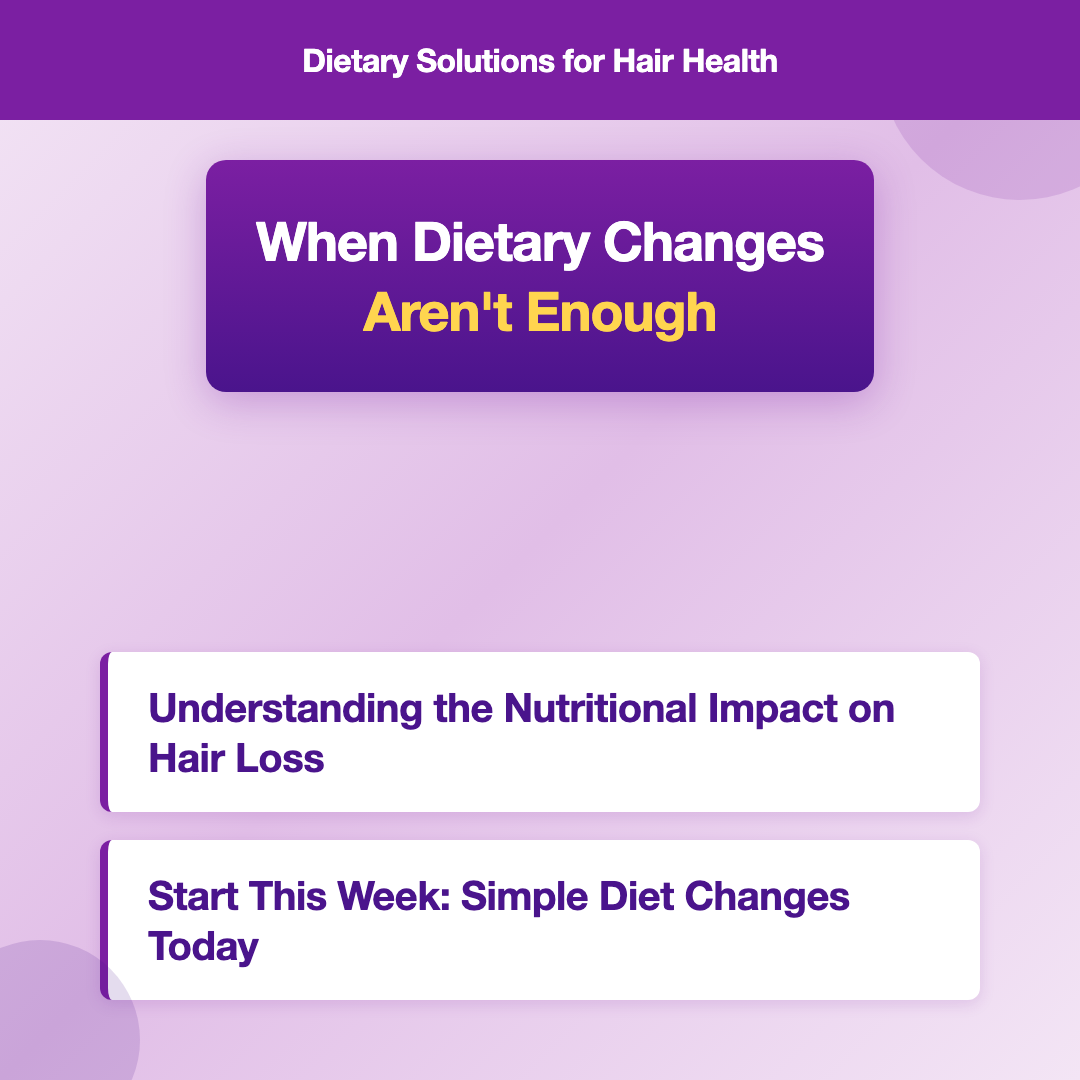
When Dietary Changes Aren’t Enough
If hair loss continues despite improved nutrition, or if you notice sudden, patchy, or rapid thinning, consult a healthcare provider. Blood tests can identify deficiencies in iron, vitamin D, or thyroid hormones. A dermatologist can evaluate scalp conditions or recommend treatments beyond dietary adjustments. Nutrition supports hair health, but it’s one piece of a larger picture that may require professional assessment.
Disclaimer: This article is for informational purposes only and is not a substitute for professional medical advice, diagnosis, or treatment. Please consult a licensed professional for personal health decisions.
📚 References
The official and high-authority sources below can help readers verify the context safely.