How to Find the Best Rhinoplasty Surgeon Near Me
You type a few words into a search bar, and suddenly there are dozens of clinics, glossy photo galleries, and star ratings, all claiming to be the right choice. Finding the best rhinoplasty surgeon near me is less about picking a winner from a list and more about confirming training, relevant experience, and a good fit for your goals. Credentials, a clear consultation process, and honest conversations about limits are usually the most reliable starting points.
Rhinoplasty, often called a nose job, reshapes the nose for appearance, breathing, or both. It is a detailed procedure, and outcomes vary from person to person. The sections below walk through the questions most people ask, starting with the simplest and moving to the harder ones.
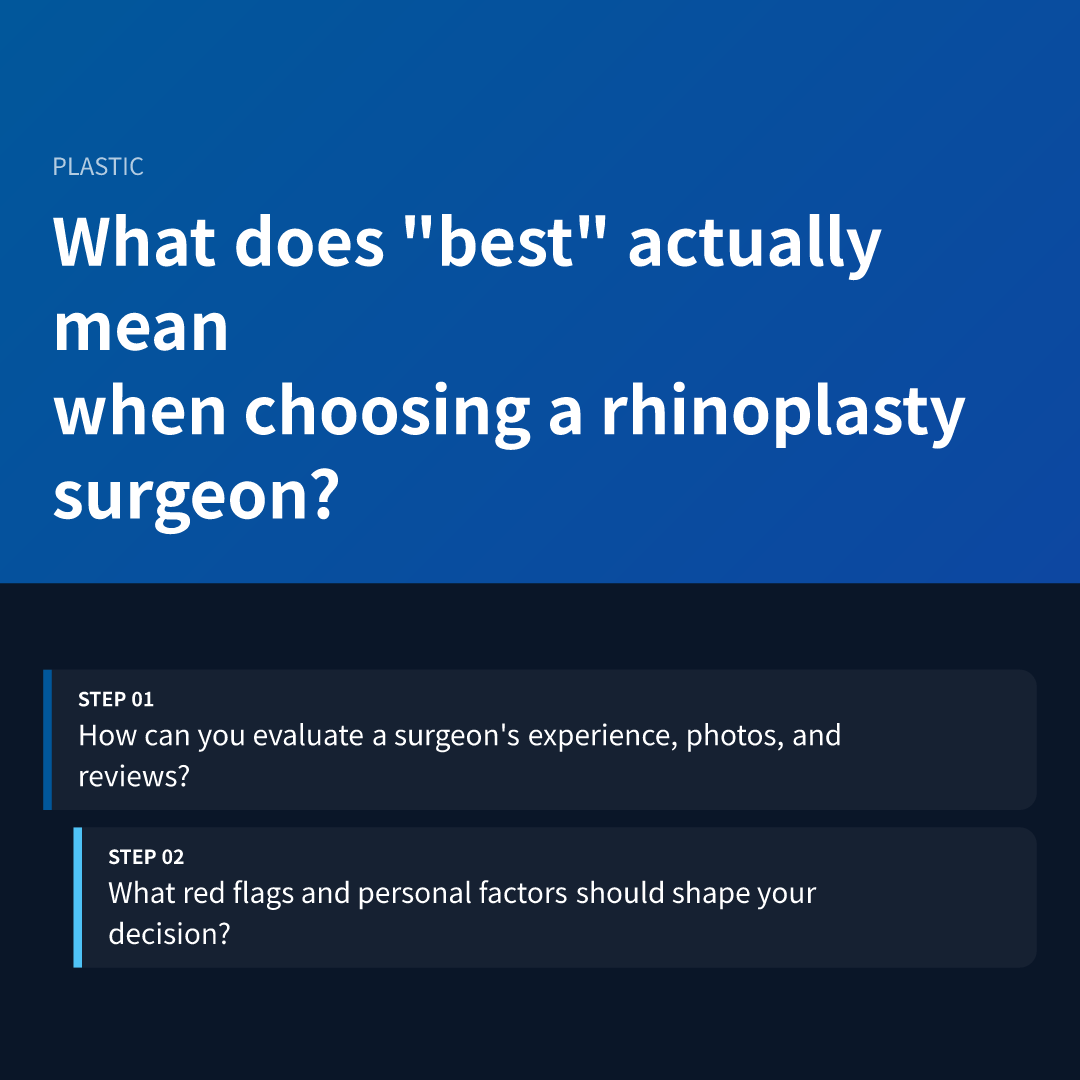
What does "best" actually mean when choosing a rhinoplasty surgeon?
"Best" is not a single measurable title, and no ranking can tell you who is right for your particular nose and goals. In practice, people usually mean a surgeon who is properly trained, experienced with the type of change they want, and willing to talk candidly about what is realistic.
Because superlatives are hard to verify, it helps to replace "best" with a few concrete questions you can actually check:
- Is the surgeon licensed in your state or region, and is the license in good standing?
- Is the surgeon certified by a recognized board in a relevant specialty, such as plastic surgery or facial plastic surgery and otolaryngology?
- Does the surgeon perform nose surgery regularly, rather than occasionally as a side service?
- Does the practice operate in an accredited facility with appropriate emergency preparedness?
The American Board of Medical Specialties and state medical boards generally offer public tools for checking certification and license status. Many professional societies for plastic surgery also publish directories of members, though membership alone does not guarantee a particular result. It is worth confirming details directly rather than relying on a clinic's own marketing.
Why "near me" is only part of the picture
Proximity is convenient for follow-up visits, which matter because healing happens over a long stretch. Still, many people find that traveling a reasonable distance for a consultation is worth it if the match is better. Some surgeons also offer virtual first meetings, which can widen your options before you commit to anything.
Keep in mind that a nearby office with limited experience in your specific concern, such as a revision or a structural breathing problem, may not be the better choice. Convenience and fit are separate questions.
How can you evaluate a surgeon's experience, photos, and reviews?
The most useful evidence is a mix of verified credentials, relevant photo galleries, and a thorough in-person or virtual consultation. No single source tells the whole story, so comparing several tends to give a clearer picture.
Reading before-and-after galleries carefully
Photo galleries can show a surgeon's aesthetic style, but they have real limits. Lighting, angles, makeup, and editing can change how a nose looks, and a gallery rarely shows the full range of results. Look for consistent lighting, multiple angles, and examples of noses similar to yours in shape, skin thickness, and ethnic background.
Be cautious if every photo looks nearly identical, since good surgical planning usually accounts for each person's facial features. It is also reasonable to ask whether the photos are of the surgeon's own patients and whether the patients gave permission. Results shown in a gallery are not a promise of what your outcome will be.
Making sense of online reviews
Reviews can reveal patterns in communication, wait times, and office staff, which are useful details. They are less reliable for judging surgical skill, because most reviewers cannot assess technique and some reviews may be solicited or filtered. Reading a spread of sources, and paying attention to recurring comments rather than single glowing or angry posts, usually works better.
The Federal Trade Commission has general guidance on how endorsements and reviews should be disclosed, which is a reminder that not every testimonial is neutral. If a review reads like an advertisement, treat it that way.
Related reading: Plastic Surgery for Men Options: What the Process Looks Like
What a good consultation tends to include
A thoughtful consultation usually involves an examination of your nose and a discussion of your goals. You might also talk through your medical history, any breathing difficulties, and how your skin and cartilage may influence healing. Many practices use digital imaging to illustrate possibilities, though these images are only illustrations and not a guarantee.
Some questions people commonly bring include:
- How many rhinoplasties does the surgeon perform in a typical year, in general terms?
- What approach, open or closed, is likely for my situation, and why?
- What are the possible risks, including breathing changes, asymmetry, or the need for a revision?
- Who handles complications or follow-up if something does not go as planned?
- What are the full costs, including facility, anesthesia, and follow-up visits?
A surgeon who welcomes these questions and explains tradeoffs plainly is generally a better sign than one who rushes you or only emphasizes benefits.
What red flags and personal factors should shape your decision?
Your decision should weigh both warning signs in the practice and factors specific to you, such as your health, expectations, and whether you are seeking cosmetic change, functional improvement, or both. This is the hardest question because it requires honest self-assessment as well as research.
Common warning signs to notice
Some patterns tend to give people pause when they appear:
- Promises of perfect, guaranteed, or risk-free results, since surgical outcomes vary and healing is unpredictable.
- Heavy pressure to book quickly, such as limited-time discounts for surgery.
- Reluctance to share credentials, facility details, or what happens if complications occur.
- Little discussion of your medical history, breathing, or realistic limits.
- A price far below what other practices in your area quote, without a clear explanation.
The U.S. Food and Drug Administration and consumer protection agencies generally advise caution around advertising that sounds too good to be true. Cosmetic surgery is elective in most cases, so you usually have time to pause and compare.
Personal factors worth discussing
Your own situation matters a great deal. People with breathing problems, previous nose surgery, past injuries, or certain medical conditions may need a surgeon with specific experience, and a standard cosmetic approach may not fit. Smoking, some medications, and certain health conditions can also affect healing, so a clinician will typically ask about them.
Expectations matter as well. Some people find it helpful to ask what the surgeon cannot change, since skin thickness, cartilage strength, and existing structure all set boundaries. If you feel uncertain, getting a second opinion from another qualified surgeon is a common and reasonable step.
Recovery, revisions, and realistic timelines
Swelling can linger and the final shape often settles gradually over a long period, so early photos do not show the end result. Some people end up considering a revision procedure, and it is useful to ask in advance how a practice handles that possibility and what it may cost. How you care for yourself after surgery should follow your surgeon's written instructions, and questions about medications or aftercare belong with your surgeon or pharmacist.
If you notice signs after surgery such as heavy bleeding, trouble breathing, fever, or severe or worsening pain, contact your surgeon's office or seek urgent medical care promptly.
Frequently asked questions
Is a surgeon who specializes only in noses always a better choice?
Not necessarily, though focused experience can be a useful sign. A surgeon who performs many nose procedures may be more familiar with common challenges, but training, ethics, communication, and fit still matter. Ask how much of their practice involves the type of change you want.
Should I get more than one consultation before deciding?
Many people do, and it is generally considered reasonable. Comparing how different surgeons assess your nose, describe risks, and explain their approach can clarify which one you trust. Differences in recommendations are worth discussing rather than treating as a contest.
What if I am unhappy with my results later?
Start by speaking with your original surgeon, since early healing can look different from the final outcome. Some people later seek a second opinion or a revision, which is often more complex than a first surgery. Asking about each practice's approach to follow-up before you commit can help you plan ahead.
Choosing the best rhinoplasty surgeon near me comes down to verifying credentials, studying relevant experience, and having candid conversations before you decide. Take your time, and bring your questions to a licensed professional who can evaluate your individual situation.
Disclaimer: This article is for informational purposes only and is not a substitute for professional medical advice, diagnosis, or treatment. Please consult a licensed professional for personal health decisions.