Plastic Surgery for Men Options: What the Process Looks Like
This walkthrough follows plastic surgery for men options from the first consultation through recovery, so you can picture each stage before making any decisions. Men commonly ask about procedures involving the face, nose, eyelids, chest, and body contour, and the general flow is similar across many of them. Details differ by procedure, surgeon, and individual health, so treat this as background reading rather than a plan.
Mia here. I am a writer, not a clinician, and I have not had these procedures myself. What follows is a general explanation that points to public health agencies where relevant. Your own surgeon is the person who can speak to your situation.
Before Anything Happens: Preparation and Planning
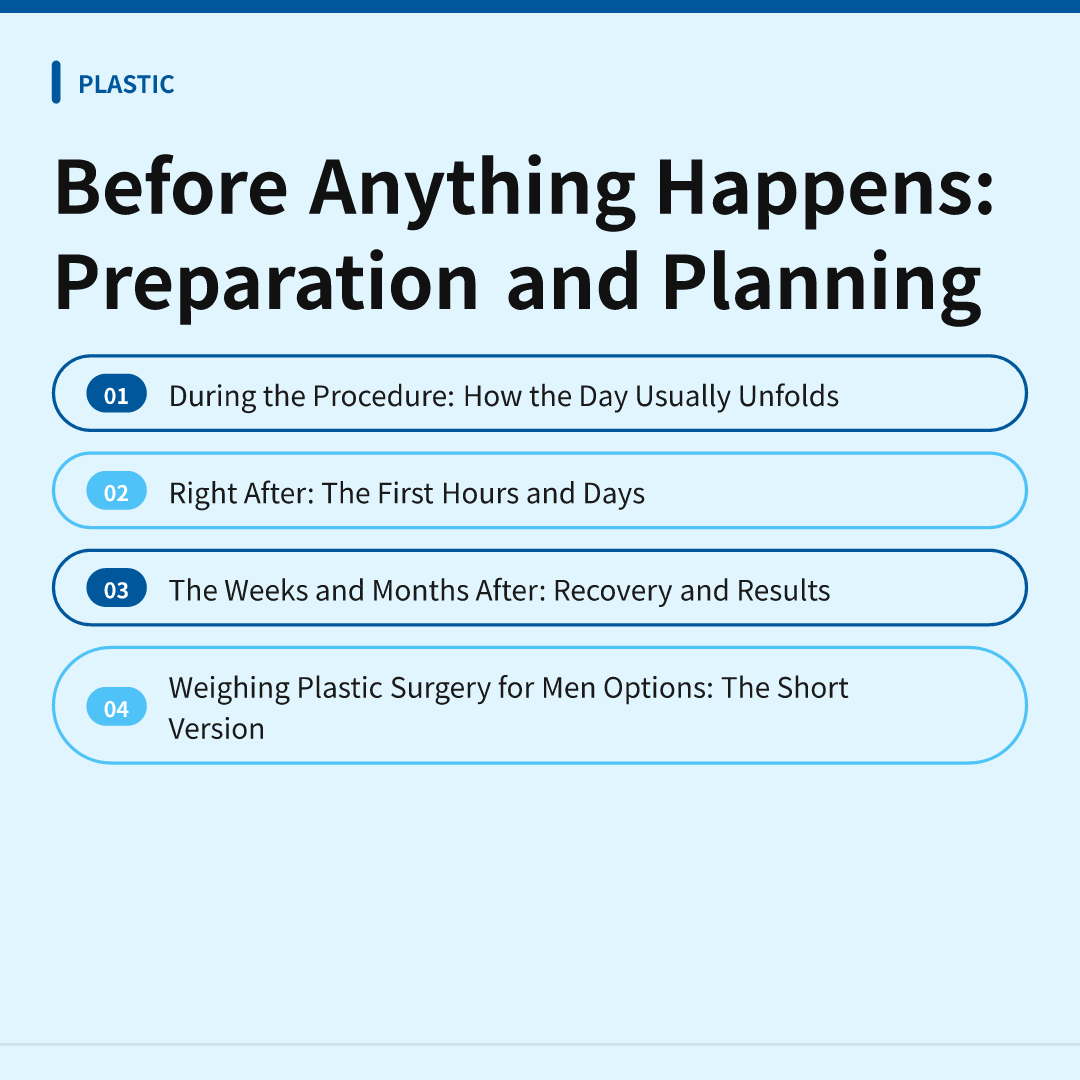
Preparation starts with a consultation, and it is usually the most important stage. This is where goals, medical history, medications, and expectations are discussed. The surgeon examines the area of concern and explains which approaches might fit, which might not, and what trade-offs come with each.
The procedures men most often ask about
Men's interest tends to cluster around a handful of areas. Common categories include:
- Facial and neck procedures: facelift variations, neck contouring, and chin or jawline work, including implants or fat-based approaches.
- Nose surgery: rhinoplasty, often for breathing concerns, appearance, or both.
- Eyelid surgery: blepharoplasty for drooping upper lids or under-eye bags.
- Chest procedures: surgery for enlarged breast tissue in men, known as gynecomastia.
- Body contouring: liposuction or related approaches for stubborn areas, and procedures after major weight loss.
- Hair restoration: surgical transplant techniques for thinning or balding areas.
Some of these overlap with reconstructive or functional care, such as breathing-related nose surgery. Whether a procedure is considered cosmetic or medically necessary can affect insurance, so that is worth asking about early.
What happens during planning
Expect questions about your health history, smoking or nicotine use, medications and supplements, and past surgeries. According to the American Society of Plastic Surgeons' general public guidance, choosing a board-certified surgeon and confirming where the procedure will be performed are standard parts of patient preparation. You may also be asked for photos, measurements, or lab work, depending on the procedure.
What you might feel at this stage is a mix of curiosity and nerves. Some men also feel self-conscious about being in a field that is often marketed toward women. That is common, and a good practice will treat your questions plainly.
A frequent question here is whether to get more than one opinion. Many people do, and reputable surgeons generally expect it.
Medications and lifestyle before surgery
Surgeons often give specific instructions about blood-thinning medicines, certain supplements, alcohol, and nicotine, since these can affect bleeding and healing. The FDA and other agencies note that supplements and medicines can interact with anesthesia and surgery in ways people do not always expect. Rather than guessing, tell your surgical team about everything you take, and follow their written guidance and your pharmacist's advice.
During the Procedure: How the Day Usually Unfolds
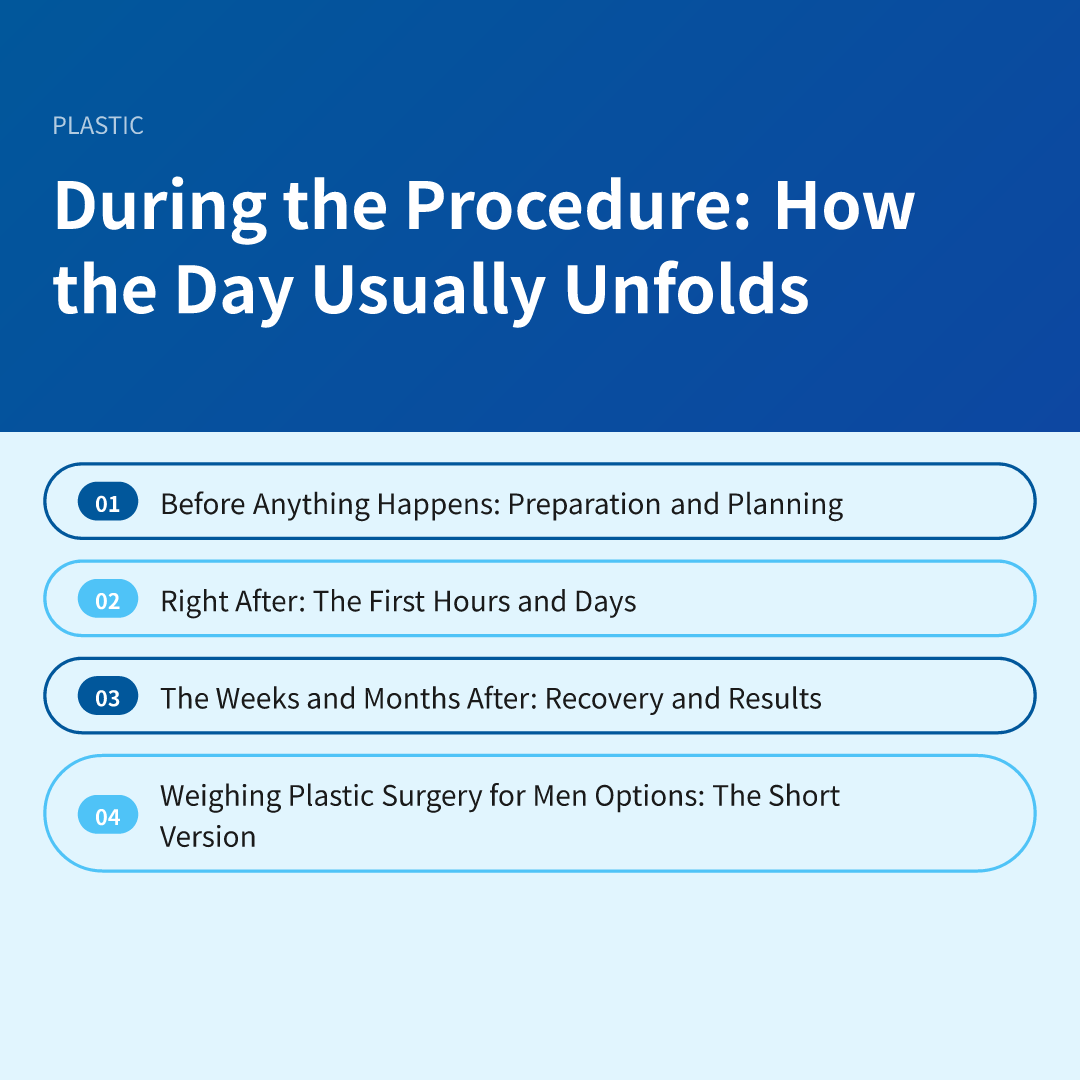
On the day itself, you typically check in, review consent forms, and meet the team who will be involved. Marking of the treatment area often happens while you are awake and standing, because landmarks shift when you lie down.
Anesthesia and setting
Depending on the procedure, anesthesia may be local with sedation or general. The choice depends on the extent of surgery, your health, and the surgeon's and anesthesia provider's judgment. The American Society of Anesthesiologists offers general patient information on what to expect from different anesthesia types, and it is a reasonable place to read up before your appointment.
You may feel drowsy or have little memory of the procedure, depending on the type used. A common question is whether you will wake up during surgery. Anesthesia teams monitor patients throughout, and your concerns are worth raising directly with the anesthesia provider beforehand.
The surgery itself
What happens next depends entirely on the operation. Eyelid surgery involves small incisions placed in natural creases. Rhinoplasty reshapes cartilage and bone, sometimes through incisions hidden inside the nose. Gynecomastia surgery may remove glandular tissue, excess fat, or both, often through small incisions near the areola. Liposuction uses thin tubes to remove fat from targeted areas. Hair transplantation relocates follicles from denser areas of the scalp.
Length varies widely, from relatively short outpatient procedures to longer combined operations. You will not be aware of most of it, so the practical question is usually about logistics: who drives you home, and who stays with you afterward. Most facilities require a responsible adult for this.
Right After: The First Hours and Days
When you wake up, you are monitored in a recovery area until you are stable enough to go home or move to an overnight stay. Dressings, compression garments, splints, or drains may be in place, depending on the procedure.
What you might notice
Swelling, bruising, tightness, numbness, and soreness are commonly described after many cosmetic procedures. The intensity varies by person and by operation. Grogginess from anesthesia can also linger for a while, and some people feel emotionally flat or teary in the first days, which is often discussed as a normal part of recovery for many surgeries.
Pain control is directed by your surgeon. Any prescribed or over-the-counter medicine should be used only as your surgeon or pharmacist has explained, since the right choice depends on your health and other medications. If something feels off, calling the practice is better than waiting it out.
Warning signs that need prompt attention
General patient guidance from health agencies like MedlinePlus lists a few situations after surgery that call for contacting the surgical team or seeking urgent care. These include:
- Fever or chills.
- Redness, warmth, or discharge at an incision that seems to be worsening.
- Swelling that is rapidly increasing or one-sided.
- Chest pain, shortness of breath, or leg pain and swelling, which can signal serious problems.
- Pain that is not controlled as your surgeon described.
For emergencies such as trouble breathing or chest pain, local emergency services are the right call rather than the surgeon's office.
The Weeks and Months After: Recovery and Results
Recovery is gradual. Early swelling often settles first, while subtler swelling can take much longer to resolve, especially after nose or facial procedures. Final results are typically judged after healing has had time to progress, not in the first weeks.
Follow-up and return to normal life
Surgeons usually schedule follow-up visits to check healing, remove sutures or dressings if needed, and answer questions. Time away from work, exercise, and heavy lifting depends on the procedure and on how you heal. Some men are eager to return to the gym quickly, and that impulse is worth discussing with the surgeon, because activity restrictions exist for reasons tied to bleeding, swelling, and incision stress.
Scarring is another common topic. Scars generally mature over a long period, and their appearance depends on genetics, incision placement, skin type, sun exposure, and aftercare. Nobody can promise how yours will look.
Limits and realistic expectations
Surgery can change shape and proportion, but it does not guarantee a particular look, and results vary from person to person. Revision procedures are sometimes discussed when outcomes fall short of expectations, though they are not always possible or advisable. Asking a surgeon how they handle dissatisfaction or complications is a fair question before you commit.
Men with certain conditions deserve extra caution. People who smoke, have bleeding disorders, uncontrolled chronic illness, or body-image concerns that feel overwhelming may need additional evaluation first. If appearance worries are causing significant distress, a conversation with a mental health professional can be a useful complement to a surgical consultation.
Weighing Plastic Surgery for Men Options: The Short Version
Looking across the whole journey, a few points hold up regardless of the procedure.
- Before: a thorough consultation, honest medical history, and a qualified, properly credentialed surgeon set the foundation.
- During and right after: anesthesia, the operation, and early recovery are managed by your care team, with swelling, bruising, and soreness commonly expected.
- Later: healing and final appearance unfold gradually, with follow-up visits guiding the way.
Everyone heals differently, and the right choice depends on your health, goals, and budget. Costs vary widely by procedure and location, and cosmetic surgery is often not covered by insurance, so ask for a clear written breakdown. If you are weighing plastic surgery for men options, a consultation with a licensed surgeon is the best next step, and it commits you to nothing.
Disclaimer: This article is for informational purposes only and is not a substitute for professional medical advice, diagnosis, or treatment. Please consult a licensed professional for personal health decisions.
Related reading: Plastic Surgery Insurance Coverage: What Plans Actually Pay For