How to Prevent Botox Bruising With Simple Steps
Bruising after botox is common but frustrating. Small blood vessels near injection sites can break easily, leaving visible marks that take days to fade. While some bruising happens even with careful technique, many cases are preventable. The solution depends on timing—what you do before, during, and after your appointment matters more than most people realize.
Understanding Why Bruising Happens
Botox injections use fine needles that pass through skin and tissue. When a needle contacts a tiny blood vessel, blood leaks into surrounding tissue and creates a bruise. Factors like medication, supplements, alcohol, and skin fragility increase this risk. Your body’s clotting ability and the injector’s technique also play roles. Knowing these causes helps you take targeted prevention steps.
Before Your Appointment: Two-Week Prep
Start preparation early for best results:
- Stop blood thinners: Avoid aspirin, ibuprofen, naproxen, and fish oil for 7-10 days if medically safe. Check with your doctor first if you take prescribed anticoagulants.
- Skip herbal supplements: Ginkgo biloba, garlic, ginger, vitamin E, and turmeric can thin blood. Stop these at least one week ahead.
- Limit alcohol: Alcohol dilates blood vessels and impairs clotting. Avoid it for 24-48 hours before treatment.
- Stay hydrated: Well-hydrated skin bruises less easily. Drink water consistently in the days leading up to your visit.
For more guidance on , review pre-treatment checklists with your provider.
During Treatment: Small Choices That Help
Your injector controls technique, but you can still help:
- Arrive with clean skin: No makeup or lotions reduce infection risk and improve visibility of vessels.
- Communicate openly: Tell your injector about all medications, supplements, and past bruising experiences.
- Request ice: Cooling the area before and after injections constricts blood vessels temporarily.
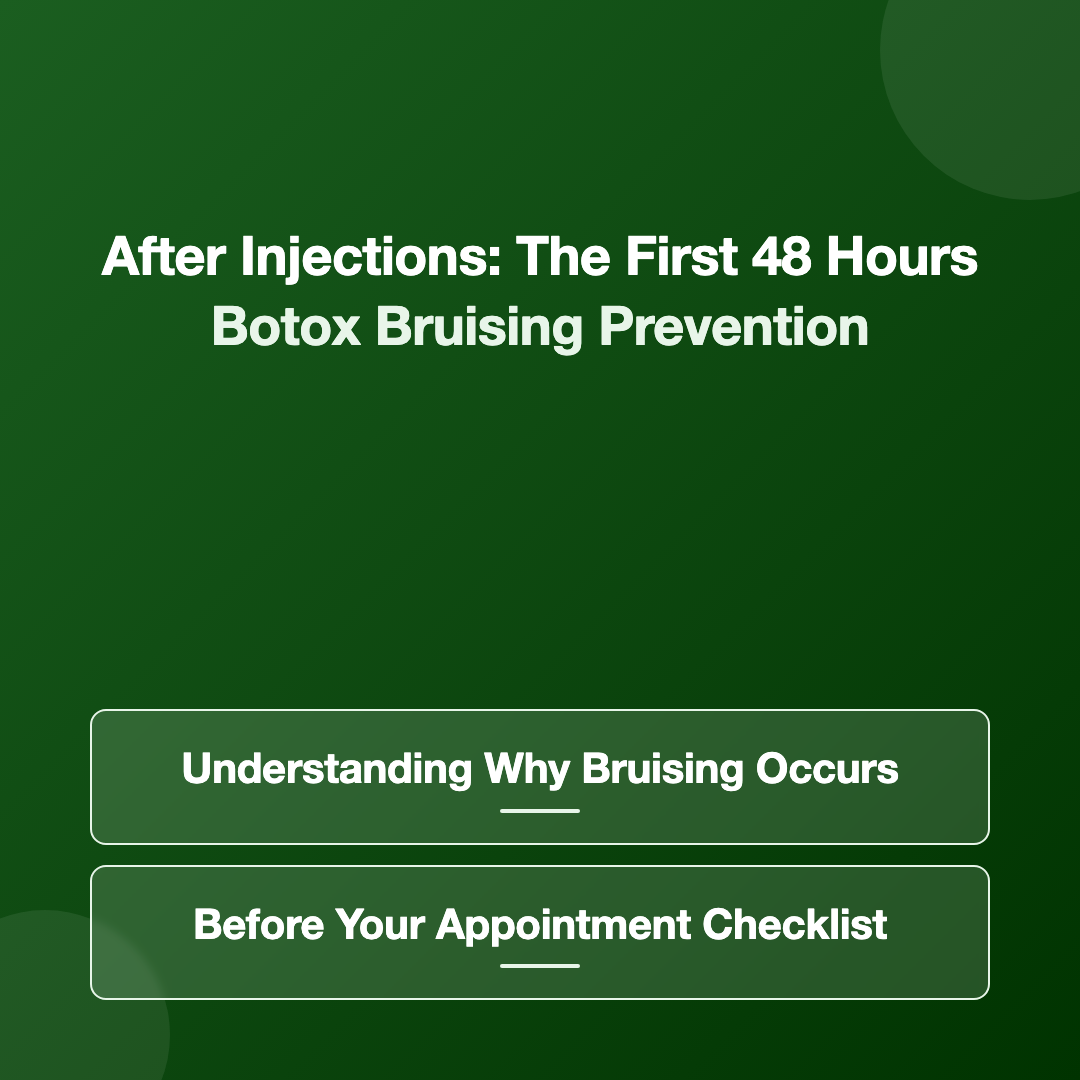
After Injections: The First 48 Hours
Post-treatment care reduces bruise severity:
- Apply gentle pressure: If bleeding occurs, press the site lightly with clean gauze for a few minutes.
- Use ice cautiously: Apply wrapped ice packs for 10 minutes at a time, avoiding direct pressure on injection points.
- Sleep elevated: Keep your head raised the first night to minimize blood flow to treated areas.
- Avoid strenuous activity: Skip intense exercise, bending over, or heavy lifting for 24 hours.
- Skip makeup initially: Wait at least 4 hours before applying cosmetics to reduce irritation.
Understanding helps you follow these steps correctly.
When Bruising Persists or Worsens
Most bruises fade within 7-10 days. Consult your provider if bruising spreads significantly, becomes very painful, or shows signs of infection like warmth or pus. Persistent or unusual bruising may indicate an underlying clotting issue that needs medical evaluation. Professional assessment ensures safe healing and rules out complications.
Disclaimer: This article is for informational purposes only and is not a substitute for professional medical advice, diagnosis, or treatment. Please consult a licensed professional for personal health decisions.
📚 References
The official and high-authority sources below can help readers verify the context safely.