Permanent Filler Risks and Complications You Should Know
Permanent fillers promised lasting results, but decades of experience have revealed serious complications that can appear years after injection. Understanding these permanent filler risks complications helps you make informed decisions about facial enhancement.
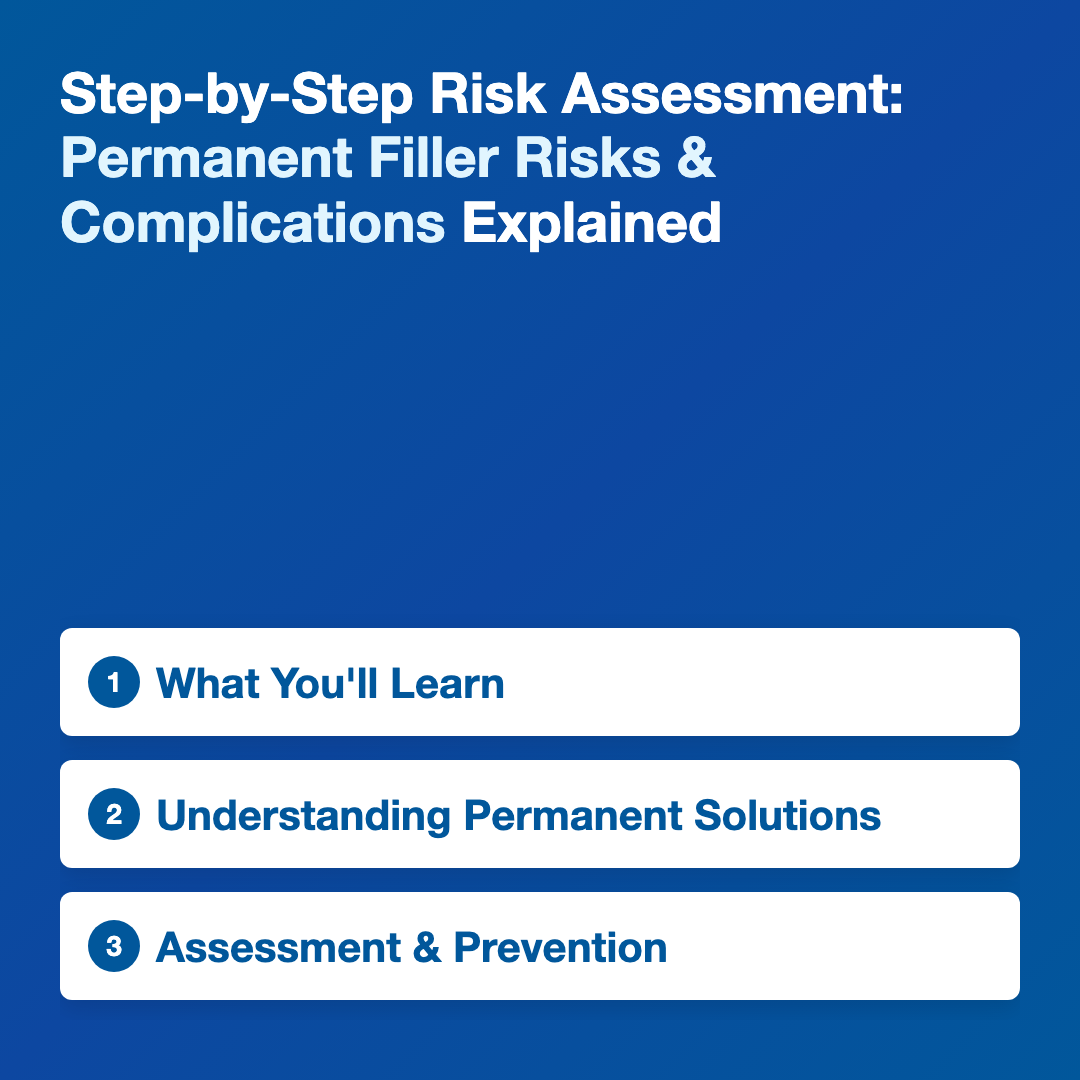
What You’ll Learn
- Why permanent fillers carry unique long-term risks
- Common complications and their warning signs
- Step-by-step assessment of your personal risk factors
- When removal becomes necessary
- Safer alternatives to permanent materials
Understanding Permanent Fillers
Permanent fillers use non-absorbable materials like silicone, polymethylmethacrylate (PMMA), or polyacrylamide gel that remain in tissue indefinitely. Unlike hyaluronic acid fillers that dissolve naturally, these substances stay permanently. The body treats them as foreign objects, and some people develop delayed immune responses requiring surgical intervention.
Common Complications
Granuloma Formation
The body may form granulomas—inflammatory nodules—around permanent filler material months or years after injection. These firm lumps can grow, become painful, and distort facial contours.
Migration and Displacement
Permanent materials can shift from their original injection site, creating asymmetry that’s difficult to correct.
Chronic Inflammation
Low-grade inflammation may persist indefinitely, causing swelling, redness, or tenderness. Some patients experience periodic flare-ups triggered by illness or dental work.
Infection Risk
Permanent filler risks complications include serving as a potential site for bacterial colonization years after initial injection.
Step-by-Step Risk Assessment
Step 1: Identify Your Filler Type
Determine exactly what material was injected, when, and in what volume.
Step 2: Document Current Symptoms
Note any lumps, asymmetry, pain, or color changes. Take dated photographs from multiple angles.
Step 3: Monitor for Changes
Track whether symptoms are stable, worsening, or fluctuating.
Step 4: Research Qualified Specialists
Seek board-certified dermatologists or plastic surgeons experienced in permanent filler complications.
Warning Signs Requiring Immediate Attention
Seek professional care immediately if you experience:
- Sudden swelling, redness, or warmth
- Fever or systemic illness with local symptoms
- Vision changes or severe headache
- Skin discoloration suggesting vascular compromise
- Rapidly growing lumps or severe pain
Frequently Asked Questions

Can all permanent fillers be removed?
No. Complete removal often proves impossible because material integrates with tissue. Surgical excision may leave microscopic particles and cause scarring.
How long after injection can complications appear?
Complications can develop immediately or decades later. Some granulomas form 10-20 years post-injection.
Are permanent fillers still used?
Most reputable practitioners have abandoned permanent fillers due to complication rates. Temporary hyaluronic acid fillers offer reversibility and safer profiles.
Conclusion

Permanent filler risks complications range from minor aesthetic concerns to serious medical problems requiring surgical intervention. While some individuals tolerate permanent materials for years, the unpredictable nature of delayed complications and difficulty of removal have led most experts to recommend temporary alternatives. If you have permanent fillers, monitor for changes and establish care with a qualified specialist.
Disclaimer: This article is for informational purposes only and is not a substitute for professional medical advice, diagnosis, or treatment. Please consult a licensed professional for personal health decisions.
📚 References
The official and high-authority sources below can help readers verify the context safely.