Post Botox Care Instructions: A Step-by-Step Walkthrough
From the moment you book a consultation to the weeks after your last follow-up, a Botox appointment follows a fairly predictable path — and knowing what happens at each stage can make the whole experience feel less mysterious. This walkthrough follows that timeline in order: what typically happens before treatment, during the injections, right after you leave the office, and in the days and weeks that follow. Along the way, we’ll cover the kind of post Botox care instructions that clinics commonly mention, though the exact advice you receive should always come from the provider who actually treats you.
Before the Appointment: What Preparation Usually Looks Like
Most reputable clinics start with a consultation, not a needle. A provider will typically ask about your medical history, current medications, and the specific lines or areas you want to address — often the forehead, the area between the brows, or the crow’s feet near the eyes.
What happens: You’ll likely be asked about blood thinners, certain supplements like fish oil or vitamin E, and any history of neuromuscular conditions. Some clinics also take photos beforehand to track results over time.
What you might feel: A bit of nervousness is common, especially for first-timers, but the pre-treatment conversation itself is usually quick and painless — it’s mostly talking, not treatment.
Common question: “Do I need to stop any medications beforehand?” This is exactly the kind of question to raise directly with your prescribing clinician or the injector, since individual health histories vary and only a professional reviewing your specific case can advise on this safely.
During the Procedure: How the Injections Actually Happen
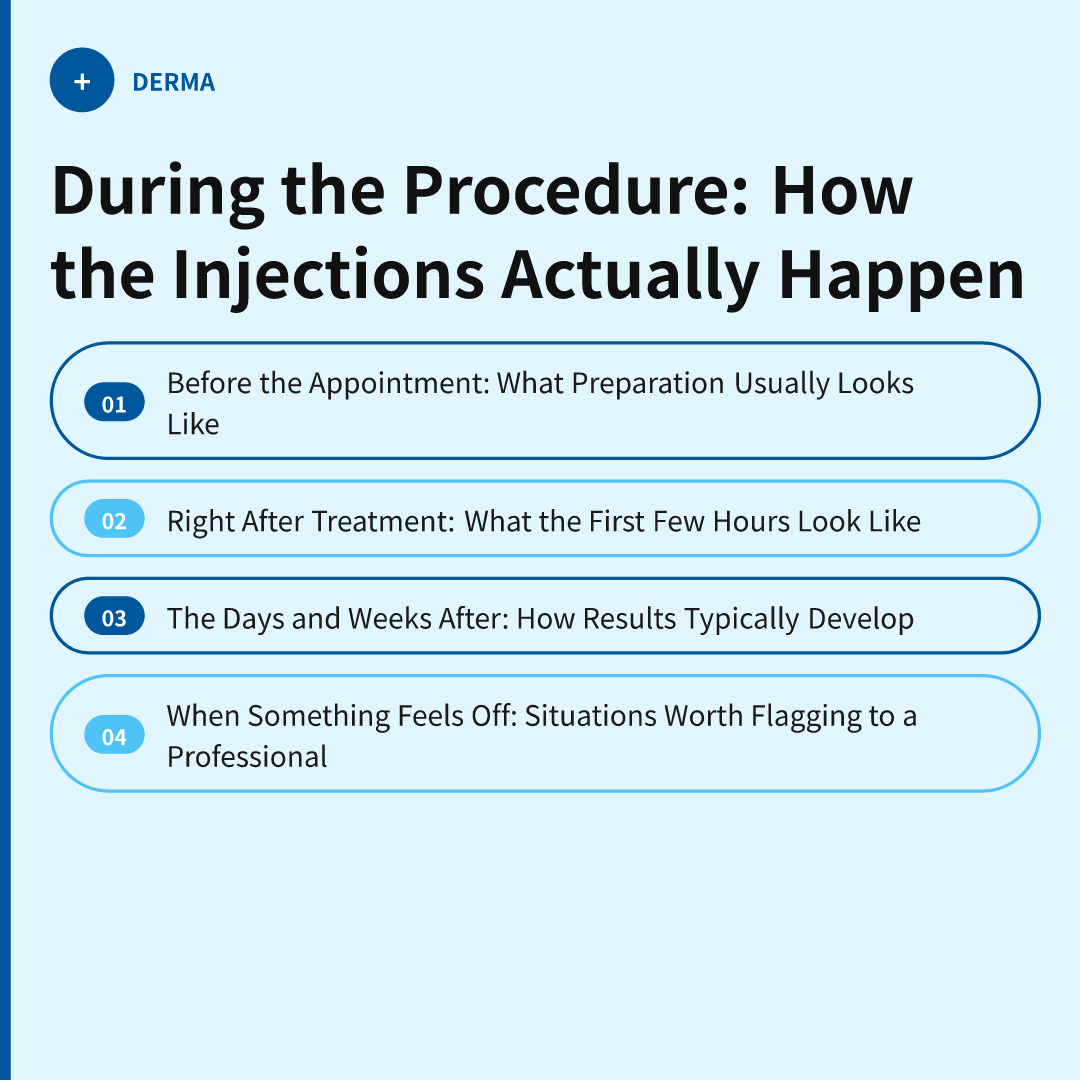
The treatment itself tends to move faster than people expect. Once the areas are marked and cleaned, the injector uses a fine needle to place small amounts of the neuromodulator into specific muscles.
What happens: A series of small injections are made across the treatment area, often taking only a matter of minutes total. Ice or a topical numbing option may be used beforehand if the clinic offers it, though many people skip this step since the discomfort is usually brief.
What you might feel: Most people describe a quick pinch or slight sting at each injection point, similar to a small pinprick. Any discomfort typically fades within seconds of each injection.
Common question: “How many injections will I need?” This depends entirely on the treatment area, the muscle strength being targeted, and the results you and your provider discuss — there’s no fixed number that applies to everyone.
Right After Treatment: What the First Few Hours Look Like
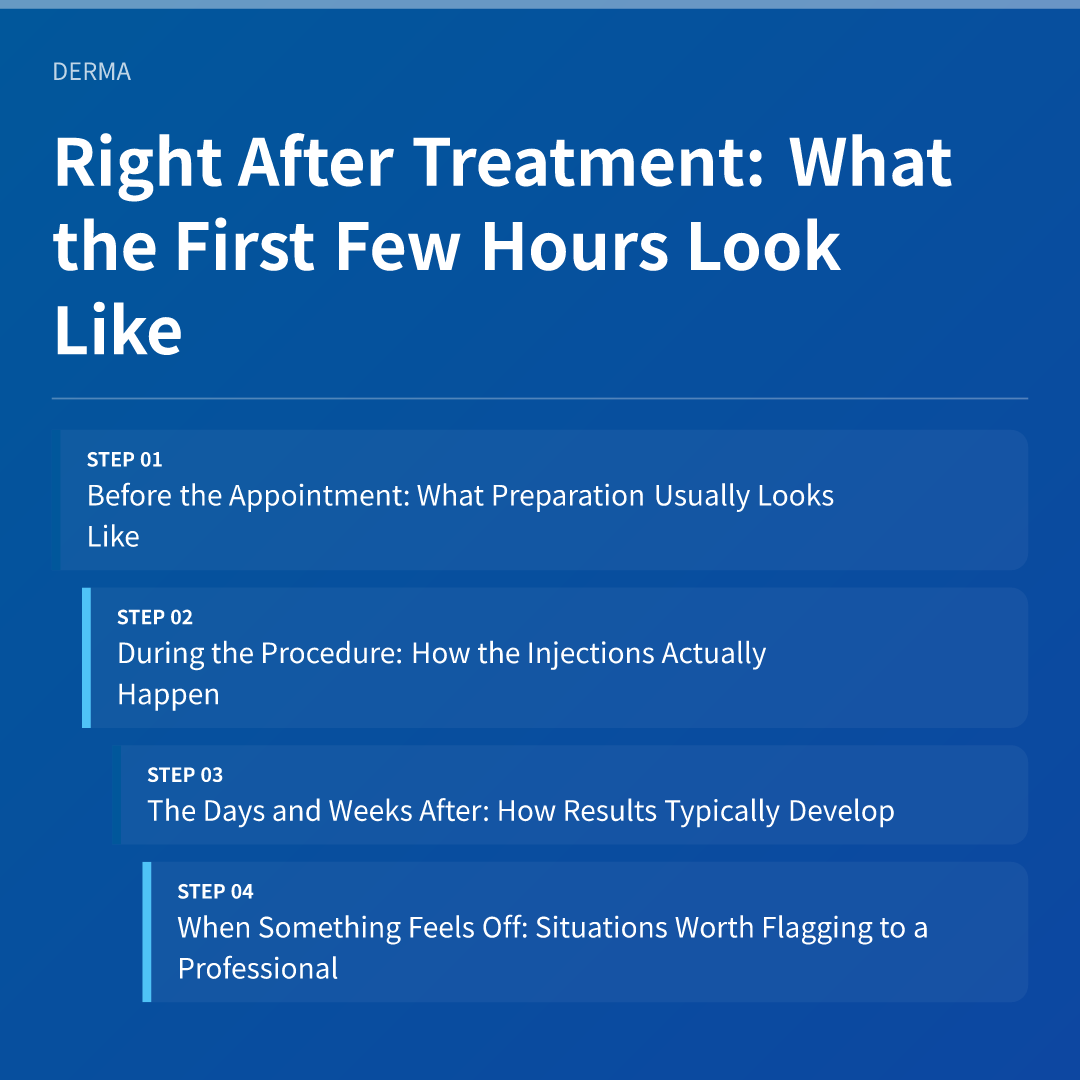
The period immediately following injections is where a lot of the practical post Botox care instructions come into play, since this is when the skin is most sensitive to pressure and movement.
What happens: Small red bumps or mild swelling at each injection site are common and usually settle within a short time. Some clinics recommend staying upright for a few hours and avoiding lying face-down, based on the general reasoning that this may help limit unwanted spread of the product to nearby muscles — though how strictly this matters can vary by provider and treatment area.
What you might feel: Mild tenderness, a tight sensation, or slight bruising at injection points is fairly typical. It’s generally advised to avoid touching, rubbing, or massaging the treated area, and to hold off on strenuous exercise, alcohol, and heat exposure like saunas for the rest of the day — but the exact timeframe your clinic suggests may differ, so it’s worth confirming this directly with them.
Common question: “Can I go back to work right after?” Many people do return to normal daily activities the same day, since visible downtime is usually minimal, though makeup application over the injection sites is often discouraged for several hours.
Redness, small bumps, or mild bruising right after injections are common and usually temporary — but any unusual symptoms, like drooping, difficulty swallowing, or vision changes, should be reported to your treating provider right away rather than waiting it out.
For readers comparing options before booking, it can help to first understand how this treatment differs from other injectables.
Related reading: Botox vs Fillers: Understanding the Key Differences and Which Works Best for Your Skin
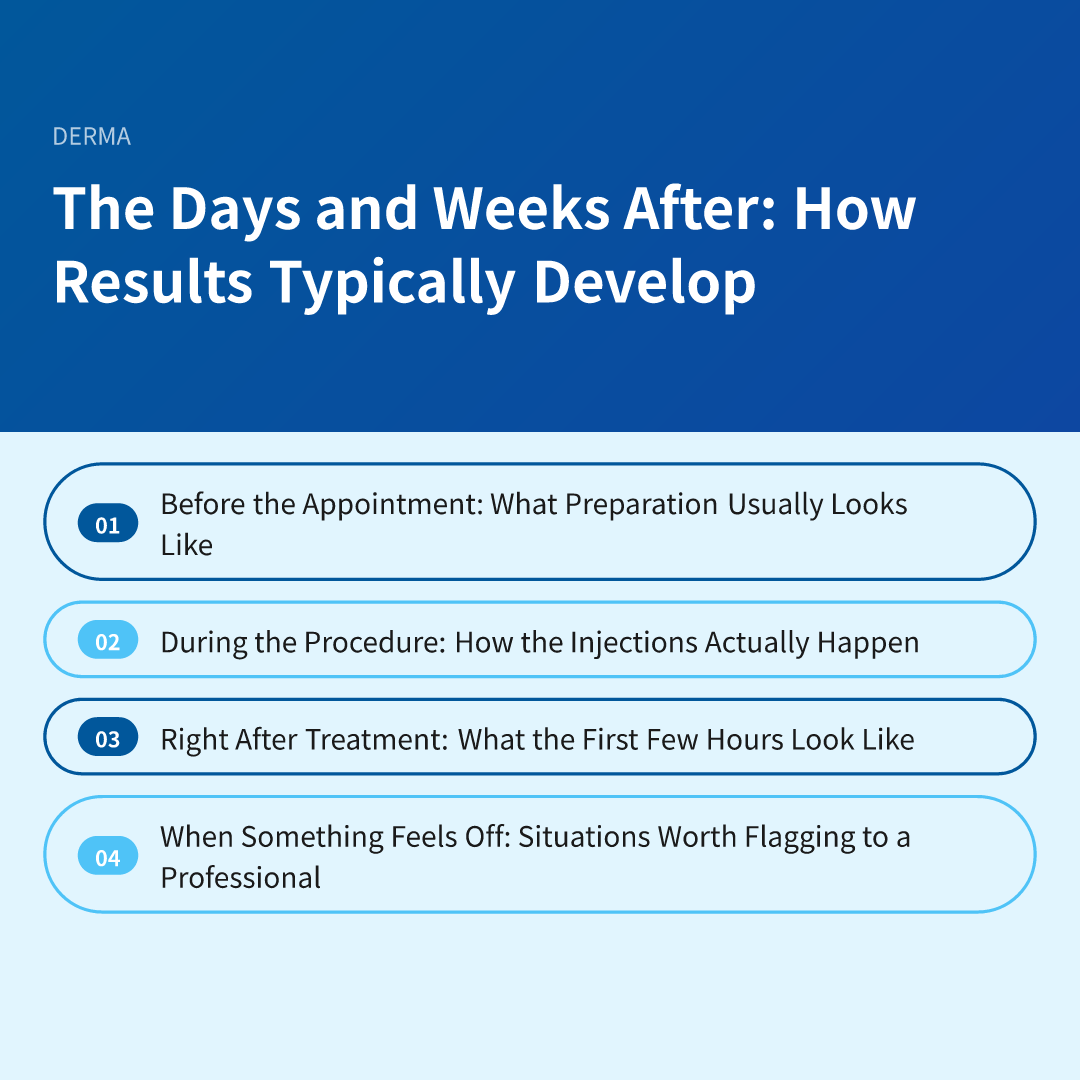
The Days and Weeks After: How Results Typically Develop
Botox doesn’t work instantly, and this is often where expectations need adjusting. The muscle-relaxing effect builds gradually rather than appearing the moment you leave the clinic.
What happens: Many people start noticing subtle changes within a few days, with fuller results generally visible by around the two-week mark. Swelling and any bruising from the injections usually fade well before the treatment’s full effect is visible.
What you might feel: Some people notice a temporary heaviness in the treated muscles, or a slightly “frozen” feeling in the forehead that tends to soften as the body adjusts. Occasionally, mild headaches are reported in the first day or two, though these are typically short-lived for most people.
Common question: “What if one side looks different from the other?” Slight asymmetry can appear temporarily as the product takes effect unevenly, and many clinics recommend waiting the full two weeks before requesting any touch-up, since results are still settling during that window.
According to the U.S. Food and Drug Administration, botulinum toxin products carry labeled information on expected effects, duration, and safety considerations that patients and providers can reference together — this is a useful starting point if you want to read manufacturer and regulatory information directly. FDA botulinum toxin safety information
Because individual skin, muscle strength, and metabolism all vary, how long results last differs from person to person, and repeat treatments are usually scheduled based on when the effect visibly wears off rather than on a fixed calendar date.
When Something Feels Off: Situations Worth Flagging to a Professional
Most recoveries are uneventful, but it helps to know what falls outside the range of “normal and temporary.” Persistent swelling that worsens rather than improves, drooping eyelids that don’t resolve, unusual muscle weakness beyond the treated area, or any breathing or swallowing difficulty are all reasons to contact the treating clinic or seek medical care rather than waiting it out at home.
It’s also worth noting that results and recovery experiences genuinely differ between people — skin type, muscle activity, prior treatment history, and even how the injections were placed can all play a role. A qualified injector, dermatologist, or physician who has actually examined you is the right person to answer questions specific to your situation, especially if you’re combining Botox with other treatments.
Putting the Timeline Together
In short: preparation is mostly conversation and history-taking, the injection itself is quick with brief discomfort, the first few hours call for gentle handling of the treated area, and full results generally unfold over the following two weeks. Individual experiences vary in timing, sensitivity, and how long the effect lasts, so treating any single timeline — including this one — as a general guide rather than a guarantee is the safer mindset. When in doubt about your own recovery, the clinic that performed your treatment remains the best source for personalized post Botox care instructions.
Disclaimer: This article is for informational purposes only and is not a substitute for professional medical advice, diagnosis, or treatment. Please consult a licensed professional for personal health decisions.