What Are Normal Blood Sugar Levels After Eating?
Blood sugar levels after eating typically rise for one to two hours before gradually settling back toward a fasting baseline, and how high they climb depends heavily on what was eaten, how much, and a person’s overall metabolic health. Many people first notice this pattern when a home glucose meter or a continuous glucose monitor shows a rise shortly after a meal, followed by a slow decline. That general rise-and-fall shape is considered typical, though the exact numbers that count as “normal” can vary from person to person and even from one testing method to another.
This kind of after-meal fluctuation is a normal part of digestion, not automatically a sign of a problem. Still, understanding roughly what to expect — and what patterns are worth flagging to a doctor — can help make sense of numbers on a glucose meter or lab report.
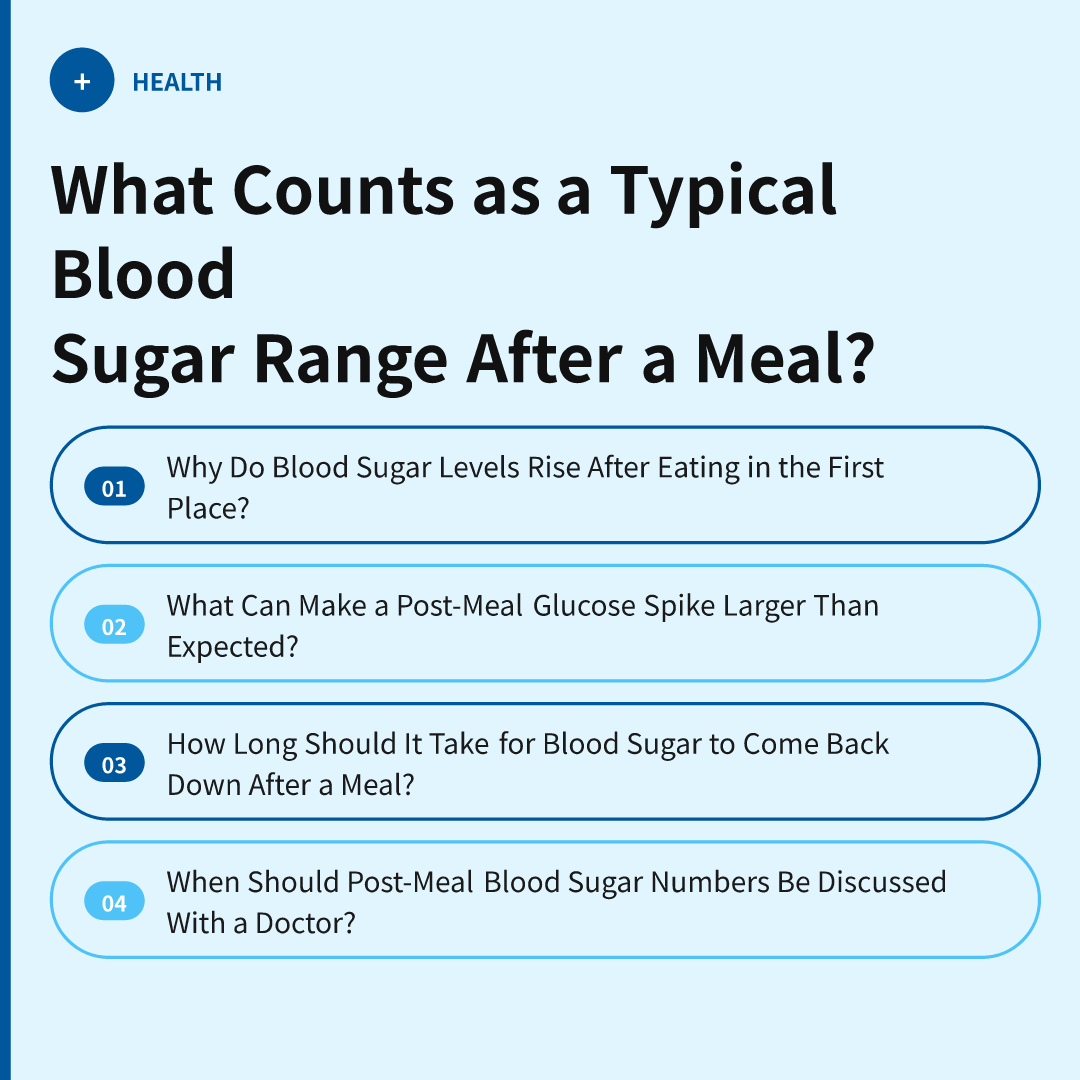
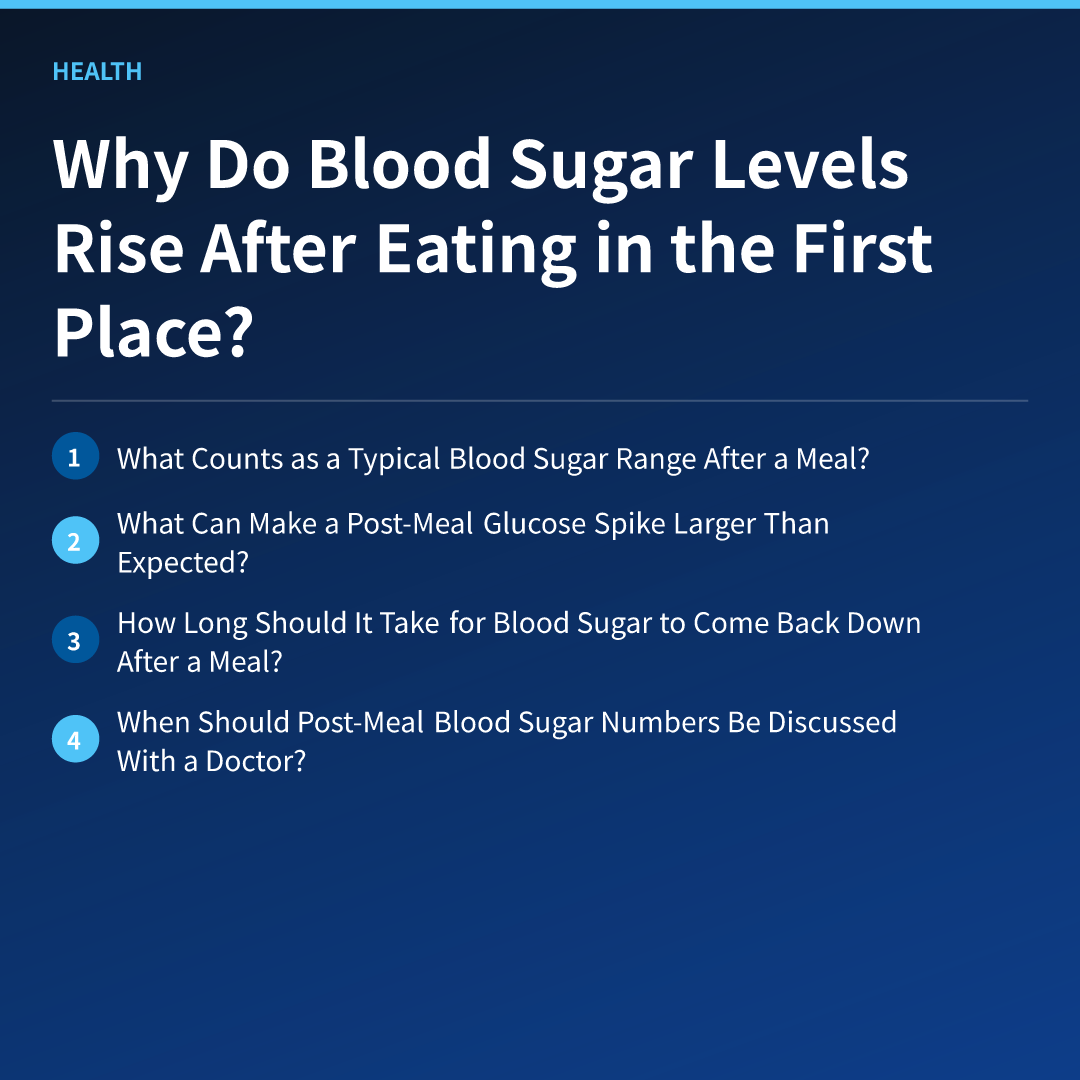
What Counts as a Typical Blood Sugar Range After a Meal?
Most general health resources describe a rise after eating as expected, with levels usually climbing within the first hour and then trending back down within a couple of hours. Rather than one fixed number, many clinicians talk about a general target range that a doctor sets individually, especially for people managing diabetes or prediabetes. The American Diabetes Association’s general guidance frames these targets as goals that a care team personalizes rather than a single universal cutoff.
For someone without diagnosed diabetes, postprandial glucose (the medical term for blood sugar after eating) tends to rise and then return closer to a fasting level within roughly two hours. For someone with diabetes or insulin resistance, that return to baseline can take longer, and the peak itself tends to be higher.
It’s worth remembering that a single reading is just a snapshot. A doctor typically looks at patterns over days or weeks — not one isolated spike — when deciding whether post-meal glucose numbers need attention.
Why Do Blood Sugar Levels Rise After Eating in the First Place?
Blood sugar rises after eating because digestion breaks carbohydrates down into glucose, which then enters the bloodstream. In response, the pancreas releases insulin, a hormone that helps cells absorb that glucose for energy or storage. This rise-and-response cycle is a normal, expected part of how the body processes food.
The size and speed of the rise depends on several things: the amount of carbohydrate in the meal, how refined or fibrous those carbohydrates are, and how sensitive the body currently is to insulin. A meal heavy in refined carbohydrates tends to produce a faster, sharper glucose spike than a meal balanced with fiber, protein, and fat.
In people whose insulin response works efficiently, glucose levels usually come back down fairly quickly after the initial rise. When insulin sensitivity is reduced — which can happen with insulin resistance or diabetes — that same meal can produce a higher peak and a slower return to baseline.
What Can Make a Post-Meal Glucose Spike Larger Than Expected?
Several everyday factors can push blood sugar higher after eating than a person might anticipate, and most of them are not unique to any one condition. Portion size and the type of carbohydrate are usually the biggest influences, but they are far from the only ones.
- Meal composition: Meals low in fiber and protein tend to raise glucose faster than balanced meals.
- Physical activity levels: Sitting for a long stretch after eating is generally associated with a slower glucose decline than light movement, such as walking.
- Sleep and stress: Poor sleep and high stress are commonly linked with reduced insulin sensitivity, which can amplify a glucose spike.
- Underlying insulin resistance: Conditions such as prediabetes or type 2 diabetes generally make post-meal spikes larger and longer-lasting.
- Certain medications: Some prescription drugs are known to affect glucose metabolism, which is one reason a doctor or pharmacist should review a full medication list when glucose patterns look unusual.
None of these factors guarantee a problem on their own. A single higher-than-usual reading after a particularly carb-heavy meal, for instance, is common and does not necessarily indicate diabetes.
How Long Should It Take for Blood Sugar to Come Back Down After a Meal?
In general, blood sugar that rises after a meal is expected to trend back toward a fasting-range level within about two hours, though the exact timing varies by individual. This is one reason many glucose checks are timed at roughly the one- or two-hour mark after the start of a meal — it gives a consistent point for comparison.
If glucose stays elevated well beyond that window on a regular basis, that pattern is more meaningful than any single reading. Repeated slow recovery after meals is one of the signs doctors look for when evaluating insulin resistance or early changes in glucose metabolism.
It’s also worth noting that home glucose meters and continuous monitors can show slightly different numbers depending on calibration, sensor placement, or timing of the test, so occasional variation between devices is not unusual. A doctor can help interpret whether a specific pattern on a specific device is meaningful.
When Should Post-Meal Blood Sugar Numbers Be Discussed With a Doctor?
A pattern of repeatedly high post-meal glucose readings, especially alongside symptoms like unusual thirst, frequent urination, fatigue, or unexplained weight change, is generally a reasonable reason to talk with a doctor. A single elevated number after an unusually large or sugary meal is less concerning on its own than a consistent trend across multiple days.
People who are already managing diabetes, prediabetes, or another condition affecting blood sugar should follow the monitoring plan and target ranges set by their own care team rather than relying on general reference numbers found online. Individual targets can differ based on age, other health conditions, medications, and personal risk factors.
Post-meal glucose readings are most useful as part of an ongoing pattern reviewed with a healthcare provider, rather than judged in isolation.
Anyone noticing very high readings, symptoms of low blood sugar such as shakiness or dizziness after meals, or numbers that don’t match how they feel should reach out to a doctor rather than trying to interpret the data alone.
Frequently Asked Questions About Blood Sugar After Eating
Is it normal for blood sugar to spike after every meal?
Yes, some rise after eating is expected and considered a normal metabolic response. What matters more is how high the spike goes and how quickly it comes back down, which is best evaluated over time rather than after one meal.
Does the type of food matter more than the amount eaten?
Both generally matter. Refined carbohydrates tend to raise glucose faster than fiber-rich or protein-balanced meals, but eating a very large portion of almost any food can also produce a bigger spike than a smaller portion of the same meal.
Can stress or lack of sleep really affect blood sugar after eating?
Stress and poor sleep are commonly associated with reduced insulin sensitivity, which can make post-meal glucose levels higher or slower to normalize. This effect varies between individuals, and a doctor can help assess whether it’s playing a meaningful role in a specific case.
Should I test my blood sugar after every meal if I don’t have diabetes?
Routine post-meal testing is not typically necessary for people without a diagnosed condition affecting blood sugar, unless a doctor recommends it for a specific reason. Anyone curious about their own patterns, or with a family history of diabetes, can bring the question to a doctor to decide what monitoring, if any, makes sense.
Understanding typical patterns in blood sugar levels after eating can make glucose numbers feel less confusing, but individual targets and interpretation should always come from a qualified healthcare provider who knows a person’s full health history.
Disclaimer: This article is for informational purposes only and is not a substitute for professional medical advice, diagnosis, or treatment. Please consult a licensed professional for personal health decisions.