Breast Augmentation Before and After Photos: How to Read Them
Breast augmentation before after photos are side-by-side images of the same person's chest taken prior to surgery and again after healing, usually shared by a surgical practice to illustrate possible outcomes. They are a visual record, not a promise, and they reflect one person's anatomy, one surgeon's technique, and one set of photographic conditions. Below is what these images actually show, when they are most useful, what they get confused with, and why reading them carefully matters before a consultation.
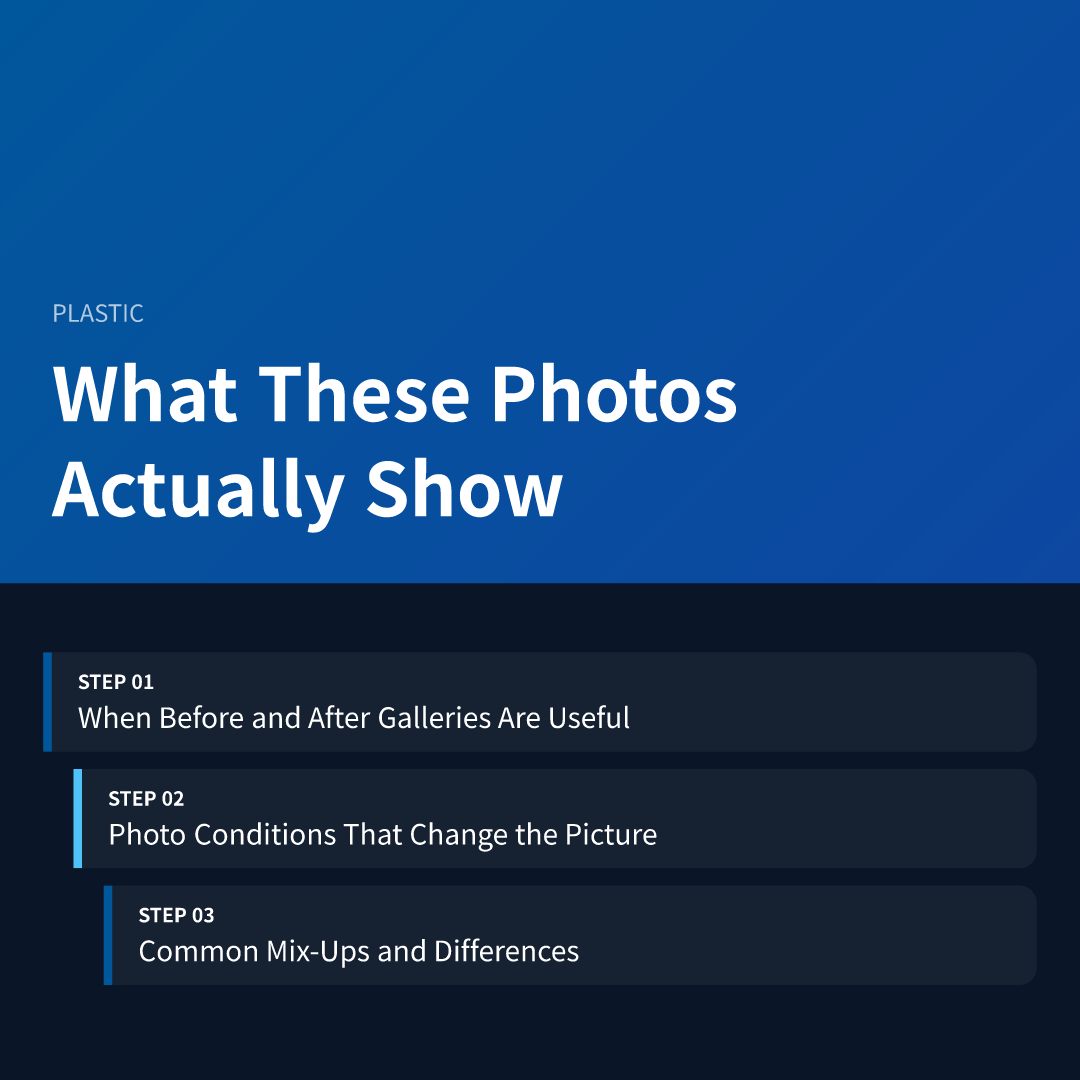
What These Photos Actually Show
A typical set pairs a "before" image with one or more "after" images from the same angles, often front-facing, side, and three-quarter views. The goal is to let a viewer compare size, shape, symmetry, and position of the breasts across time. Think of it like a house renovation gallery: you see the finished rooms, but not the structural constraints, budget, or compromises behind each one.
Several terms come up often in captions. Implant profile describes how far an implant projects forward from the chest wall. Placement refers to whether an implant sits under the chest muscle or over it, which can change the look and feel. Incision site is where the surgeon makes the cut to reach the pocket, such as under the breast fold or around the areola. Photos rarely explain these choices on their own, so captions and consultations matter.
What the images cannot show is just as important. They do not show how the person felt during recovery, whether revision surgery was later needed, how the result changed years afterward, or whether the person was happy. A single image set is a snapshot at one point in healing.
When Before and After Galleries Are Useful
Galleries tend to be most helpful early in research, when you are trying to put words to what you like or do not like. Many people find it easier to point at an image than to describe a look in the abstract. Bringing a few examples to a consultation can give a surgeon a clearer sense of your aesthetic preferences.
They also help you gauge a practice's range. If every photo looks nearly identical regardless of the patient's starting anatomy, that may tell you something about a practice's style. A broader range of body types, chest shapes, and result sizes can suggest more flexibility, although it is not a guarantee of anything.
The American Society of Plastic Surgeons, a professional body, generally encourages patients to review a surgeon's work and discuss realistic expectations during consultation. That conversation is where a photo gallery becomes truly informative, because the surgeon can explain how your own anatomy would differ from the examples.
Choosing comparable examples
The most relevant photos are those where the person's starting point resembles yours: similar frame, chest width, skin laxity, and existing breast volume. A result on a very different body may not translate. When browsing, look for patterns in how a practice handles cases like yours rather than fixating on a single standout image.
Seeing the healing timeline
Some galleries label how long after surgery each image was taken. This matters because swelling and implant settling change appearance over time. According to general patient information from the American Society of Plastic Surgeons, it can take a while for tissues to relax and for the final shape to become apparent, and timing varies from person to person. Photos taken very early may look quite different from those taken after healing.
Photo Conditions That Change the Picture
Photography itself can alter how a result appears, sometimes dramatically. Lighting direction can add or erase shadows that suggest fullness. Camera distance and lens choice can change proportions. Posture, such as arm position, shoulder tension, or a slight turn, can shift how the breasts sit.
Be cautious when the "before" and "after" differ in these basics. Stronger lighting, a different background, a tan line, or a tilted stance may make a difference look larger or smaller than it truly is. Consistent framing across both images is a mark of a more trustworthy comparison.
Digital editing is another consideration. Some images may be retouched, and the Federal Trade Commission's general advertising principles say that marketing should not be misleading. If an image looks unusually smooth or uniform, it is reasonable to ask the practice whether the photos are unedited.
Common Mix-Ups and Differences
Photos versus a personal outcome
The most frequent confusion is treating a gallery image as a forecast. A result depends on your tissue, skin elasticity, chest shape, implant choice, surgical plan, and healing response. Two people with the same implant can look quite different afterward. Photos illustrate what is possible, not what will happen for you.
Photos versus simulations
Some practices offer 3D imaging or digital simulations that preview an approximate look on your own body. These tools are not the same as before and after photos of real surgical results. Simulations are estimates, and the FDA, which regulates breast implants as medical devices in the United States, provides separate patient information on implant risks and considerations that no image can substitute for.
Featured photos versus typical results
Galleries are curated. A practice naturally chooses images that present its work favorably, and that is understandable, but it means the gallery may not reflect the full spread of outcomes. Asking whether a gallery is representative, and whether the practice can share a wider range of cases, is a fair question.
Photos versus complete risk information
A strong visual result says nothing about possible complications. According to FDA patient guidance on breast implants, risks can include things like capsular contracture (scar tissue tightening around an implant), implant rupture, changes in sensation, and the possibility of additional surgery. Implants are generally not considered lifetime devices, and the FDA notes that follow-up care is part of having them. Reactions and outcomes vary from person to person.
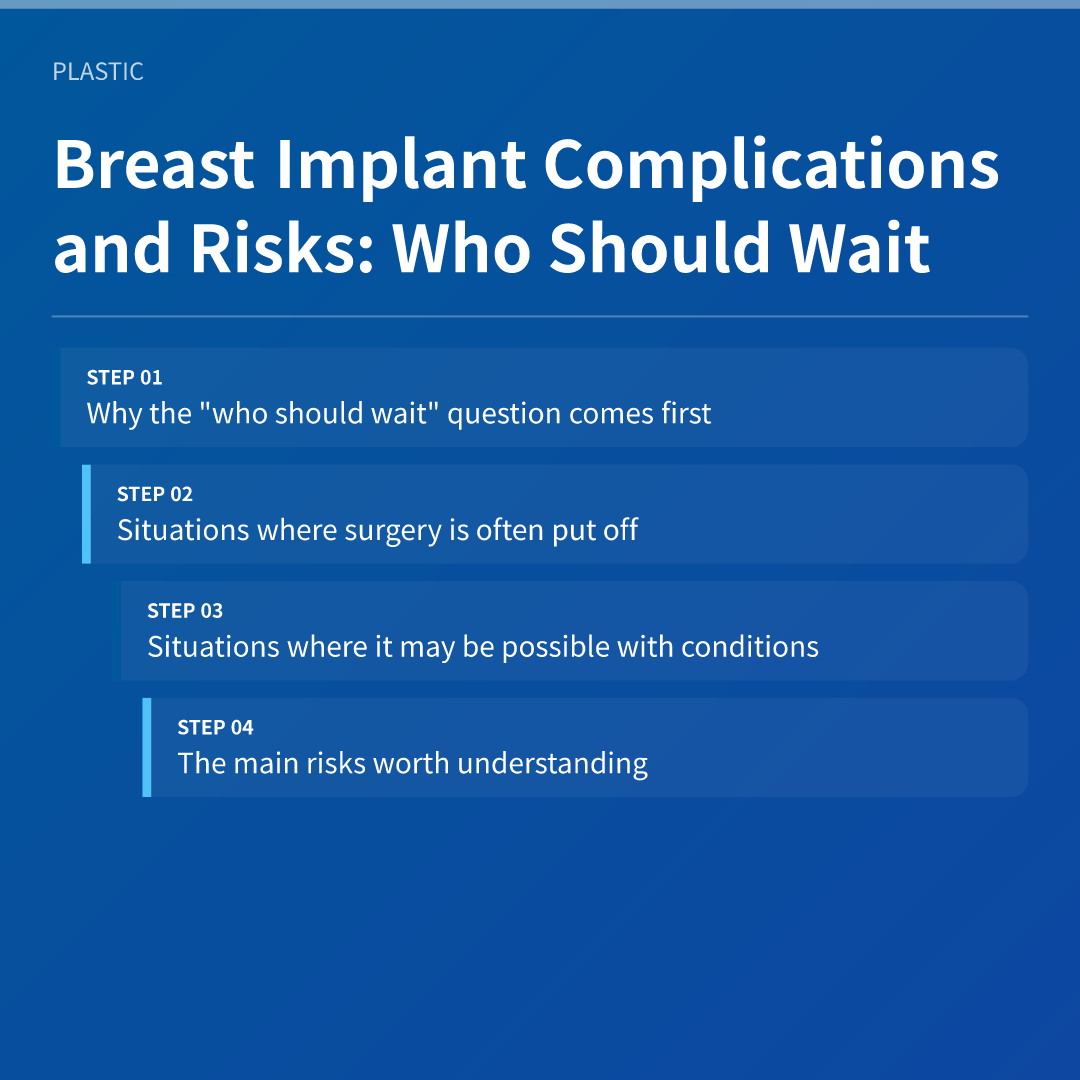
Related reading: Breast Implant Complications and Risks: Who Should Wait
Why Reading Photos Carefully Matters
Surgery is a significant decision, and images are persuasive. A well-lit gallery can quietly set expectations that your own result may not match, which is a common source of disappointment. Learning to look critically helps you separate inspiration from prediction.
It also shapes the quality of your consultation. If you can describe what you notice, such as how natural a transition looks at the upper chest, or how symmetrical a result appears, you give the surgeon something specific to respond to. A qualified, board-certified plastic surgeon can then explain what is realistic for your anatomy and what trade-offs are involved.
Questions worth bringing to a consultation
- Are these photos of actual patients treated by the surgeon who would operate on me?
- Were the images edited or taken under different lighting or posture?
- How long after surgery were the "after" photos taken?
- Can you show cases where the starting anatomy resembled mine?
- What are the risks, the possibility of revision, and the follow-up expectations?
When to be extra careful
It makes sense to slow down if a practice pressures you with images, uses photos without clear consent or source, or avoids discussing risks. People with certain health conditions, those who are pregnant or planning pregnancy, or those with concerns about mental well-being around body image may need especially thoughtful guidance from a qualified professional. Individual circumstances differ, and only a licensed clinician who examines you can speak to your situation.
What Changes in Your Decisions Once You Understand This
First, you stop treating a gallery as a preview and start treating it as a conversation starter. Instead of asking "Will I look like this?", you ask what in the image appeals to you and whether your anatomy and goals make something similar reasonable, leaving the answer to a qualified surgeon who has examined you.
Second, you weigh photos alongside everything else: credentials, risk information, follow-up care, and how comfortable you feel with the practice. Breast augmentation before after photos become one useful input among several, rather than the deciding factor in a choice that deserves careful, unhurried thought.
Disclaimer: This article is for informational purposes only and is not a substitute for professional medical advice, diagnosis, or treatment. Please consult a licensed professional for personal health decisions.