Dental Implants for Missing Teeth: How to Read Your Treatment Plan
Dental implants for missing teeth solutions come down to a few terms on a treatment plan, and learning to read them helps you judge whether an option fits your mouth. A quote or consent form can look like a wall of jargon: fixture, abutment, crown, graft, healing period. Let's go through it the way you would read the back of a product label, line by line, asking what each item means and what people commonly misunderstand about it.
One note before we start. I'm a writer organizing general information, not a clinician, and nothing here replaces an exam by a licensed dentist. Whether an implant suits you depends on your bone, gums, health history, and goals, and that is a decision for your dental team.
What to look for on the plan
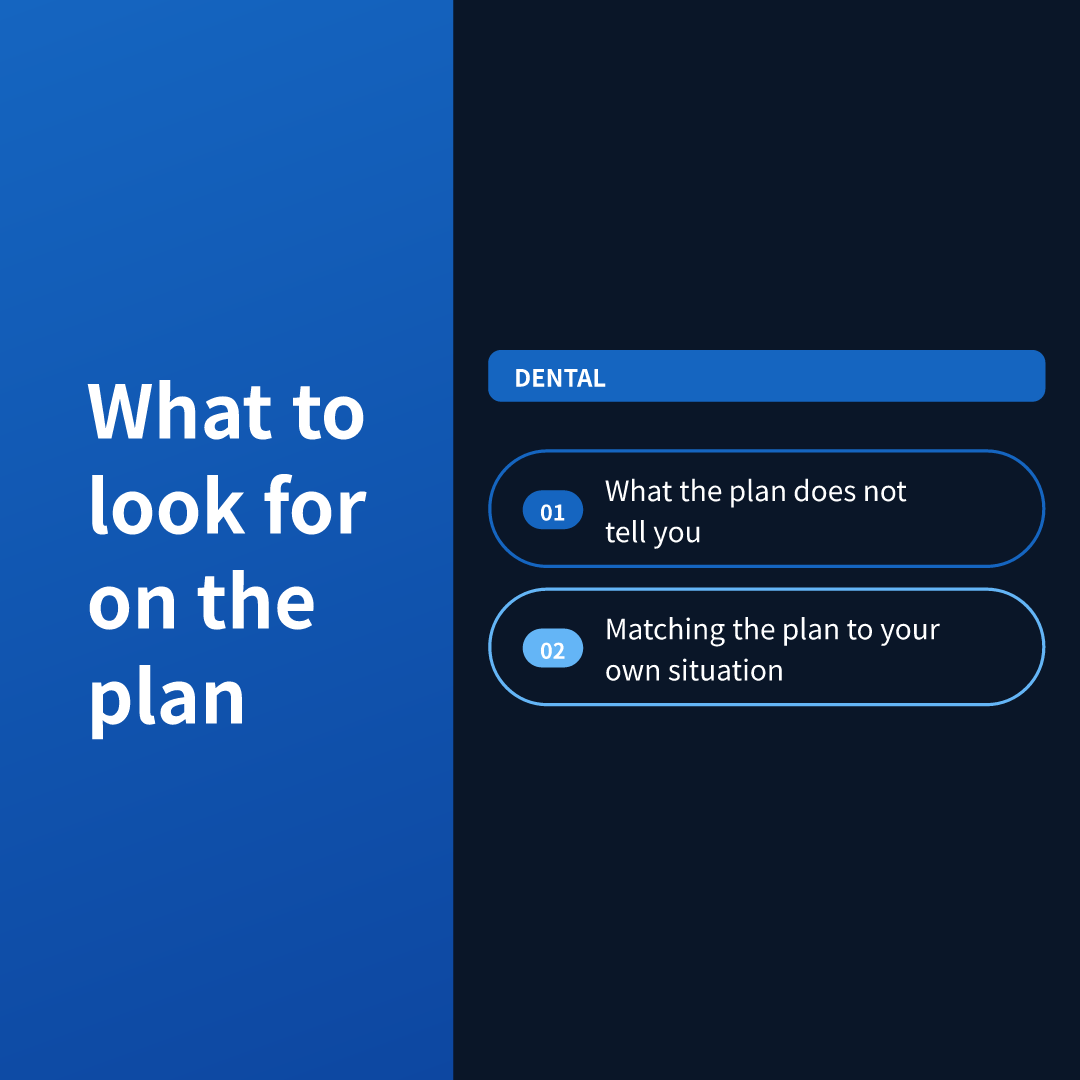
Most implant plans list the same handful of components and steps. Here is what each one generally means, paired with a misunderstanding that comes up often.
The implant fixture
What it means: The fixture is the small post, often made of titanium or a ceramic material, that is placed in the jawbone to act as an artificial tooth root. According to the National Institute of Dental and Craniofacial Research, implants are generally used to support replacement teeth and are anchored in the jaw.
Common mix-up: People sometimes think the implant is the whole tooth. It is only the root part. The visible tooth is a separate piece attached later.
The abutment
What it means: The abutment is the connector that sits between the fixture and the visible crown. Depending on the design, it may be a separate piece or part of the restoration.
Common mix-up: Because it is small and mostly hidden, some readers assume it is optional or a billing add-on. In many systems it is simply a necessary link, though your dentist can explain how your particular plan handles it.
The crown, bridge, or denture
What it means: This is the visible replacement. One missing tooth is often replaced with a single crown. Several adjacent teeth may be handled with a bridge supported by implants, and a full arch may be handled with an implant-supported denture. The American Dental Association's public information describes implants as an option that can support these different types of restorations.
Common mix-up: A quote for "one implant" does not always mean one tooth is being replaced. Look at how many implants and how many visible teeth are listed, because those numbers do not always match.
Bone grafting or sinus procedures
What it means: If the jawbone is thin or soft, a plan may include adding bone material or lifting the sinus floor before or during implant placement. General dental guidance notes that enough healthy bone is usually needed to hold an implant.
Common mix-up: Seeing "graft" on a plan does not necessarily mean something went wrong or that you are a poor candidate. It is a common planning step for some people, and your dentist can explain why it is or is not listed for you.
Healing and staging
What it means: Implant treatment is often done in stages, with time allowed for the bone and the implant to integrate before the final tooth is attached. Some plans use a temporary tooth in the meantime. Timelines differ from person to person and from case to case.
Common mix-up: "Same-day teeth" can sound like the whole process finishes in a day. Often it refers to a temporary restoration, while healing continues underneath. Ask what is temporary and what is final.
Related reading: Breast Augmentation Surgery Cost: The Price on the Quote vs. What You Actually Pay
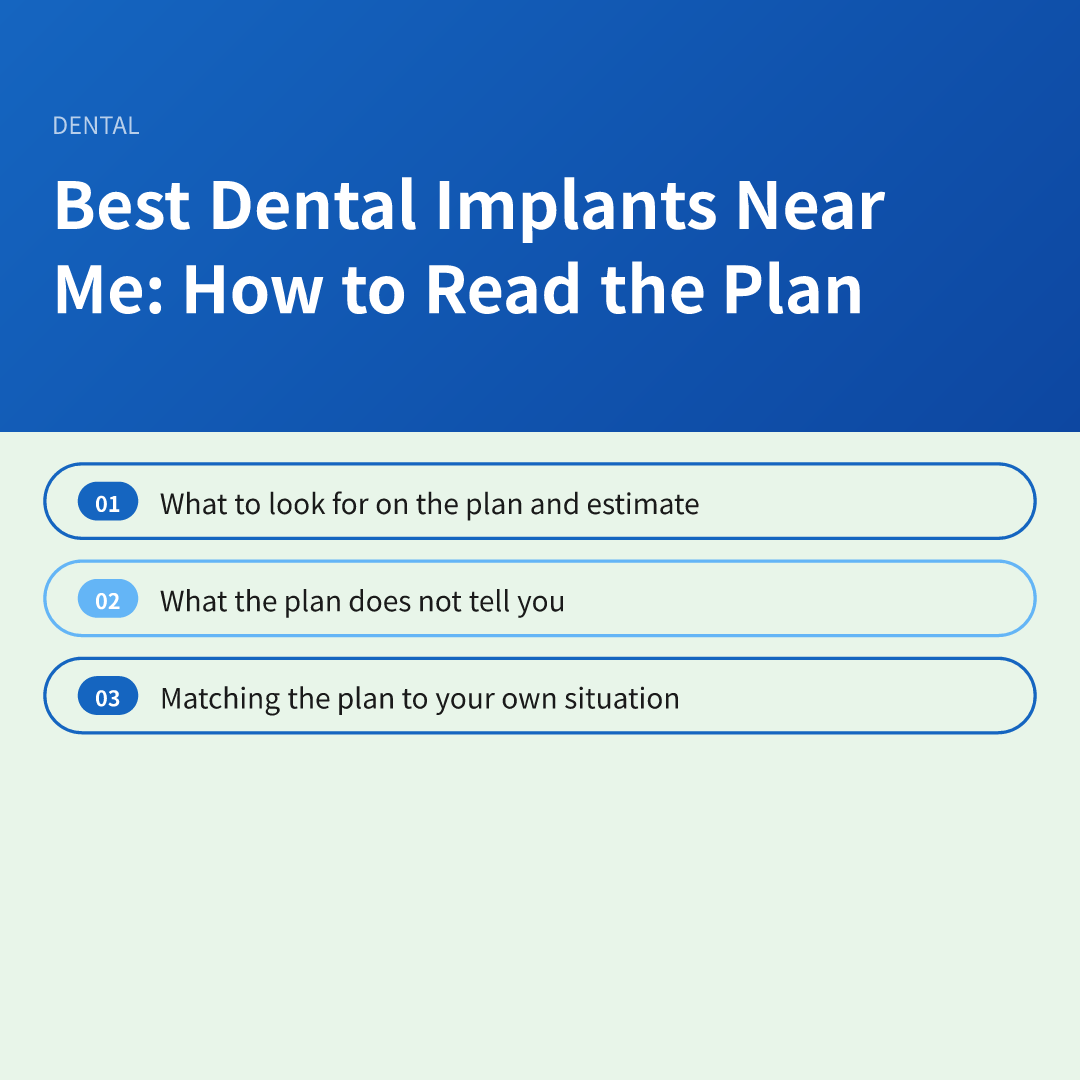
What the plan does not tell you

A treatment plan is a list of items and fees. It rarely explains the things that shape how the treatment goes. Here are some gaps worth noticing.
Your long-term maintenance
An implant itself cannot decay the way a natural tooth can, but the gum and bone around it can still become inflamed. The Mayo Clinic's patient information notes that good oral hygiene and regular dental visits remain important after implants are placed. A plan seldom spells out the cleaning routine, follow-up visits, or the cost of maintaining the restoration over time.
Possible complications
Like any surgical procedure, implant treatment carries risks, such as infection, problems with healing, or damage to nearby structures. How likely any of these are varies with the person, the site, and the clinician's approach. A consent form may list them briefly, so it is reasonable to ask for a plain-language explanation and what happens if something does not go as expected.
Whether the restoration may need replacing
The fixture and the visible tooth are different parts, and they may not wear at the same pace. Crowns and other restorations can chip, loosen, or wear down over the years. A plan usually does not forecast this, so ask what repair or replacement could involve later.
Who is doing what
Some cases involve one dentist; others split surgery and restoration between a surgeon and a general dentist, or among a team. A plan may not say who is responsible if the pieces do not fit together well. It is fair to ask who handles follow-up and complications.
What is not covered by the quote
Scans, extractions, grafts, temporary teeth, and follow-up visits may or may not be included in the listed fee. Dental insurance often covers implants only partly or not at all, depending on the plan. Ask for an itemized breakdown so you can compare like with like.
Matching the plan to your own situation
Implants are one of several ways to replace missing teeth, and no single option is right for everyone. These are the personal factors dentists commonly weigh. Only an examination can tell you where you stand.
Your jawbone and gums
Bone that has shrunk after a tooth has been missing for a long time may need extra steps. Gum disease is another point: the National Institutes of Health's general oral health information links untreated gum disease with problems around implants, so it is usually addressed first.
Your general health
Certain conditions and habits can affect healing. Smoking, poorly controlled diabetes, some medications, and prior radiation to the head and neck are examples that dental professionals commonly ask about. This does not automatically rule anyone out, but it is why a full health history matters. Tell your dentist about everything you take and every condition you have.
How many teeth, and where
A single gap at the front of the mouth is a different project from several missing back teeth or a full arch. Appearance, chewing demands, and the condition of neighboring teeth all play into the choice among an implant, a bridge, or a removable denture. Some people prefer an option that avoids surgery, and that is a legitimate preference to raise.
Your time, budget, and comfort
Implants can involve multiple visits over a stretch of months, and the cost is often higher up front than some alternatives. Others find the investment worthwhile over time. Neither view is wrong. Be honest with your dentist about what you can manage, and ask what a phased or lower-cost path might look like.
When to get a second opinion
If a plan feels rushed, if you are pressured to decide quickly, or if the proposed work seems much larger than what another dentist suggests, a second consultation is a normal and reasonable step. Differences between plans are not always a sign that someone is wrong; they can reflect different philosophies and experience.
Warning signs after treatment
Contact your dentist promptly if you notice persistent pain, swelling, bleeding that does not settle, a loose implant or crown, pus, fever, or numbness that does not fade. If you ever have trouble breathing or swallowing, or swelling spreading to the face or neck, seek urgent medical care.
Frequently asked questions
Can anyone with missing teeth get an implant?
Not everyone is a candidate, and suitability is decided case by case. Bone volume, gum health, general health, and habits like smoking are commonly reviewed. Some people who are not good candidates for implants still have other good options.
Does an implant mean I no longer need regular dental care?
No, the surrounding gums and bone still need care. The artificial tooth cannot decay in the usual way, but inflammation around it can still occur. Your dentist can describe what home care and checkups fit your situation.
Is it a problem if two dentists give me different plans?
Not necessarily. Dentists may differ in approach, materials, and staging, and your anatomy may allow more than one reasonable route. Ask each to explain their reasoning and compare the itemized scope, not just the final price.
What is the one thing to confirm before I agree to treatment?
Confirm that you can say, in your own words, what is being placed, what the final tooth will be, and what follow-up and replacement could involve. If any part of your dental implants for missing teeth plan is unclear, ask the dentist to explain it before you sign.
Disclaimer: This article is for informational purposes only and is not a substitute for professional medical advice, diagnosis, or treatment. Please consult a licensed professional for personal health decisions.