Root Canal Infection After Treatment: What It Means
Root canal infection after treatment is a topic many people search for when a tooth that was supposed to be "fixed" still hurts, swells, or feels strange weeks or months later. It is a worry that tends to come up late at night, usually when a dental office is closed. Understandably, people want to know whether what they feel is normal healing or something that needs attention.
In general terms, a persistent or returning infection after a root canal means that bacteria are still affecting the tooth or the bone around its root. This can show up soon after the procedure or long afterward. Dental organizations such as the American Association of Endodontists describe this as a situation that a dentist or endodontist evaluates, usually with an exam and imaging. This article explains the background, the common patterns, and the questions worth bringing to an appointment. It is general information, not a diagnosis.
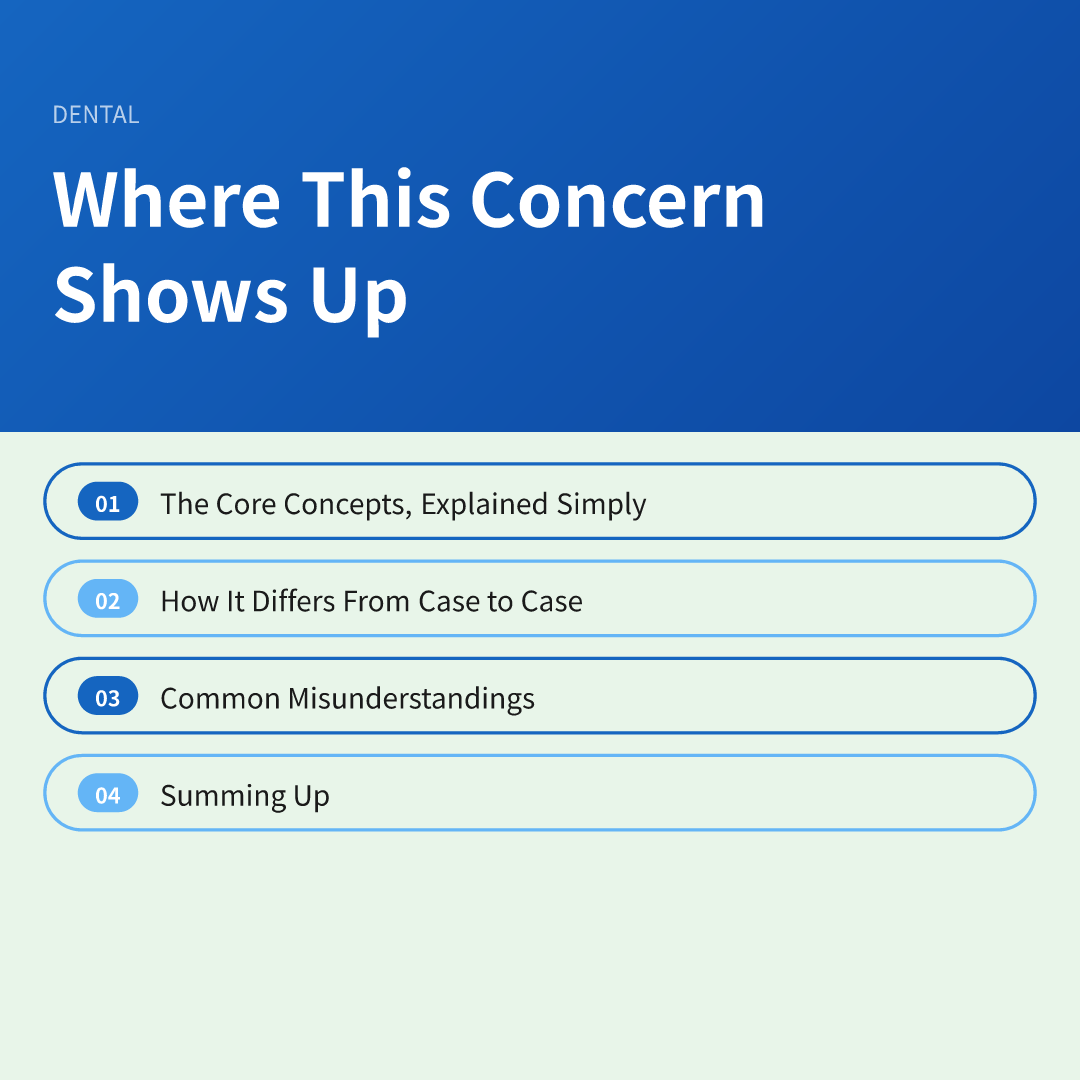
Where This Concern Shows Up
Most people expect a root canal to end the pain. For many, it does. But the tooth is complex, and a treated tooth is still a living part of the mouth, surrounded by gum and bone. Sometimes discomfort lingers, fades, and returns, or a new problem appears long after the dental work felt finished.
Situation one: soreness that does not seem to settle
Imagine someone who had a root canal and a filling a few weeks ago. The tooth still feels tender when chewing, and there is a dull ache that comes and goes. They wonder whether the infection was missed.
Some tenderness after the procedure is commonly described by dental sources as part of healing, because the tissue around the root can be irritated by the work itself. The American Dental Association's public information notes that mild soreness is often expected for a period after treatment. What matters is the direction of change. Discomfort that gradually eases tends to be viewed differently than discomfort that worsens or spreads.
Situation two: a problem that appears long afterward
Now picture someone whose root canal was done years ago and felt fine. Then they notice a small bump on the gum near the tooth, or a bad taste, or pressure that was not there before. This is a different pattern. Dental sources explain that a previously treated tooth can develop trouble later, for example if bacteria find a way back in through a crack, a leaking filling or crown, or a canal that was hard to clean fully the first time.
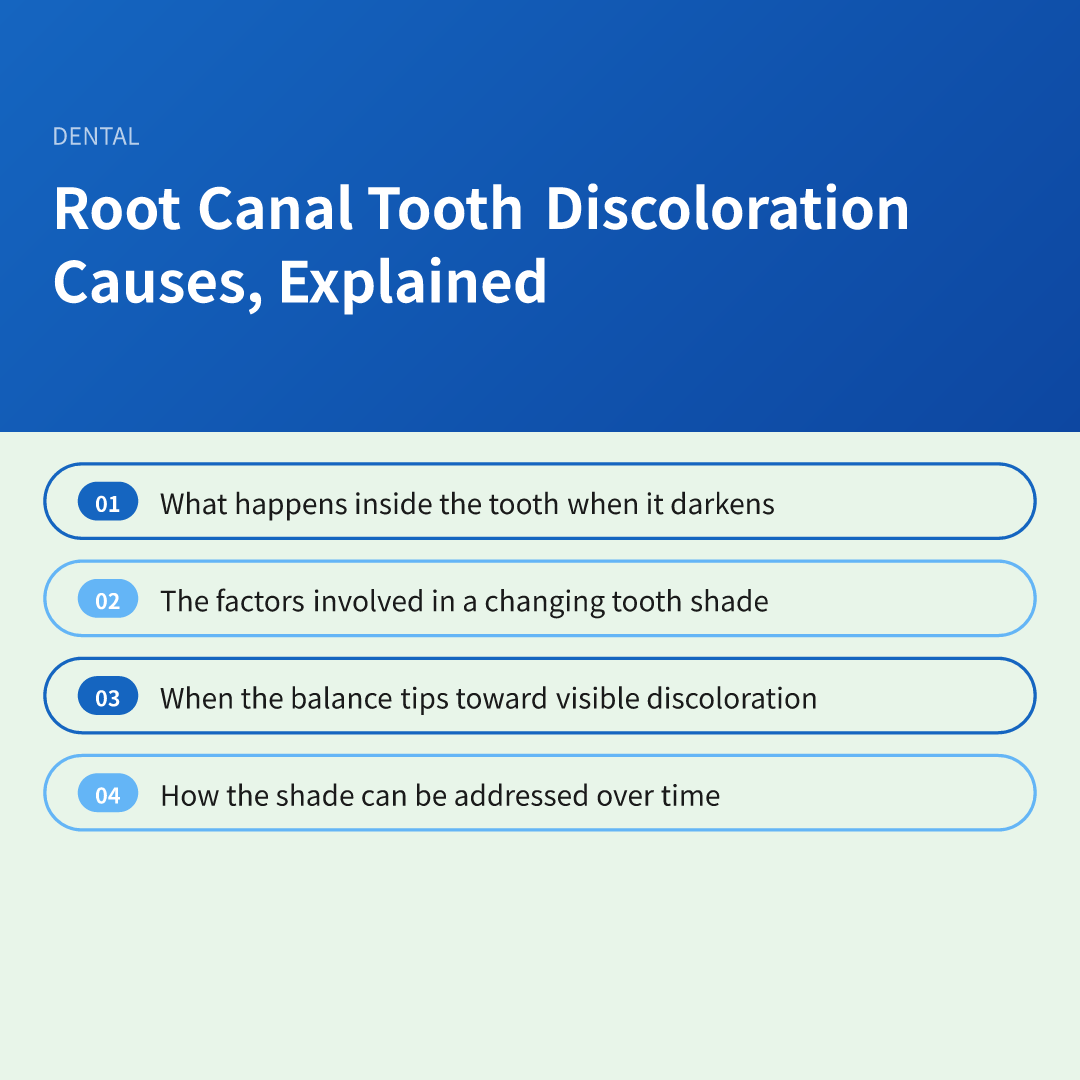
Related reading: Root Canal Tooth Discoloration Causes, Explained
The Core Concepts, Explained Simply
What a root canal is trying to do
A root canal removes inflamed or infected tissue from inside the tooth, cleans and shapes the inner space, and seals it. The goal is to remove bacteria and prevent them from returning. The National Institute of Dental and Craniofacial Research and similar public sources describe it as a way to keep a natural tooth in place rather than removing it.
Why infection can persist or return
Dental references commonly list several reasons a treated tooth may still have trouble. These are patterns, not predictions for any one person:
- Complex inner anatomy: Roots can have tiny side channels or extra canals that are hard to reach and clean completely.
- Sealing problems: If the filling or crown does not seal well, bacteria may re-enter over time.
- Cracks: A fine crack in the tooth can let bacteria in and is not always easy to see.
- Delayed restoration: A tooth left without a permanent filling or crown for too long may be more exposed to contamination.
- New decay: Cavities can form around an old restoration and reach the treated area.
Normal healing versus a possible problem
Telling these apart at home is difficult, and even dentists rely on exams and X-rays. Still, general guidance points to some differences. Mild tenderness that steadily improves is often described as part of recovery. By contrast, swelling, a pimple-like bump on the gum, pain that is getting worse, or a bad taste are the kinds of signs that dental sources say deserve prompt evaluation.
Related reading: Root Canal Filling Material Types, Explained Simply
How It Differs From Case to Case

Two people with similar symptoms can have very different explanations. Tooth location matters, since back teeth often have more canals than front teeth. The quality of the existing restoration matters. So do gum health, the presence of cracks, and how long ago the work was done.
Timing also changes the conversation. Soon after treatment, the question is often whether the area is still settling or whether something was incompletely addressed. Years later, the question is more often whether new decay, a failing crown, or a fracture has opened a path for bacteria.
What a dental professional may look at
Dentists and endodontists generally begin with a history and an exam. They may check how the tooth responds to tapping or pressure, look at the gums for swelling or a drainage spot, and take dental X-rays to see the bone around the root. In some cases, more detailed three-dimensional imaging is used. What is recommended depends on what they find.
Options that may be discussed
Depending on the findings, dental sources describe several directions a clinician might discuss. These can include monitoring the tooth, redoing the root canal treatment, a minor surgical procedure at the root tip, or, in some cases, removing the tooth and discussing replacement. Antibiotics are sometimes part of care when an infection is spreading, but whether they are appropriate, and which kind, is a decision for the prescribing clinician. Each path has trade-offs in cost, tooth preservation, and likelihood of success, which is worth asking about directly.
Common Misunderstandings

"If it hurts, the root canal failed"
Not necessarily. Some soreness can occur while tissue recovers, and pain can also come from the bite, a high filling, or the gum rather than from infection. The reverse also applies: some infections cause little pain at first, which is why follow-up visits matter.
"No pain means no infection"
A tooth that has had a root canal may have reduced sensation, so a lingering problem can be quiet for a time. Dentists sometimes find changes on a routine X-ray before symptoms ever appear. That is one reason regular checkups are encouraged by dental associations.
"A fever or swelling can wait"
Facial swelling, fever, trouble swallowing, or trouble breathing are not things to sit on. The American Dental Association and other public health sources note that spreading dental infections can become serious. These signs call for urgent dental or emergency care.
"Home remedies can sort it out"
Rinses, over-the-counter pain relievers, and similar measures may ease discomfort for some people, but they do not remove the source of an infection. Before using any medicine, including pain relievers, check the label and talk with a pharmacist or your dentist, especially if you have other health conditions or take other medications.
"Redoing it means the dentist did something wrong"
Not always. Because of the complicated structure inside teeth and the way bacteria can re-enter later, a second look is sometimes a normal part of long-term tooth care, even when the first treatment was done carefully.
Summing Up
Root canal infection after treatment is a recognized possibility, and it can appear soon after the procedure or long afterward. Many cases are manageable when evaluated early, but outcomes differ from person to person, and no one can promise a particular result without examining the tooth.
Questions worth bringing to your appointment
- What do the exam and X-rays suggest about the cause of my symptoms?
- Is my tooth's filling or crown sealing properly, and could a crack be involved?
- Would retreatment, a root-end procedure, or another option fit my situation, and what are the trade-offs?
- What signs should make me call sooner than my next scheduled visit?
Short Conclusion
Three points to remember about root canal infection after treatment:
- Mild soreness that improves is commonly seen during healing, while worsening pain, swelling, a gum bump, or a bad taste deserves a dental evaluation.
- Persistent or returning infection can come from hard-to-reach canal anatomy, cracks, leaky restorations, or new decay, and the right next step depends on what an exam shows.
- Silent problems are possible, so follow-up visits and X-rays matter even when the tooth feels fine.
Contact a dentist or endodontist promptly if symptoms are getting worse or not improving. Seek urgent or emergency care for facial swelling, fever, or difficulty swallowing or breathing.
Disclaimer: This article is for informational purposes only and is not a substitute for professional medical advice, diagnosis, or treatment. Please consult a licensed professional for personal health decisions.