Weight Loss Exercise Routine on Semaglutide: A Daily Plan
A weight loss exercise routine on semaglutide tends to last when it is tucked into three points of the day, morning, midday, and evening, rather than built as one big plan. Small, repeatable habits are easier to keep when appetite, energy, and digestion are changing. This guide walks through each part of the day and explains why that timing often makes sense. Semaglutide is a prescription medicine, so any decision about starting, adjusting, or pairing it with a new activity level belongs with your prescriber.
Nothing here is a prescription or a promise of results. People respond to this medication differently, and the same exercise plan can feel easy for one person and draining for another. Think of what follows as a flexible framework to adapt and bring to your next appointment.
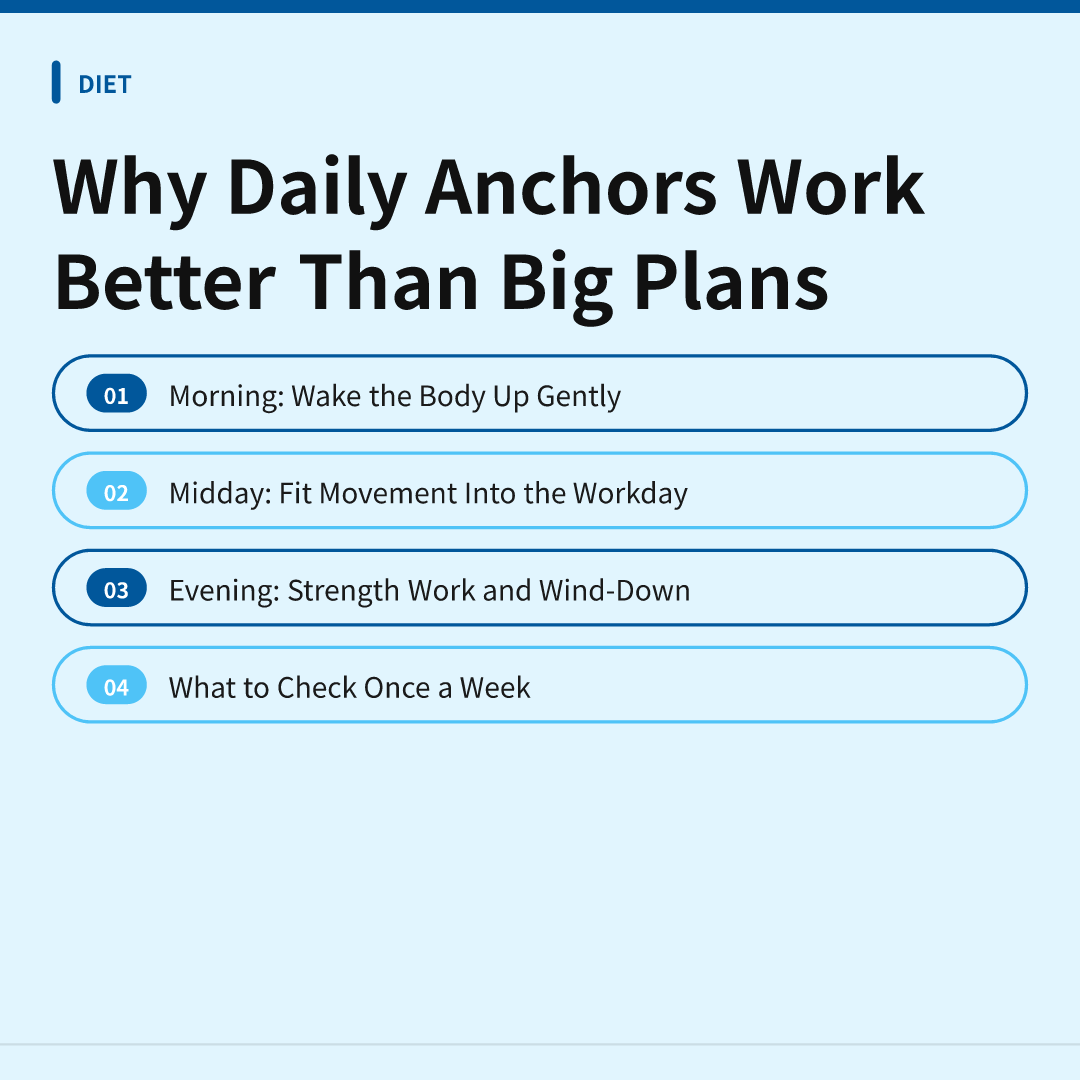
Why Daily Anchors Work Better Than Big Plans
Many people who begin a medication-supported weight management program feel motivated at first and then lose steam when the schedule gets complicated. According to the CDC's general physical activity guidance, regular movement is widely associated with better long-term health, and the emphasis is on consistency over intensity. That fits well with a daily-anchor approach, where each time of day has one or two small jobs.
There is also a practical reason. Semaglutide is known to slow stomach emptying and reduce appetite for many people, and the FDA labeling for these medicines lists nausea, vomiting, and other digestive effects among common reactions. Those effects can shape when you feel like moving and when you feel like eating. Matching your routine to your own pattern, instead of a fixed template, usually works better.
Morning: Wake the Body Up Gently
Mornings are a good place for the easiest, lowest-pressure movement of the day. A short walk, light stretching, or a few minutes of mobility work can be enough. The goal is not to burn a lot of energy but to set a tone and make the rest of the day's choices a little easier.
A short walk or light movement
Why morning? Many people find their schedule is least likely to be hijacked before the day starts, so a brief walk has a better chance of actually happening. Light movement also tends to be gentler on a stomach that may feel sensitive. If you notice queasiness, a slower pace or a shorter route is often more comfortable than pushing through. Your care team can advise on what to do if nausea is frequent.
A protein-minded breakfast
Why this point? When appetite is lower, it is easy to skip meals and end up with too little protein. The NIH and MedlinePlus general nutrition guidance describes protein as an important part of a balanced eating pattern, and many clinicians discuss protein intake with people who are losing weight so that muscle is not lost along with fat. Even a small, easy-to-tolerate breakfast gives you a starting point. Specific targets are individual, so a registered dietitian or your prescriber is the right person to set them with you.
Midday: Fit Movement Into the Workday
The middle of the day is when routines tend to fall apart, because work, errands, and family take over. Instead of planning a full workout, look for small openings. This is also when hydration and steady energy matter, since reduced appetite can quietly lead to under-eating and under-drinking.
Break up long sitting stretches
Why now? The CDC's activity guidance generally encourages people to sit less and move more throughout the day, not only during a dedicated workout. A few minutes of walking, stairs, or standing every so often adds up over time. For many people this feels more realistic than a long gym session, especially on days when energy dips.
A balanced lunch and steady fluids
Why this point? Midday is a natural checkpoint to notice whether you have eaten and had enough to drink. Dehydration and very low food intake can make dizziness and fatigue worse, and those can make exercise feel harder than it should. If you often feel lightheaded, weak, or unable to keep fluids down, that is worth raising with your clinician rather than managing alone.
Evening: Strength Work and Wind-Down
Evening is often when people have more control over their time, which makes it a reasonable slot for slightly more structured activity. It is also the best moment to build in recovery so the next morning starts well.
Resistance or strength-focused movement
Why this timing? Many people have more flexibility after work, and strength-focused activity, using body weight, bands, or machines, is commonly discussed as a way to help preserve muscle during weight loss. General guidance from the CDC and other public health bodies describes muscle-strengthening activity as part of a well-rounded week. How much, how hard, and which movements suit you depends on your joints, history, and fitness level, so a qualified trainer or your clinician can help you tailor it. If you are new to lifting, getting form guidance from a professional is usually wiser than guessing.
A light, comfortable dinner and an easy wind-down
Why now? Heavy or greasy meals can be harder to tolerate for some people on this medication, and a lighter dinner may sit better, especially if you plan to move afterward. Winding down with gentle stretching and a regular bedtime supports recovery. Sleep needs vary from person to person, but many people find that a steady schedule leaves them feeling more rested and better able to stick with their routine.
What to Check Once a Week
A weekly look back is more useful than judging yourself day by day. Weight and energy can fluctuate, and one rough day says little. The point of a review is to notice patterns and decide what to adjust or discuss with your care team.
Signs that need professional attention
Per FDA labeling and general guidance for this class of medicines, some symptoms deserve prompt medical attention rather than a routine tweak. These include severe or persistent stomach pain, repeated vomiting, signs of dehydration, severe dizziness, or anything that feels alarming. If you are unsure, contact your prescriber or seek urgent care. Do not wait for your next scheduled visit if something feels seriously wrong.
Who should be extra careful
People with certain medical conditions, those who are pregnant or planning pregnancy, and anyone taking other medicines that affect blood sugar may need individualized guidance. The same goes for anyone with a history of disordered eating, since appetite-suppressing medicine combined with an exercise focus can be a risky mix. A clinician who knows your history is the right person to decide what fits.
Your Weekly Check-In List
Use this list as a conversation starter for yourself and for your next appointment. It is a way to notice trends, not a pass-or-fail test.
- Movement: Did most days include some activity, even a short walk, and did at least a couple include strength-focused work?
- Energy: Did you feel steady enough to exercise, or were you often tired, dizzy, or weak?
- Protein and meals: Were you eating regularly, with some protein at most meals, despite lower appetite?
- Fluids: Were you drinking enough through the day?
- Digestion: Did nausea or stomach discomfort affect your routine, and is it improving or getting worse?
- Sleep and recovery: Did you have a reasonably regular bedtime and enough rest between harder sessions?
- Mood and relationship with food: Did exercise or eating feel manageable, or did it start to feel stressful or compulsive?
- Questions to bring: What would you like to ask your prescriber or a registered dietitian about your plan?
A sustainable weight loss exercise routine on semaglutide is usually built from small daily anchors, gentle adjustments, and regular conversations with the professionals who know your health. Results vary widely, so progress is best judged over weeks and months rather than days. Bring your weekly notes to your care team, and let them help you decide what to keep, change, or pause.
Related reading: Semaglutide Weight Loss for Non Diabetics: What to Know
Disclaimer: This article is for informational purposes only and is not a substitute for professional medical advice, diagnosis, or treatment. Please consult a licensed professional for personal health decisions.