Hair Loss Stress Management Techniques That Actually Help
More people have been searching for hair loss stress management techniques lately, and it’s not hard to see why. Between demanding work schedules, constant news cycles, and the general pace of modern life, a lot of people are noticing more hair in their brush or shower drain than they remember seeing before. When that happens, it’s natural to wonder whether stress is the culprit and whether there’s anything practical to do about it.
In simple terms, stress-related hair loss usually refers to a pattern where a stressful period pushes more hair follicles than usual into a resting phase, which later leads to noticeable shedding. This is different from pattern baldness, which follows a more gradual, genetically influenced timeline. Hair loss stress management techniques generally focus on lowering the body’s stress response, supporting the natural hair growth cycle, and giving hair a better chance to recover once the underlying stress eases.
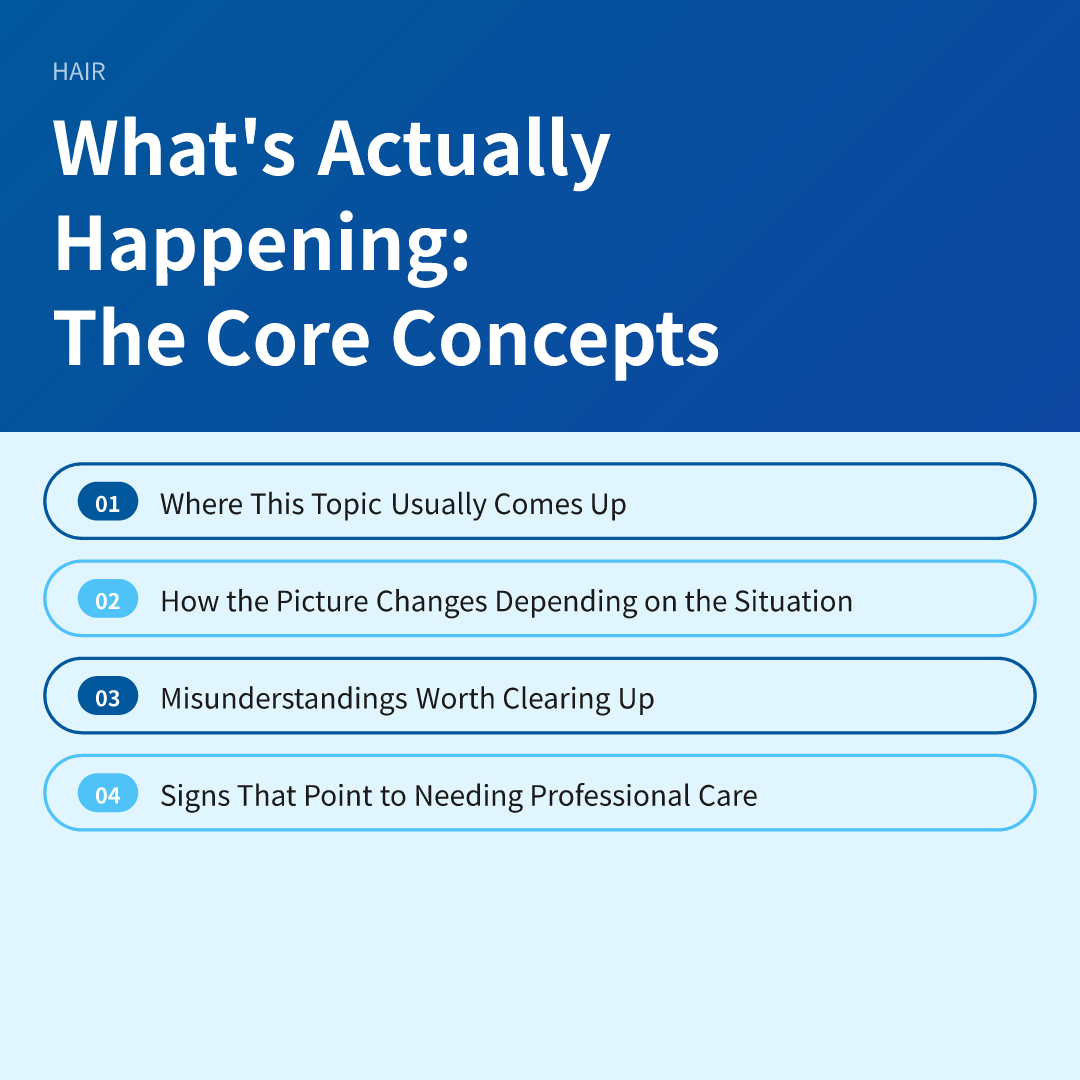
Where This Topic Usually Comes Up
This kind of question tends to surface after a specific life event rather than out of nowhere. Someone might have gone through a major deadline crunch, a family emergency, a period of illness, or even a big positive change like a move or a new job that still carries a lot of pressure. A few months later, they notice their hair feels thinner or they’re seeing more strands than usual, and that’s often when the search for hair loss stress management techniques begins.
Consider a hypothetical example: someone working through a demanding quarter at their job, sleeping poorly and skipping meals, starts noticing extra hair on their pillow a couple of months later. In another common scenario, a person going through a stressful family situation notices their part looking a bit wider than before. In both cases, the connection between stress and hair isn’t always obvious right away, because the shedding often shows up weeks or months after the stressful period, not during it.
What’s Actually Happening: The Core Concepts
To understand why stress management might help with hair, it helps to know a little about the hair growth cycle. Hair follicles cycle through a growth phase, a transitional phase, and a resting phase before the hair eventually sheds and a new strand begins growing. Under normal circumstances, only a small percentage of hairs are in the resting or shedding phase at any given time, which is why day-to-day hair loss usually isn’t very noticeable.
When the body experiences a significant physical or emotional stressor, it can trigger a larger-than-usual number of follicles to shift into that resting phase at once. Months later, those hairs shed together, which is often described as a diffuse, all-over thinning rather than a bald patch. Managing stress doesn’t reverse hair that has already shed, but it may help reduce the chances of the cycle being disrupted again and support a calmer internal environment for regrowth.
Common stress management techniques that people explore in this context include regular physical activity, consistent sleep habits, relaxation practices like deep breathing or meditation, reducing caffeine or alcohol intake, and building in time for activities that feel restorative rather than draining. None of these are quick fixes, and individual results vary quite a bit depending on the underlying cause and overall health.
Hair that has already entered the shedding phase typically needs to complete its natural cycle; stress reduction is more about supporting future growth than instantly stopping current shedding.
How the Picture Changes Depending on the Situation
Not everyone experiencing hair thinning during a stressful period is dealing with the same underlying pattern, and the right approach can differ quite a bit from person to person. Someone dealing with a short, intense stressor might see shedding settle down on its own once life calms down, while someone under chronic, ongoing stress may need a more sustained approach to both stress management and hair care.
| Situation | Typical Pattern | General Approach Worth Discussing |
|---|---|---|
| Short-term acute stress (e.g., a stressful event lasting weeks) | Shedding often appears a few months later and may resolve gradually | Basic stress management, patience, monitoring over time |
| Chronic ongoing stress (e.g., long-term caregiving or work strain) | Shedding may persist or recur as long as stress continues | Combining stress reduction with professional guidance |
| Stress plus other factors (diet, illness, hormonal changes) | Hair changes may be more pronounced or harder to pin down | Evaluation by a healthcare provider to sort out contributing factors |
Age, overall health, nutrition, and even genetics can all interact with stress in ways that make one person’s experience quite different from another’s. This is one of the reasons hair loss stress management techniques that work well for one person might feel less effective for someone else, and why it’s worth paying attention to your own patterns rather than assuming a one-size-fits-all approach.
For a closer look at how everyday habits factor into hair health more broadly, you might find it useful to explore nutrition and hair health basics as a companion topic, since diet and stress often overlap in their effects on hair.
Misunderstandings Worth Clearing Up
One common misunderstanding is thinking that stress management alone will quickly stop visible shedding. Because of the delayed nature of the hair growth cycle, changes made today may not show visible results for a couple of months, and expecting overnight improvement often leads to frustration or giving up too soon.
Another misconception is assuming that all hair thinning during a stressful life phase must be stress-related. In practice, thinning can also stem from thyroid changes, iron levels, certain medications, or genetic pattern hair loss that happens to become noticeable around the same time as a stressful period. Sorting out the actual cause typically requires more than guesswork, which is where professional evaluation becomes valuable.
There’s also a tendency to treat relaxation techniques as optional extras rather than genuinely useful tools. While meditation or breathing exercises may support overall well-being and indirectly help with hair health, many people find that consistent stress-reduction habits support better sleep and overall well-being, which can indirectly create a more favorable environment for healthy hair over time. Results and experiences differ from person to person, so it’s reasonable to see these techniques as one part of a broader approach rather than a standalone solution.
It’s also worth being cautious about products or programs that claim to quickly or dramatically reverse stress-related shedding. Since individual hair growth cycles and underlying causes vary so much, claims that promise universal results are generally worth questioning. If you’re weighing different approaches, understanding different types of hair loss can help clarify whether what you’re experiencing lines up more with a stress pattern or something else entirely.
Signs That Point to Needing Professional Care
While general stress management can be a reasonable first step, certain signs suggest it’s time to talk with a dermatologist or your regular healthcare provider rather than waiting things out. These include noticeable bald patches rather than diffuse thinning, hair loss that continues well beyond several months without improvement, scalp itching, redness, or pain, and hair loss accompanied by other symptoms like unexplained fatigue, weight changes, or irregular periods. (Source: NIH NIAMS: Alopecia Areata)
A healthcare provider can help rule out or identify contributing factors such as thyroid issues, nutritional deficiencies, or other medical conditions that mimic or overlap with stress-related shedding. They can also discuss options ranging from lifestyle adjustments to topical treatments, though specifics about any treatment, product, or dosage should come from your prescribing clinician, pharmacist, or the product’s official instructions rather than general articles. If you’re also curious about how everyday scalp care habits fit into the picture, offers a related angle worth reading.
Bringing It All Together
Stress and hair health are connected, but the relationship is usually gradual and multi-layered rather than instant. Hair loss stress management techniques, such as consistent sleep, regular movement, and relaxation practices, are generally aimed at supporting the body’s overall balance rather than promising a quick fix. Because hair growth cycles take time, patience and consistency tend to matter more than searching for an instant solution.
- Stress can push extra hair follicles into a resting phase, leading to noticeable shedding months later.
- Stress management techniques may support recovery but work alongside time, not as an instant remedy.
- Persistent, patchy, or symptom-associated hair loss deserves a proper evaluation rather than self-diagnosis.
If thinning continues, worsens, or comes with other unexplained symptoms, it’s worth scheduling a visit with a dermatologist or your primary care provider so they can look at your specific situation and history. Self-directed stress management is a reasonable starting point for many people, but it isn’t a substitute for professional evaluation when the pattern doesn’t improve or looks unusual. (Source: NIH NIMH: Caring for Your Mental Health)
Disclaimer: This article is for informational purposes only and is not a substitute for professional medical advice, diagnosis, or treatment. Please consult a licensed professional for personal health decisions.